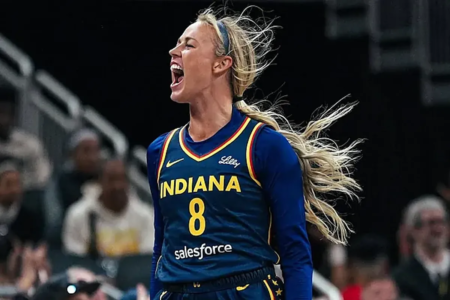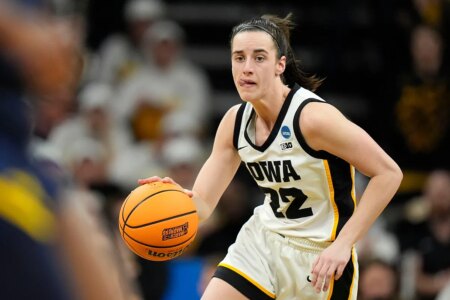




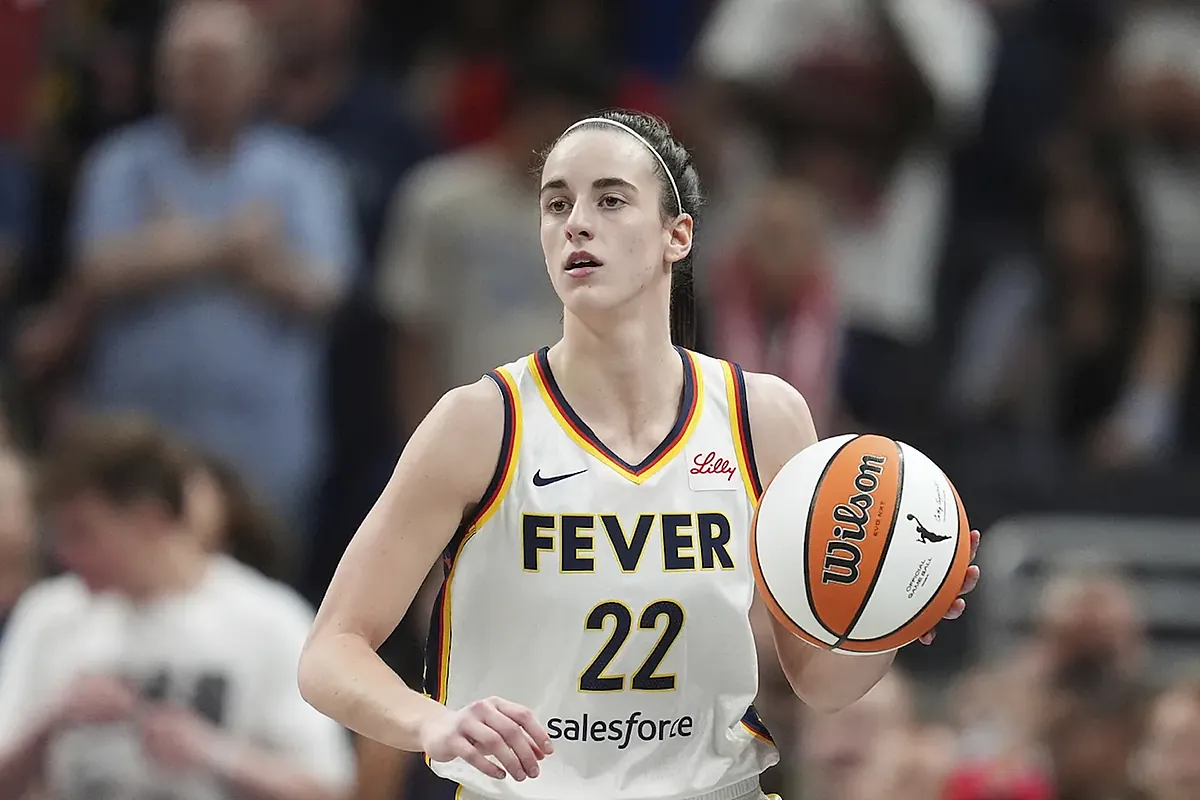
The influence of Caitlin Clark on the WNBA continues to grow, but with that rise has come a wave of criticism directed not at the player, but at the league and its teams.
As franchises increasingly lean on Clark‘s popularity to promote games and boost attendance, fans are beginning to question whether the same level of appreciation exists when it comes to on-court recognition.
The latest flashpoint came when the Phoenix Mercury promoted an upcoming matchup against the Indiana Fever using Clark’s image prominently alongside their own star Kahleah Copper.
The July 9 contest quickly became a focal point for debate, as fans accused the Mercury, and by extension other WNBA teams, of exploiting Clark’s star power for financial gain.
Clark’s drawing power is undeniable. Since entering the league, she has consistently filled arenas, driven television ratings, and elevated the overall visibility of the WNBA.
Her return from a recent injury, coupled with an MVP performance in international competition, has only intensified the spotlight surrounding her.
Yet, the marketing strategies employed by teams have not gone unnoticed. One fan summed up the growing sentiment bluntly: “Other teams love CC when it’s time to sell tickets.”
That criticism reflects a broader frustration among Clark’s supporters, who believe the guard’s contributions are sometimes minimized in competitive discussions, even as her popularity is heavily leveraged commercially.
Marketing vs. recognition: a growing divide
The Mercury are far from alone in capitalizing on Clark’s appeal. In recent seasons, multiple franchises have adjusted their approach when hosting the Fever.
The Dallas Wings, for instance, heavily promoted Clark’s professional debut, resulting in a sellout crowd. Other teams have even relocated games to larger venues when Clark is scheduled to appear, aiming to maximize ticket revenue.
This pattern has led to accusations of inconsistency. “When it’s time to sell something…get Clark,” another fan wrote, highlighting what many perceive as a transactional relationship between teams and the league’s most marketable player.
The commercial reach of Caitlin Clark extends well beyond ticket sales. Major brands such as Nike and Gatorade have partnered with the Fever guard, reinforcing her status as one of the most recognizable faces in women’s sports.
Teams have also used creative strategies, such as bundling games featuring Clark with less prominent matchups, to drive attendance across the board.
Despite this, debates persist about her standing within the league. Some critics have downplayed her role on the court, pointing instead to teammates like Kelsey Mitchell and Aliyah Boston.
That narrative has only fueled further backlash from fans.
“I wonder why they don’t put Kelsey Mitchell or AB on their advertising? CC, according to ya’ll, is a role player and has no motion,” one comment read, pointing to what many see as a contradiction.
Another added: “Why is CC22 pictured and not AB??? AB is the highest-paid person in the league. Obviously, the Fever thinks she is the most important player on the team….. jus’sayin.”
Even comparisons to league legends have entered the conversation.
While figures like Sheryl Swoopes have previously offered measured takes on Clark’s impact, fan perception has often been less forgiving, particularly when accolades or rankings appear to undervalue her contributions.
At its core, the debate underscores a broader tension within the WNBA: balancing competitive integrity with the undeniable commercial boost provided by a generational talent.
For now, Caitlin Clark remains at the center of both conversations, celebrated as a transformative figure, yet also a lightning rod for criticism over how the league chooses to spotlight her success.
Read the full article here