



Every World Cup produces unforgettable moments, but not all of them are worth celebrating.
For every champion that lifts the trophy, there are teams that leave a very different kind of legacy-one defined by heavy defeats, historic collapses, and performances that quickly become cautionary tales.
From a former host nation to teams making their long-awaited debuts, these squads didn’t just fall short-they etched their names into World Cup history for all the wrong reasons.
Bolivia (1950)
The story begins with Bolivia at the 1950 FIFA World Cup, one of the strangest tournaments ever organized. The format itself was unconventional, with uneven group sizes and even a final group instead of a traditional knockout stage.
Bolivia found themselves in a peculiar two-team group after France withdrew. Their fate came down to a single match against eventual champions Uruguay. What followed was less a contest and more a rout. Uruguay demolished Bolivia 8-0 on July 2, effectively ending their campaign before it ever truly began. In a tournament already filled with irregularities, Bolivia‘s heavy defeat stood out as one of its most lopsided moments.
Greece (1994)
More than four decades later, Greece endured a nightmare debut at the 1994 FIFA World Cup. Their campaign is perhaps best remembered for being on the receiving end of one of the tournament’s most iconic goals, scored by Diego Maradona in Argentina’s 4-0 win.
But that was only the beginning of Greece‘s troubles. Losses to Nigeria and Bulgaria followed, both without scoring a single goal. By the end of the group stage, Greece had conceded 10 goals and scored none, cementing their place among the least effective teams in World Cup history. The aftermath was swift, with head coach Alketas Panagoulias stepping down immediately.
Haiti (1974)
The 1974 FIFA World Cup featured multiple teams that struggled to compete on the global stage, including Haiti. Making their first appearance, the Caribbean team showed flashes of promise but ultimately couldn’t keep pace.
Losses to Italy, Poland, and Argentina resulted in a -12 goal difference, highlighting the gap between emerging football nations and established powers at the time.
Zaire (1974)
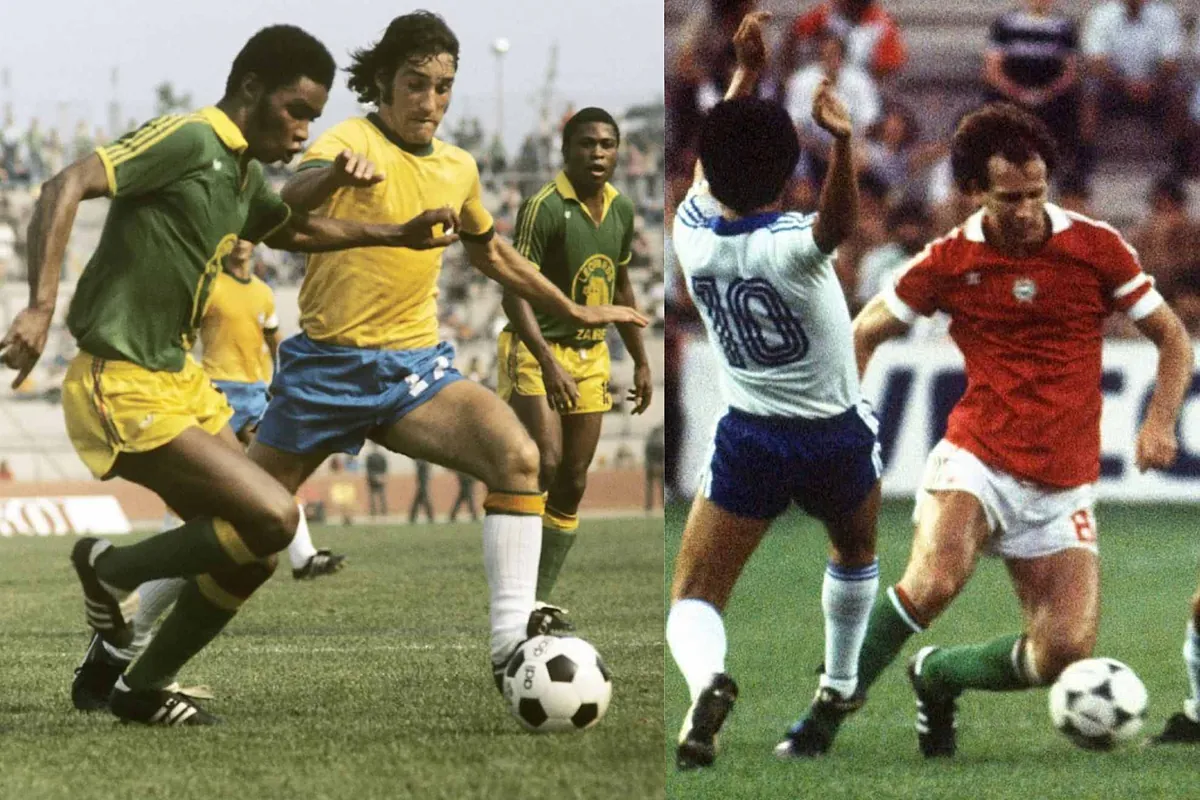
That same tournament also introduced what many still consider the worst team performance in World Cup history: Zaire. In their only World Cup appearance, Zaire lost all three matches, conceding 14 goals without scoring once. A 9-0 defeat to Yugoslavia remains one of the heaviest losses ever recorded in the tournament. Their overall performance set an unfortunate benchmark for futility that still stands decades later.
El Salvador (1982)
Eight years later, El Salvador matched that level of struggle at the 1982 FIFA World Cup. Their campaign is best remembered for a devastating 10-1 loss to Hungary in their opening match, a result that effectively doomed any hopes of recovery.
While their subsequent defeats to Belgium and Argentina were more competitive, the damage had already been done. El Salvador finished with one goal scored and 13 conceded, reinforcing their place among the tournament’s most overmatched sides.
These teams came from different eras and backgrounds, but they share a common thread: the World Cup exposed the gap between them and the elite level of international football. Whether due to inexperience, tactical shortcomings, or simply being overmatched, their performances serve as reminders of how unforgiving the sport’s biggest stage can be.
Read the full article here