


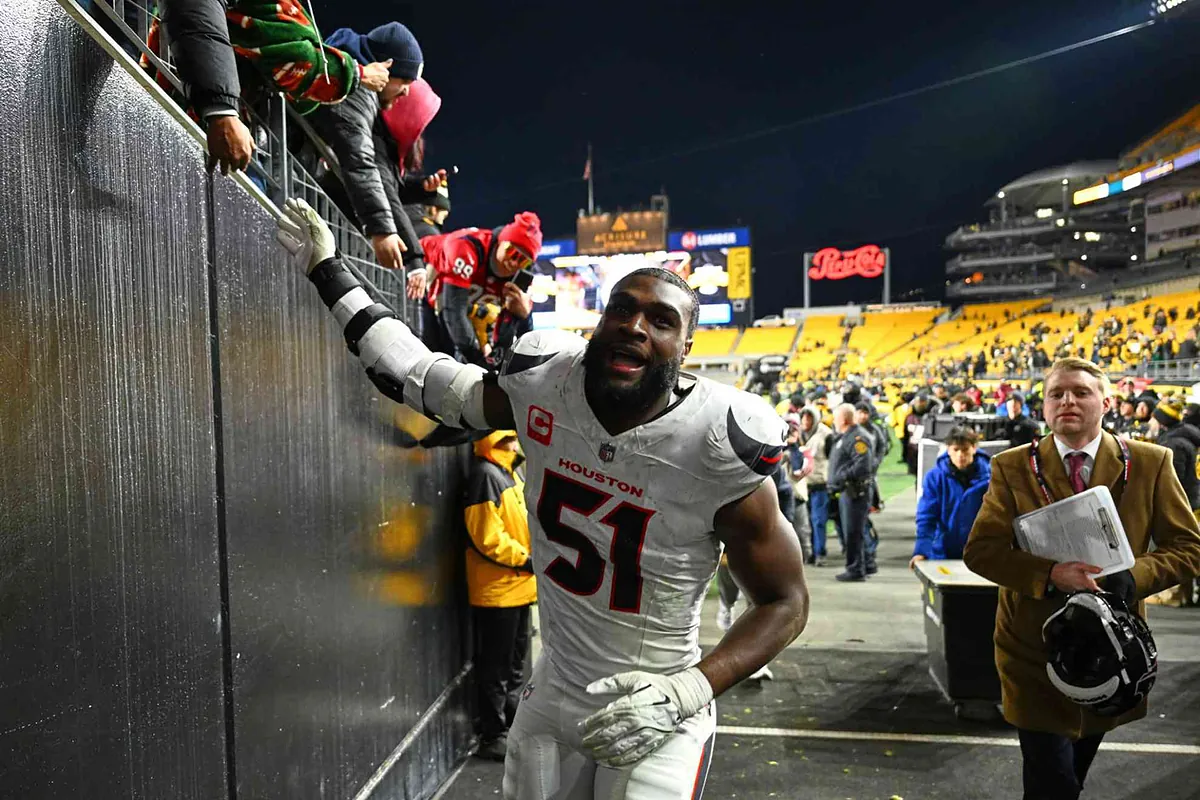
The Houston Texans didn’t just secure a cornerstone player this week, it ignited one of the NFL‘s biggest financial debates. By handing Will Anderson Jr. a three-year, $150 million extension, Houston has pushed the value of elite defensive talent into territory once reserved almost exclusively for quarterbacks.
The reaction was immediate. While many around the NFL praised the move as a bold investment in a rising star, others focused on a striking comparison: Anderson‘s annual salary now exceeds that of several top quarterbacks, including Patrick Mahomes.
That point was highlighted by analyst Skip Bayless, who questioned the optics of the deal while acknowledging the market forces behind it.
“There are a bunch of quarterbacks who don’t make as much now as Will Anderson, starting with Patrick Mahomes,” Bayless said on “The Arena: Gridiron,” noting that Mahomes‘ long-term deal in Kansas City averages around $45 million per year.
Anderson‘s extension, which includes $134 million guaranteed, makes him the highest-paid non-quarterback in NFL history.
It surpasses the deal signed by Micah Parsons, whose contract previously set the standard for defensive players. But beyond the headline figure, the deal signals a clear shift in how teams value defensive impact.
Elite edge rushers, players capable of changing games with pressure and disruption, are now being compensated closer to the league’s top offensive stars. For Bayless, the numbers may seem jarring, but the reasoning is harder to dispute.
“I look at the total impact that he’s had on that franchise,” he said. “They were barely second in points allowed, first in yards allowed, and every year they just get better and better and better on defense.”
Anderson’s rise fuels Houston’s gamble
Since being drafted third overall in 2023, Anderson has rapidly evolved into the centerpiece of Houston‘s defense. At just 24 years old, he has already amassed 30 sacks, 64 quarterback hits and 136 tackles, while earning Defensive Rookie of the Year honours and a first-team All-Pro selection.
His influence extends beyond individual stats. With Anderson anchoring the defense, the Texans have transformed into a playoff contender, reaching the postseason in each of his first three seasons and consistently advancing to the divisional round.
Last season, he finished runner-up for Defensive Player of the Year, further cementing his status among the league’s elite.
The bigger shift reshaping NFL salaries
The Anderson deal is not an isolated case, it’s part of a broader trend. Contracts for top defensive players have surged in recent years, with stars like Myles Garrett, T.J. Watt, and Maxx Crosby all securing lucrative extensions.
As offenses become more dynamic, teams are placing greater value on players who can disrupt quarterbacks and control games defensively. That demand has driven salaries upward, narrowing the long-standing gap between quarterbacks and other positions.
For the Texans, the decision reflects long-term thinking. Locking in a franchise defender during his prime provides stability, especially as the team continues to build around a young core that includes quarterback C.J. Stroud.
Whether Anderson‘s contract is viewed as a masterstroke or an overreach will depend on how both he and the Texans perform in the years ahead. But its immediate impact is undeniable.
The market has shifted again, and the ripple effects are already being felt across the league. For now, one thing is certain: the price of elite defense has never been higher.
Read the full article here