

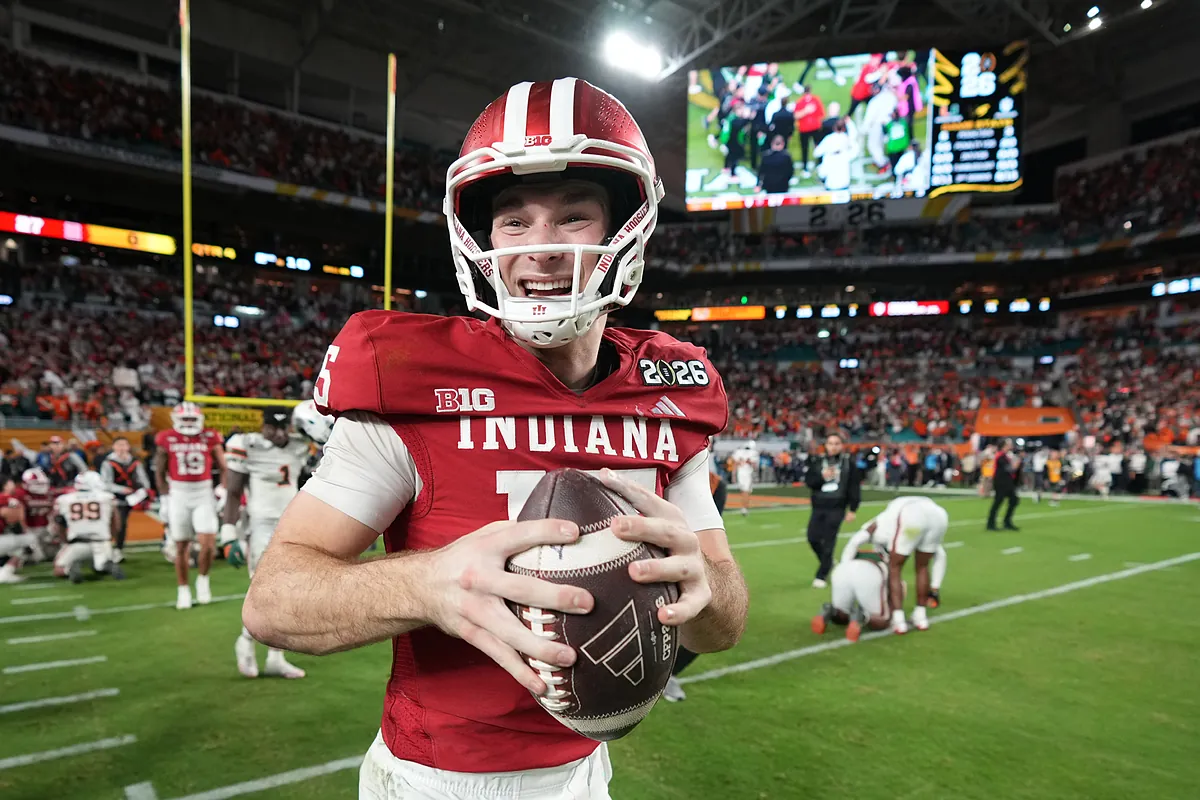
The Las Vegas Raiders insist they are aligned, but when it comes to quarterback development, the tone coming from the sideline and the front office suggests a philosophical tension, one that could directly affect Fernando Mendoza‘s path with the franchise.
New head coach Klint Kubiak has made it clear he believes greatness reveals itself regardless of surroundings. In his view, elite quarterbacks do not require perfect conditions. They impose their will on imperfect ones.
“Any of these QBs that succeed, they would have succeeded regardless of myself or the organization. Great QBs find a way to get it done… The cream rises to the top. You’re looking for who is that individual that can find a way no matter the circumstances,” he said.
Kubiak‘s message centers on evaluation through adversity. The implication is straightforward: if a quarterback is truly special, he will prove it whether the roster is complete or not.
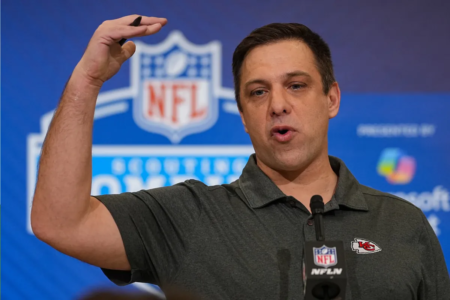
General manager John Spytek appears to see the equation differently.
Spytek has emphasized caution, structure and insulation, especially when it comes to young passers. He has pushed back against the idea of throwing a rookie into the lineup simply because draft status or public expectations demand it.
“You want to limit the amount of pressure on that guy from the start,” Spytek said, showing his preference for balance rather than hype. He stressed that a young quarterback should not feel obligated to score 35 points every Sunday just to compensate for deficiencies elsewhere on the roster.
Two visions, one quarterback decision
The divergence may not be dramatic, but it is meaningful. Kubiak‘s philosophy tests a quarterback immediately. Spytek‘s framework shields him early.
If Mendoza is part of the Raiders‘ future plans, that contrast matters. Under Kubiak‘s lens, a prospect would need to demonstrate resilience and playmaking ability from the outset. Under Spytek‘s approach, patience and infrastructure would take priority before exposing him to sustained pressure.
Reading between the lines, Spytek seems open to maintaining a capable veteran presence, someone who can stabilize the offense while a younger quarterback develops. That model slows the timeline. It reduces volatility.
Kubiak‘s comments suggest he may be more comfortable accelerating evaluation. If the “cream rises to the top,” then identifying it quickly becomes the objective.
Read the full article here