


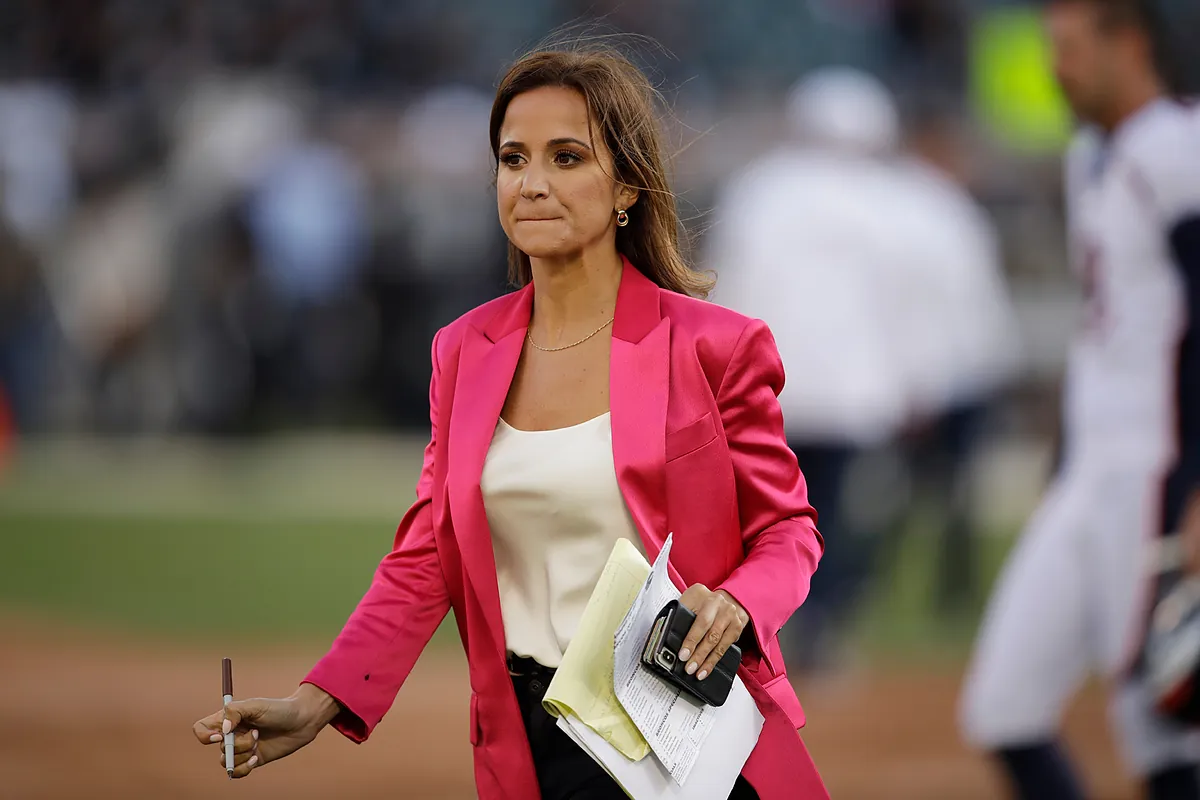
For Mike Vrabel and Dianna Russini, the release of widely discussed photos did not come without warning.
Both Vrabel and Russini were aware the images were set to become public, a detail that added another layer to a story that quickly drew attention across the NFL media landscape.
As fans tuned in to ESPN, the report began to circulate more widely, prompting immediate reaction not only to the images themselves but also to how and when the story was handled.
The situation soon shifted from a simple report into a broader conversation about media judgment and timing.
Criticism directed at ESPN coverage
Much of the backlash focused on ESPN, with critics questioning the decision to highlight the report during a high-visibility moment for football audiences.
The timing led some to argue that the network amplified the story unnecessarily, bringing added scrutiny to both Russini and Vrabel.
Debate quickly spread online, where viewers and media observers weighed in on whether the coverage crossed a line between reporting and sensationalism.
The discussion reflected ongoing tensions around how personal moments are handled when they involve high-profile figures in sports.
A story that quickly grew beyond its origins
As the report gained traction, attention expanded beyond the initial images to the broader implications of the coverage.
For Russini, a respected NFL insider, and Vrabel, a prominent head coach, the spotlight intensified rapidly.
While both figures remained at the center of the story, much of the conversation ultimately focused on media responsibility rather than the individuals themselves.
The episode highlighted how quickly narratives can evolve once they reach a national audience.
Even before the report reached viewers watching ESPN, those involved understood it was about to become public.
What followed underscored the powerful role timing and presentation play in shaping how stories are received
Read the full article here