


Tensions flared during the second round of the Ryder Cup when Rory McIlroy found himself under siege from unruly American fans.
What began as excessive heckling evolved into a situation severe enough that police were called in to support course security.
The decision to bring in law enforcement underscores the boundary that was crossed in fan behavior, and raises questions about how far sportsmanship should stretch in a passionate, high-stakes environment.
In previous Ryder Cups, rowdy crowds were mostly tolerated as part of the spectacle. But at Bethpage Black, the mood changed.
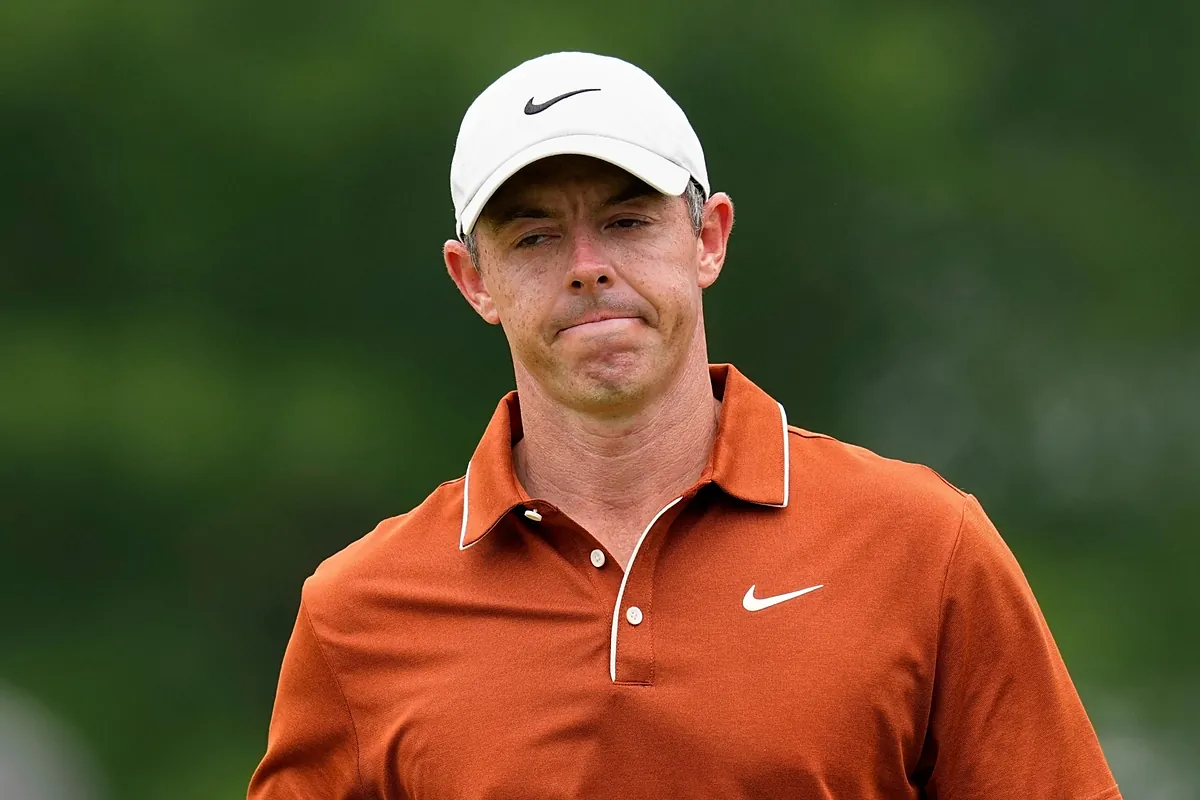
McIlroy endured repeated verbal attacks, many targeting his family, and ultimately snapped.
At one point, he muttered, “shut the fk up,” clearly frustrated as he walked away to collect himself. Meanwhile, his playing partner Shane Lowry also had a confrontation, pointing out a crowd member and demanding that officials eject him.
Notably, Justin Thomas also raised his voice in frustration, calling out to the crowd that their noise was interfering with play.
By midday, state police and extra security personnel had been deployed around McIlroy‘s group, as well as across other matches.
The PGA of America confirmed it had “added extra security and State Police to Match No. 1, as well as the other three matches in today’s afternoon fourballs” and heightened the frequency of spectator behavior reminders on video boards.
From “partisan support” to verbal assaults: when golf crowds cross the line
Golf has always encouraged fan interaction, cheering, polite applause, and awe. But what happened at Bethpage pushed the definition of interference. In modern golf, silence during play is a basic expectation.
Yet, fans in McIlroy‘s group repeatedly disrupted that norm. McIlroy reportedly refused to take another shot until the crowd calmed.
McIlroy has also confronted hecklers in past Ryder Cups. During the 2016 edition at Hazeltine, he pointed out a fan to security and demanded ejection after verbal abuse.
“Someone said a few derogatory things I thought were over the line,” he recalled then. But in 2025, the scale and aggressiveness of the insults, combined with profanity and personal attacks, made it impossible to merely ignore.
The decision to bring in law enforcement reflects the evolving threshold of acceptable spectator conduct in golf.
The circumstances also pose challenges for integrity and fairness. When a player’s concentration is disrupted repeatedly, the competitive balance is threatened.
McIlroy‘s oncourse reactions show how much impact the crowd had, and how little control he felt in the moment.
For his part, McIlroy later acknowledged the complexity of fan behavior. He said he “doesn’t mind” a bit of heckling, “that’s what an away Ryder Cup is”, but once the insults continue while he’s preparing to hit a shot, it crosses a line.
He’s not alone in that position, players in many sports empathize with the tightrope of balancing fan energy and personal focus.
Bethpage‘s events raise a new standard: when spectators’ words turn into a tactical weapon against players, formal security measures, even police intervention, may become necessary.
The 2025 Ryder Cup now stands not only as a fierce athletic contest, but also as a test of how sports manage the volatile intersection of fans, players, and pressure.
Read the full article here