


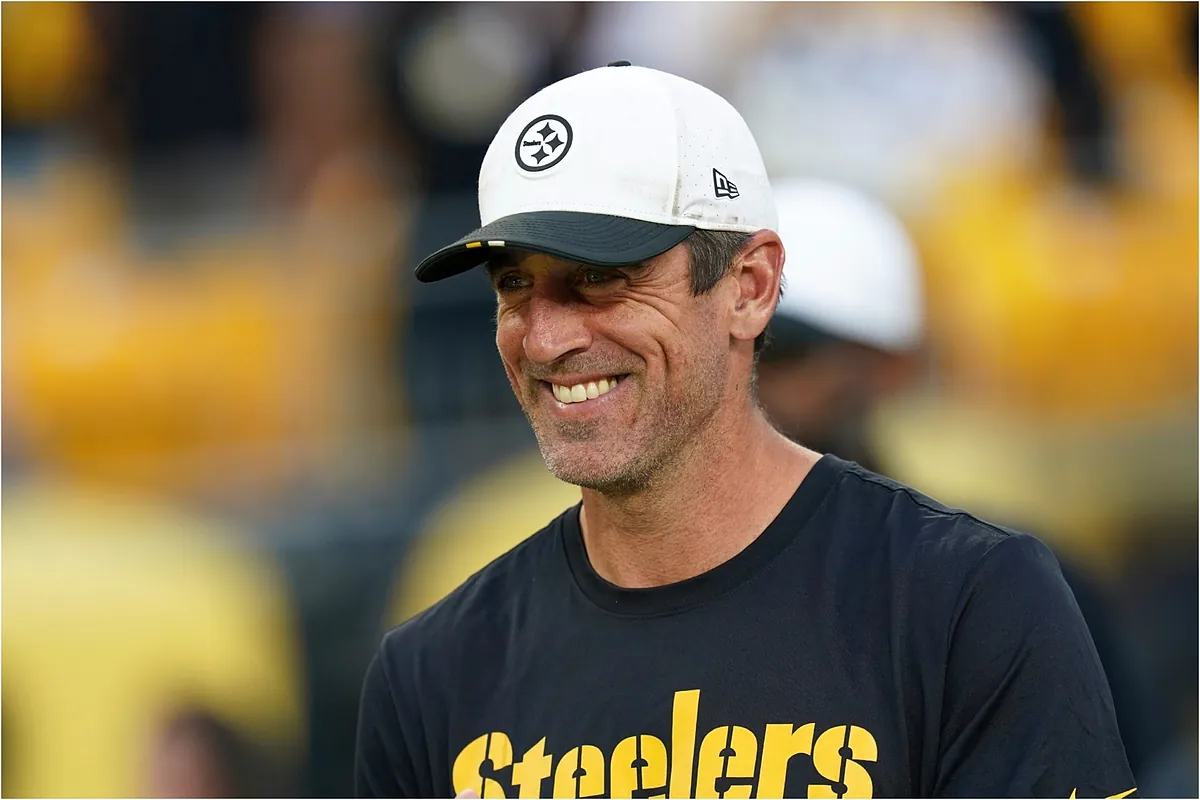
Even at the ripe age of 42 years old, Aaron Rodgers proved he could still operate at a high level in 2025. In his lone season with the Pittsburgh Steelers, the four-time MVP threw for 3,322 yards, 24 touchdowns and seven interceptions, guiding the franchise to its first AFC North title since 2020.
For much of the regular season, Rodgers delivered efficiency, ball security and veteran command.
It was precisely what Pittsburgh envisioned when it signed him to a one-year, $13.65 million contract that included a $10 million signing bonus. Yet the postseason told a different story.
In a 30-6 wild-card loss to the Houston Texans, Rodgers completed 17 of 33 passes for just 146 yards with one interception.
The offense stalled, protection broke down and the defeat sparked renewed debate about whether Rodgers remains a long-term “QB1” solution.
His contract has since expired at the end of the season, leaving him an unrestricted free agent without a public declaration of retirement.
Complicating the picture is the organizational shift in Pittsburgh. Former head coach Mike Tomlin stepped away from the Pittsburgh Steelers on January 13 following the playoff disappointment.
A week later, the franchise hired Mike McCarthy, Rodgers‘ former head coach with the Green Bay Packers. The reunion naturally fueled speculation about a second season in Pittsburgh.
At the 2026 NFL Scouting Combine, general manager Omar Khan confirmed communication remains open. “The door’s open to have Aaron back,” Khan said, signaling that the Steelers are not prepared to close the chapter.
According to ESPN’s Adam Schefter, a return to Pittsburgh is currently “more likely than not,” though retirement remains a secondary possibility.
NBC interest adds intrigue
That ambiguity has opened the door to an intriguing alternative: television.
A recent report from The Athletic, highlighted by Pittsburgh-based radio host Andrew Fillipponi, revealed that NBC is actively targeting Rodgers as a potential NFL studio analyst for 2026.
The network reportedly views him as a “wild card,” contingent upon whether he elects to continue playing. The same report noted interest in pairing Rodgers with Tomlin and Cam Heyward.
However, Tomlin‘s appetite for television work remains uncertain, and Heyward may not yet be finished on the field. The fluidity of those decisions adds complexity to NBC’s planning.
The broader media landscape also factors in. High-profile players such as Travis Kelce and Kirk Cousins could still choose to extend their playing careers, potentially thinning the pool of immediate broadcasting talent.
For Rodgers, the calculus is layered. On one hand, the opportunity to return to the Steelers under McCarthy offers familiarity and a chance to build upon a division-winning campaign.
Continuity in scheme and leadership could provide a smoother path than starting anew with a different franchise.
A new kind of legacy for Rodgers?
On the other hand, transitioning to a studio role would allow Rodgers to leverage his football IQ and personality without the physical toll of a 22nd NFL season.
Networks increasingly covet quarterbacks for their analytical depth and insider perspective, and Rodgers‘ résumé would command immediate credibility.
The decision timeline remains uncertain, though a resolution is unlikely before mid-March. Until then, Rodgers holds the cards.
He can pursue another championship run in Pittsburgh, explore free agency elsewhere, or pivot toward a second career in broadcasting.
For now, the door remains open on all fronts. Whether Rodgers takes another snap for the Steelers or steps behind a studio desk in 2026, his legacy in NFL is secure – and the next step won’t change that.
Read the full article here