

The New York Yankees entered the offseason facing a familiar demand from their fan base: go all-in to chase another World Series title. Instead, frustration is starting to boil over in the Bronx.
While the front office did secure its most important internal objective by re-signing star outfielder Cody Bellinger to a five-year, $162.5 million deal, the broader roster has remained largely unchanged.
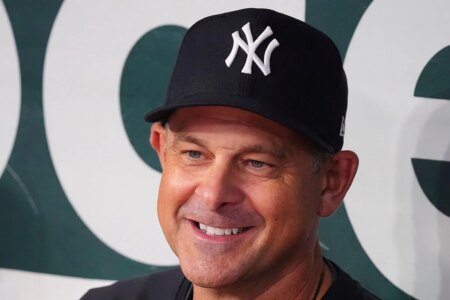
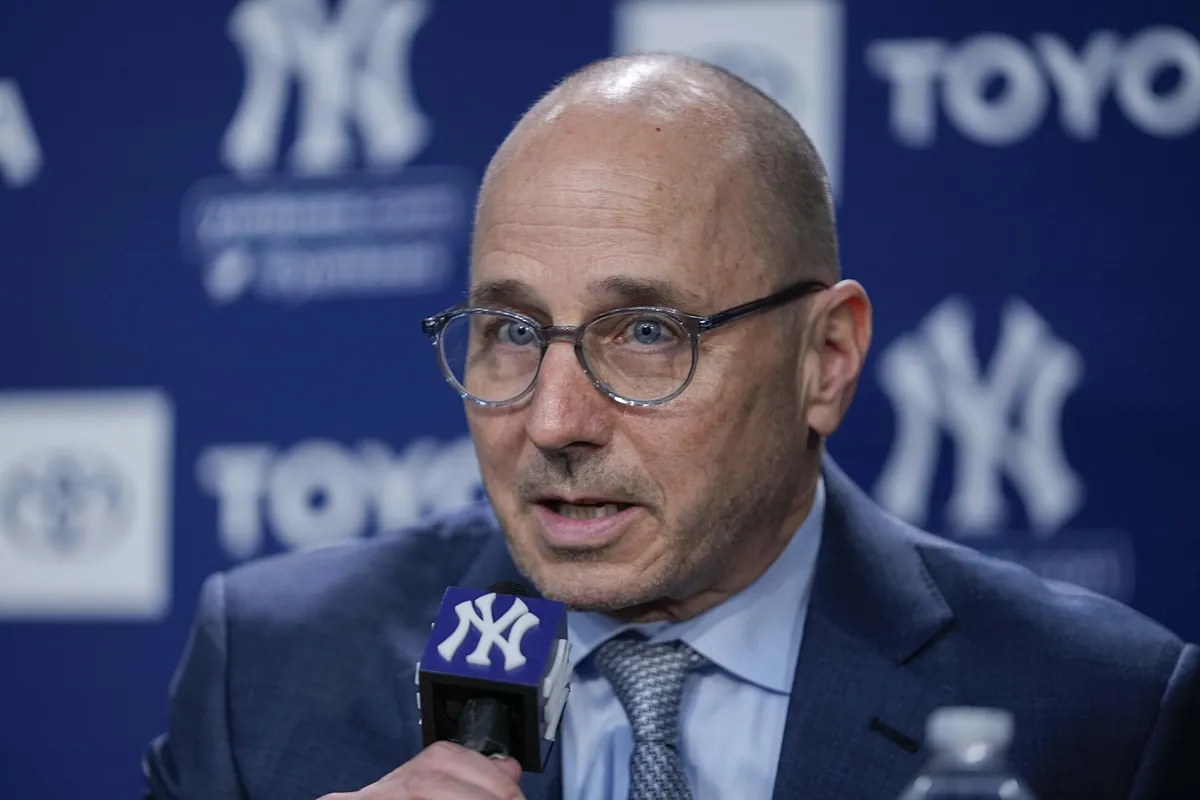
That reality has sparked growing frustration – and now a public disagreement between general manager Brian Cashman and the team’s longtime television voice, Michael Kay.
From a pure talent standpoint, retaining Bellinger was no small feat. His presence ensures the Yankees lineup remains among the most dangerous in baseball, anchoring an offense that can overwhelm opposing pitching when healthy.
Yet for many observers, that move alone fell short of the aggressive offseason push they expected from a franchise defined by championship-or-bust standards, particularly with 2026 looming as another prime opportunity.
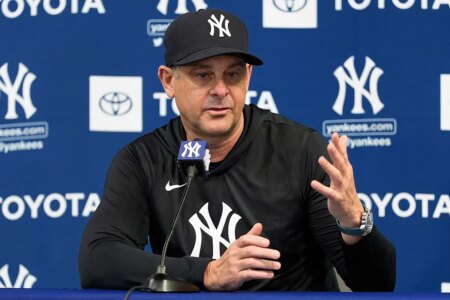
As criticism mounted, Cashman recently addressed concerns that the Yankees are essentially bringing back the same roster as last season.
He pushed back on that framing, emphasizing internal returns and incremental changes rather than splashy external additions.
“First, it’s a collection of really talented players,” Cashman said. “It’s not the same roster. I would differ there.
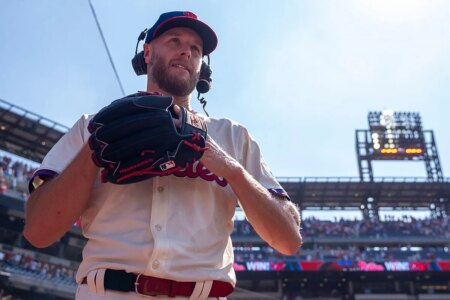
“We have some players at some point returning from the IL that are important players, Gerrit Cole being obviously one of them.
“But we’ve had some additions from the second half that got their feet wet with the Yankees, some with success, some with failures.”
Michael Kay calls out the messaging
Those comments did not sit well with Michael Kay, who has spent decades covering the Yankees and rarely shies away from blunt assessments.
Appearing on ESPN New York radio, Kay argued that the issue was not the roster itself, but how Cashman framed it.
“You are running it back,” Kay said. “So rather than fight the words, you are running it back.
“The answer should be, ‘We’re bringing back the same team because we think that team is great. We think that that team, under the right circumstances, would be able to beat anybody and get to the World Series.’ That’s the answer.”
In Kay‘s view, acknowledging the situation would not signal complacency. Instead, it would reflect confidence.
By trying to argue that the roster is meaningfully different, Cashman opened himself up to criticism that feels unnecessary, especially when most fans can plainly see that the core remains intact.
Confidence vs urgency in the Bronx
In his defense, Cashman‘s underlying belief that he thinks this group can contend for a championship has stayed the course.
With key players like Gerrit Cole returning from injury and younger contributors gaining experience, the front office clearly views internal improvement as a viable path forward. From that perspective, avoiding major external spending could be seen as restraint rather than reluctance.
Still, perception matters for a franchise like the Yankees, where every offseason is judged against the ultimate benchmark of championships. Fans want ambitious moves and when the roster looks familiar, words without much action won’t convince them.
The debate is less about whether the Yankees can win as constructed and more about whether the organization is comfortable owning that decision publicly. As the season approaches, results will ultimately determine who is right.
If this roster delivers a deep postseason run, the criticism will fade quickly. If it falls short again, however, the words exchanged this winter – and the choice to largely stand pat – will be revisited with far less generosity.
Read the full article here