




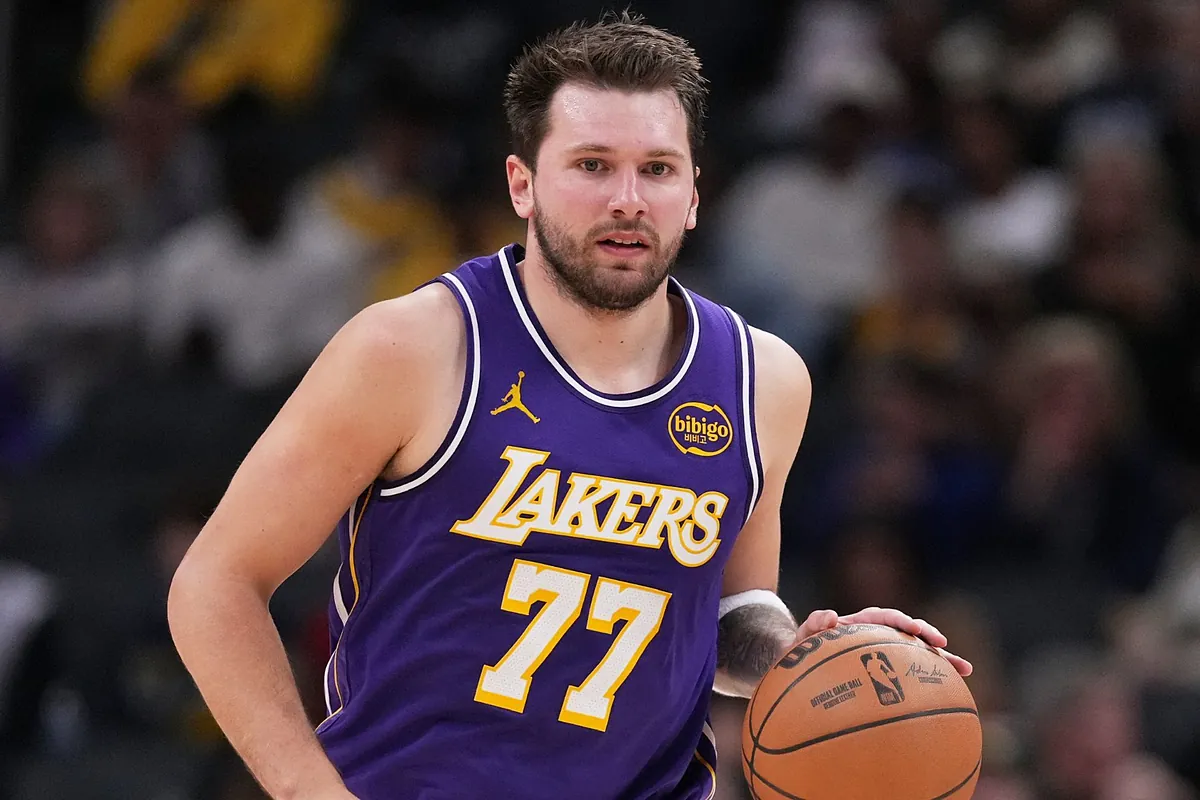
With Luka Doncic sidelined, the Los Angeles Lakers can only watch as their NBA season teeters on the brink. The All-NBA star has been diagnosed with a Grade 2 hamstring strain, carrying an estimated recovery timeline of four to six weeks.
However, Doncic has made an unexpected decision, underscoring his urgency to return to the NBA playoffs as quickly as possible. He has traveled to Spain to pursue an accelerated recovery plan.
Why did Doncic go to Spain?
The Slovenian superstar is seeking regenerative treatments that are not widely available in the United States-procedures that could ultimately determine whether he returns in time for the 2026 NBA playoffs or misses the entire postseason.
Under the NBA Collective Bargaining Agreement (CBA), players and teams have autonomy over medical treatments as long as no banned substances are involved. As a result, seeking care in Europe does not violate league rules.
Options reportedly include Platelet-Rich Plasma (PRP) therapy, stem cell treatments, and exosome therapy-regenerative techniques that sit in the gray area between innovation and regulation and are more restricted in the United States under FDA guidelines.
In countries such as Spain, Germany, and Switzerland, these procedures are often more flexible and, in some cases, produce faster recovery outcomes. Doncic is not the first NBA star to pursue treatment in Europe; Kobe Bryant notably traveled to Germany in 2011 for PRP therapy while dealing with knee issues.
According to Dr. Evan Jeffries, a certified physical therapist cited by the New York Post, these approaches typically combine stem cells, PRP, and other advanced regenerative methods. “Theoretically, it could cut his recovery time in half,” he explained.
The recovery protocol may also include high-power laser therapy, red light therapy, pulsed electromagnetic field (PEMF) therapy, hyperbaric oxygen therapy, and other advanced rehabilitation techniques.
All of this reflects Doncic’s urgency to return in time to help the Lakers championship push. It is an aggressive strategy, particularly for a fragile muscle group like the hamstring.
This is no minor setback: it marks the fifth hamstring-related injury of his career, and soft-tissue issues of this nature carry a significant risk of reinjury.
Read the full article here