



Craig Breslow, the Red Sox chief baseball officer, is having a lot of conversations about how his front office will pilot MLB’s Aug. 3 trade deadline. But it seems like those discussions are not reflecting their reality.
The Red Sox (27-37) are last in the American League East, 11 ½ games behind the first-place Tampa Bay Rays, and 4 ½ games out of a Wild Card spot with six teams in front of them. They’re not a serious threat to win the World Series. They have several trade chips whose value may never be higher. Yet they’re still masquerading as potential playoff contenders.
“It’s been true industry-wide,” Breslow said in New York over the weekend about how he would characterize trade talks. “There are a lot of teams that probably feel pretty similarly to us, which is to say that they have confidence in their rosters, they know they’re not playing as well as they’re capable of, and really nobody has put the postseason out of reach. So there are a bunch of teams that are in it right now that are thinking along the same lines as we are.”
Craig Breslow has some big decisions to make. (Photo by Barry Chin/The Boston Globe via Getty Images)
The Red Sox are fooling themselves if they believe buying instead of selling is the best move for their immediate and future success.
Their offense has hit the fewest home runs (49) in Major League Baseball. Boston’s .376 slugging percentage and 90 wRC+ are both ranked 26th in the majors. ESPN reported this week that the Red Sox are aggressively looking to add a right-handed bat, and that they’re even willing to take on money. (That’s puzzling, considering they had an opportunity to spend more money on an impact bat in the offseason, but more on that later.) The larger point is that their offensive problems won’t be solved by simply acquiring a power hitter at the deadline.
The Red Sox don’t walk much (7.8%, ranked 27th in MLB), they don’t slug (.131 ISO, 29th in MLB), they hit a ton of weak ground balls (44.1% GB rate, 5th in MLB), and they’ve scored the second-fewest runs in baseball (250) behind only the Padres. First baseman Willson Contreras is supplying all the power in the lineup, and the Red Sox could use an extra slugger, to be sure. But that’s not going to help them play better on the margins.
The lineup is poorly constructed. One way to overcome that is to change their approach at the plate, emphasize small-ball, steal bases, and execute sacrifice flies and bunts. But looking at the rest of the mediocre field, and understanding that 10 of 15 AL teams are playing sub-.500 baseball, is a trap. The danger of a weak playoff race is that the Red Sox are convincing themselves that they’re one hot streak away.
“We need to run our own race,” Breslow said when asked whether the weak state of the AL could drive the Red Sox to be buyers. “We need to make sure that we get our house in order. We need to play better. We need to win more games. At that point, we can figure out where we are relative to the league. But the first thing is we need to build on the progress that we’ve seen offensively over the last month. And then make sure that we’re pitching consistently well. We need to win games for any of this to happen.”
The reality is, the Red Sox actually have a handful of compelling players they could be shopping in the weeks leading up to the deadline.
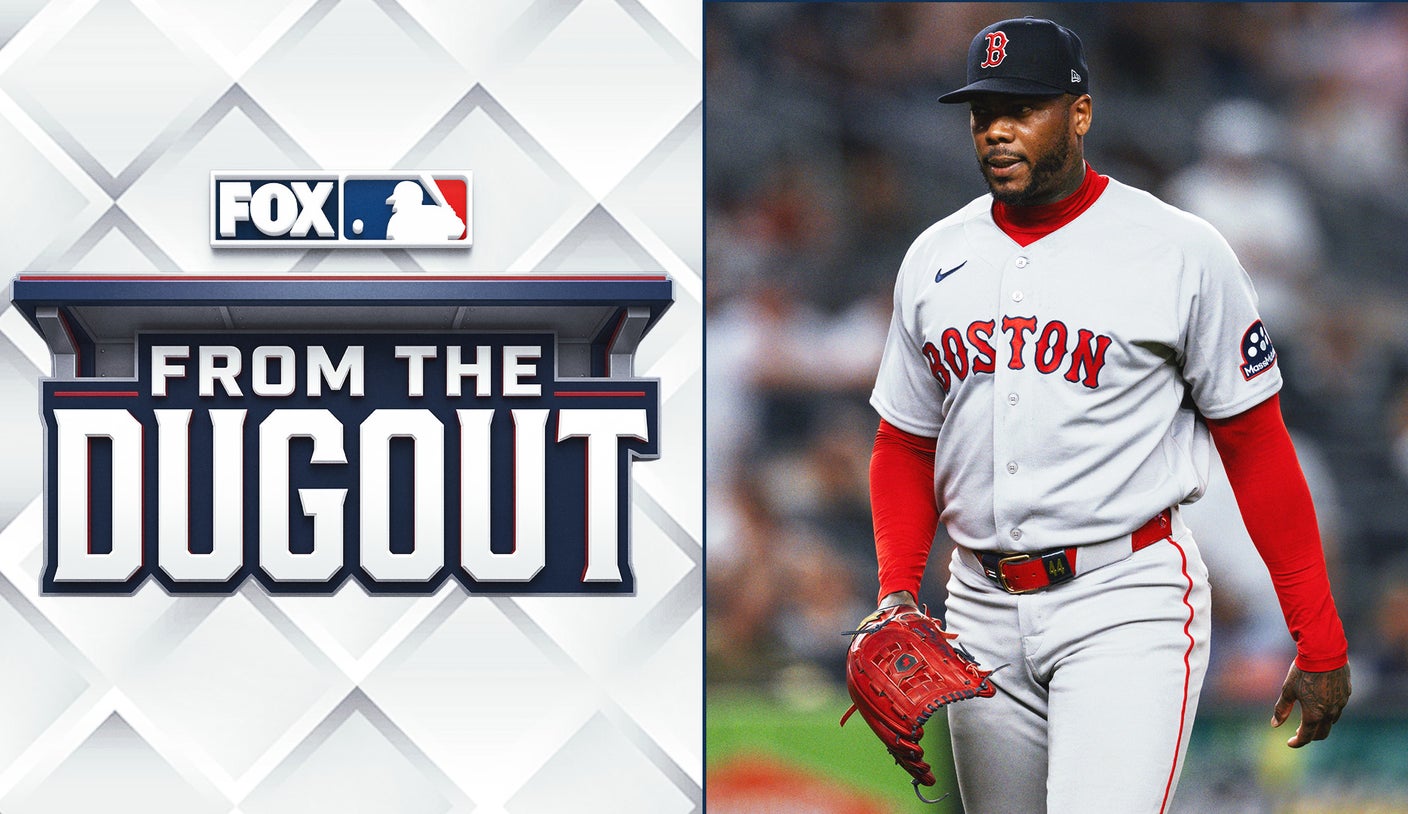
Aroldis Chapman could be in store for some new scenery. (Photo by Kevin C. Cox/Getty Images)
Closer Aroldis Chapman is, by far, Boston’s most attractive trade chip. At 38 years old, Chapman has a 0.46 ERA and 33.8% strikeout rate across 20 games (13 saves) and 19 ⅔ innings. Several teams are desperate for an elite closer with proven postseason experience, who’s also a rental on a one-year deal. Chapman could net the Red Sox a top-100 prospect or multiple upper-minors prospects. It’s a no-brainer to deal him.
Veteran right-hander Sonny Gray is another logical candidate to dangle in front of contenders. He’s 7-1 with a 3.20 ERA in 11 starts and 56 ⅓ innings pitched. His fastball has looked elite this season, and he’s improved on his hard-hit rate, with 37% being his lowest since 2021. Contenders always want starters at the deadline, and Gray’s postseason experience and reliable innings make him an attractive asset. The Red Sox could get a near-MLB ready arm or mid-tier prospects for Gray.
Sonny Gray could help a contender looking for a postseason push. (Photo by Michael Urakami/MLB Photos via Getty Images)
Boston should also be entertaining blockbuster deals for outfielder Jarren Duran, who has started to heat up at the plate. After hitting .170 with a .481 OPS and one home run in 26 games in April, Duran hit .261 with a .879 OPS and nine home runs in 27 games in May. Rival executives might be weary of his attitude in the clubhouse after being involved in controversial off-field altercations and emotional reactions. But he’s still a fascinating player for his speed, defense and left-handed bat, with two more years of team control. Boston would likely need an overwhelming offer to move him.
Right-handed reliever Garrett Whitlock and designated hitter Masataka Yoshida could also join those three players on the trade block. With so many valuable candidates, the Red Sox should be using the deadline to shore up prospects and MLB-ready players. They can accelerate their 2027 window, rather than chasing an 84-win season that might be good enough to sneak into the playoffs, because that’s how weak the AL is. But the team doesn’t show much promise beyond an early October exit.
That being said, Red Sox fans are right to doubt whether Breslow can engineer the best returns for the attractive pieces he has, and how he’ll handle those hauls.
Jarren Duran is another potential trade candidate. (Photo by Brian Fluharty/Getty Images)
We’re approaching the one-year anniversary of Breslow’s infamous Rafael Devers trade, and it sure looks like the San Francisco Giants won the deal. Of course, the Giants gave up a lot of players and are paying Devers over $31 million per year. And even though Devers has not yet panned out the way the Giants had hoped, he posted a .949 OPS in May, he still owns a .847 career OPS, and they have plenty of time to figure it out together.
The Red Sox, meanwhile, botched the Devers trade the minute they let third baseman Alex Bregman sign with the Cubs over this past offseason. Devers entered 2025 having played seven seasons at third base in Boston. But the Red Sox had just signed Bregman to play third base, and Breslow and company were not up front with Devers about switching positions. So they traded him to San Francisco. Entering 2026, Bregman wanted to stay in Boston. But the Red Sox were unwilling to sign him due to disagreements over Bregman’s requests: a long-term contract with a no-trade clause and less deferred money.
Then, the Red Sox traded away most of Devers’ return package, which consisted of four players. Since they were counting on Bregman to be their long-term solution at third base when they made the decision to trade Devers, and then Bregman signed with the Cubs, they were caught with their tail between their legs entering 2026 without a third baseman. So in February, they traded away one of the best return pieces from the Devers’ haul — left-hander Kyle Harrison — to Milwaukee for Caleb Durbin, Andruw Monasterio, and Anthony Seigler.
Durbin, who was brought in as their primary third baseman, has an OPS+ of 55. Monasterio is also playing at replacement level, with a 0.2 WAR in 35 games. Meanwhile, Harrison has turned into an elite pitcher for the Brewers. His 2.72 ERA is ranked 12th-best among NL starters who have pitched at least 50 innings this year.
So Breslow’s track record to this point should be enough for Red Sox CEO Sam Kennedy to appoint a different front-office leader ahead of another important trade deadline. But according to a recent report from the Boston Globe, the Red Sox are not considering firing Breslow. In his third season, Breslow will continue to be the man in charge amid the team’s chaotic and disappointing year.
The organization has regressed since qualifying for the postseason last year. On April 25, the Red Sox fired manager Alex Cora and six of his coaches. They were 10-17 at the time, and are 17-20 since interim manager Chad Tracy took over. The Red Sox have roughly seven weeks to find consistency in the win column, but it shouldn’t take that long to reach a decision.
Sell.
Read the full article here