


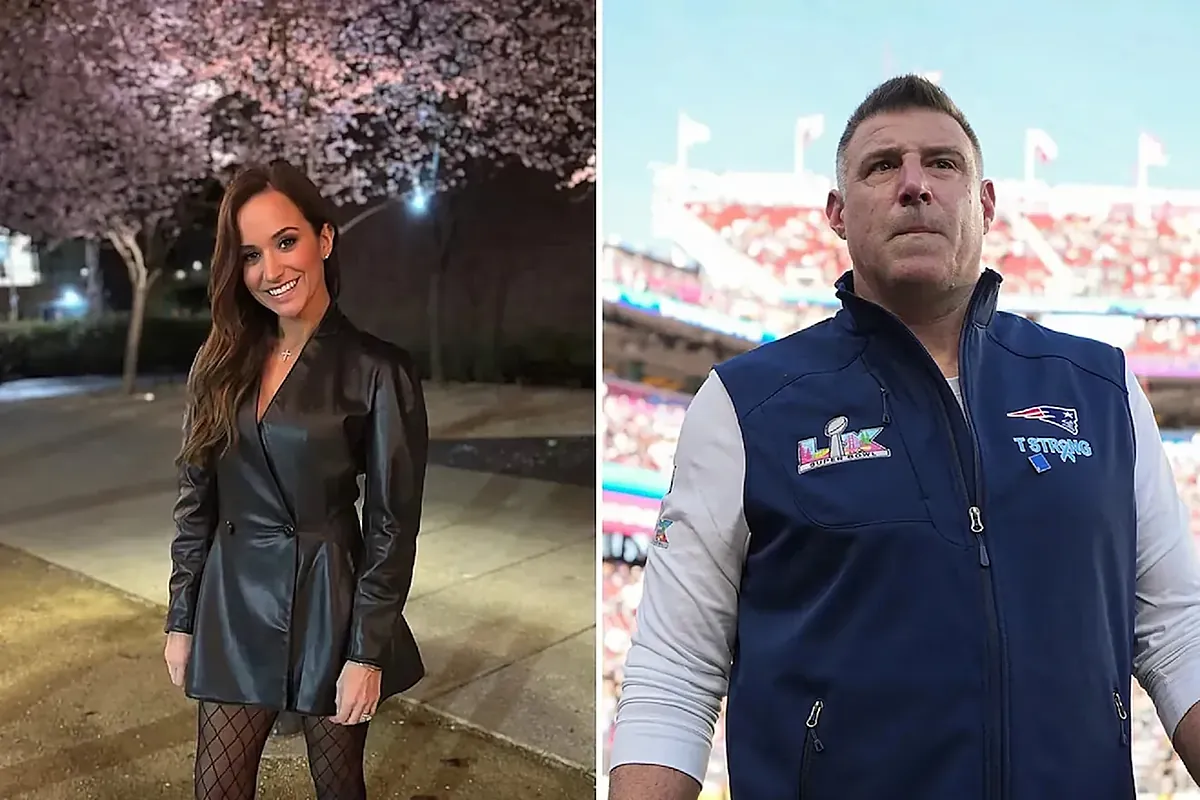
Stephen A. Smith has stepped into one of the NFL media’s most polarizing controversies, offering a measured but firm defense of both Dianna Russini and Mike Vrabel following scrutiny over their reported interaction at an Arizona resort.
The situation has sparked debate across sports media circles, with questions centered on professionalism, optics, and the blurred lines between reporters and league insiders.
While many voices have rushed to judgment, Stephen A. Smith has taken a more deliberate approach, at least initially, by publicly backing his former colleague.
“I give her the benefit of the doubt. She worked at ESPN for 10 years as my colleague. She’s a wonderful person, she’s a damn good reporter, I respect the hell out of her, and I’m gonna give her the benefit of the doubt,” Smith said on SiriusXM radio.
That endorsement carries weight. Dianna Russini built a strong reputation during her time at ESPN and later as an NFL insider, making Smith’s defense less about speculation and more about firsthand experience. Still, his support isn’t without nuance.
“If she says this stuff isn’t true, I’m gonna believe her until further evidence to the contrary is provided,” Smith added, emphasizing that his stance could shift if new information emerges.
Balancing trust, optics, and accountability
While Stephen A. Smith backed Dianna Russini‘s version of events, he also acknowledged the complexities surrounding the situation, particularly the perception it creates within the industry.
“Having said that, it still didn’t stop me from saying that when you know that you are a reporter and this is a head coach of an NFL team and you cover the NFL, you can’t put yourself in that position.”
That distinction highlights the core issue. The controversy isn’t just about what happened, but how it looks.
In an era where access and relationships are critical to reporting, maintaining professional distance remains essential, especially when covering high-profile figures like Mike Vrabel, the head coach of the New England Patriots.
Smith also pushed back against a narrative that has gained traction in some circles, that gender bias is driving the fallout.
“I don’t think misogyny applies in this particular case,” Smith said. “The fact of the matter is, he’s the head coach of an NFL team. She’s a reporter. The onus is on her to make sure her objectivity is not skewed in any way.”
That perspective cuts against arguments from media personalities who have suggested Dianna Russini is being treated unfairly compared to Mike Vrabel.
Instead, Smith framed the issue as one of professional responsibility tied to role rather than gender.
Still, the situation remains murky. Reports indicate that Dianna Russini had opportunities to provide additional context or evidence supporting her claim that the interaction was strictly professional but chose not to do so.
That decision has fueled skepticism among peers and industry insiders.
Meanwhile, Mike Vrabel has largely avoided direct fallout, reinforcing the uneven consequences often seen in situations involving media members versus team personnel.
For Stephen A. Smith, the takeaway is clear: belief in a colleague doesn’t eliminate accountability.
His stance walks a fine line, defending Dianna Russini‘s character while acknowledging the professional missteps that allowed the controversy to escalate.
In a media landscape driven by perception as much as fact, that balance may ultimately define how this story is remembered.
Read the full article here