



There’s a shift in the conversation around Lamar Jackson and his place with the Baltimore Ravens after the franchise’s hopes of securing a long-term deal faded with the passing of a self-imposed deadline this spring.
What had been viewed as a manageable negotiation now shapes up as a potentially defining moment in the future of one of the league’s most dynamic signalcallers.
The Ravens announced they could not finalize a comprehensive contract extension with the two-time MVP before the legal tampering window opened earlier this month, leaving Jackson‘s earnings and commitment in limbo.
The club instead opted to restructure his current pact to ease cap pressure in the short term, a move that helped free roughly $40 million against the 2026 salary cap but shifted significant financial burden into future years.
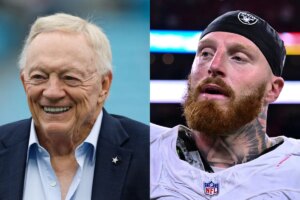
“We want another window, and Lamar knows that,” Ravens owner Steve Bisciotti said, emphasizing both sides’ desire to eventually reach a long-term deal that reflects Jackson‘s value.
“I think he is amenable to doing something that mirrors the last deal that he did, although the annual number will be a little higher.”
Despite that tone of cooperation, the failure to reach an agreement by the target date has sparked discussion throughout the league about where Jackson‘s career could ultimately unfold.
Unlike many stars with high leverage, he carries a no-tag clause in his contract that would allow him to reach unrestricted free agency in 2028 if no new agreement is reached, a rare and potent bargaining chip that could give Jackson options outside of Baltimore down the line.
What Jackson‘s future means for the Ravens and the NFL landscape
From the Ravens‘ perspective, the restructuring was a necessary form of roster management after losing key contributors like center Tyler Linderbaum and tight end Isaiah Likely in free agency while still pursuing defensive upgrades.
General manager Eric DeCosta framed the tweak as a compromise that still keeps extension talks alive. “We’re certainly hopeful that we’ll get an extension done,” he said, “I think it’s important to both parties. But we remain to see what’s going to take place in the future.”
For Jackson, the strategic shift buys time but doesn’t resolve the underlying impasse. His current deal, signed in 2023 and worth a projected $260 million, made him one of the league’s highest-paid players at the time, but the landscape for quarterback compensation has continued to evolve rapidly.
With rising salaries at the position and teams prioritizing both immediate cap flexibility and long-term commitments, Jackson‘s market value and leverage are in flux.
Offseason roster news adds layers to the situation as well. Baltimore recently signed veteran edge rusher Trey Hendrickson to a lucrative contract after a high-profile trade for Maxx Crosby fell through, actions the club hopes will bolster a defense that struggled at times last season.
Meanwhile, quarterback depth moved into focus when veteran Cooper Rush was released and backup Tyler Huntley resigned on a two-year deal. These moves signal that the franchise is building around Jackson in 2026, but also hedging its bets in key supporting roles.
Read the full article here