



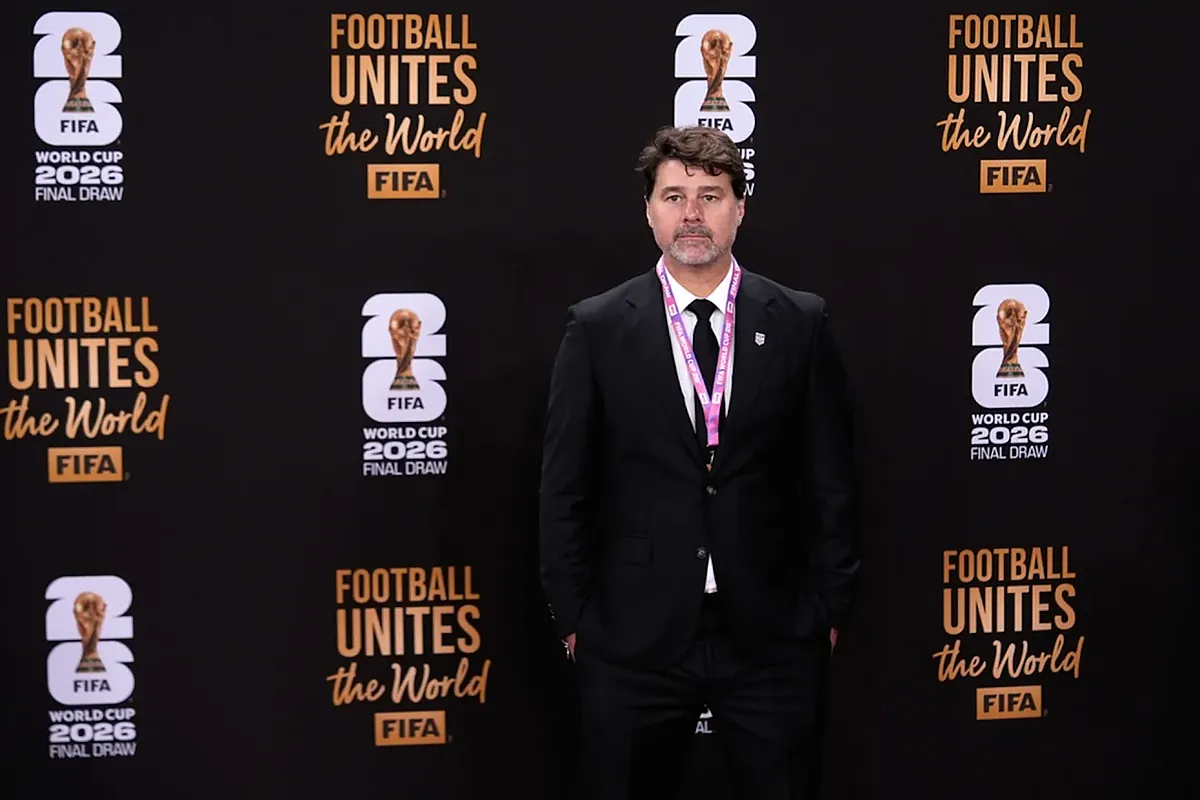
Mauricio Pochettino has made it clear that he is not shying away from the pressure that comes with leading the United States into the 2026 World Cup, especially after a direct question from Donald Trump.
In a recent interview with High Performance, the Argentine manager revealed that the U.S. President personally asked him whether the national team could realistically win the tournament, which will be hosted primarily in the United States. Pochettino did not hesitate in his response.
“He asked me, ‘What do you think, coach? Can you win the World Cup?’ And I said, of course, Mr. President … It’s the USA. When we accept the challenge to be there, it’s because we truly believe we can win.”
The message was as much about belief as it was about ambition. For Pochettino, who built his reputation managing elite European clubs and developing young talent, taking charge of the U.S. men’s national team represents a long-term project, one that now carries enormous national expectations.
Hosting the 2026 FIFA World Cup alongside Canada and Mexico places the spotlight firmly on the Americans.
Historically, the United States has not been considered a global powerhouse in men’s soccer.
Their best modern performance came in 2002 with a run to the quarterfinals. However, with a young core of players competing in top European leagues and a rapidly growing domestic fan base, optimism is rising.
“After a year and a half of working together, people are starting to feel that we can do it. We’re going to have the support of a massive country, massive fans behind us, pushing us to run, to perform, to score goals, to make tackles.”
Turning pressure into motivation on home soil
For Pochettino, the key challenge will be channeling the intensity of a home World Cup into productive energy rather than anxiety.
“The expectations are huge, but we need to transform that pressure into energy,” he concluded.
Playing in front of packed stadiums across the country will undoubtedly fuel excitement, but it also increases scrutiny.
The U.S. is set to host several high-profile friendlies in preparation for the tournament. The campaign begins March 28 against Belgium at Mercedes-Benz Stadium in Atlanta. Just days later, Team USA faces Portugal at the same venue on March 31.
Preparations continue with a May 31 match against Senegal at Bank of America Stadium in Charlotte, followed by a June 6 showdown with Germany at Soldier Field in Chicago.
These fixtures will provide crucial tests against established international contenders and help solidify tactical cohesion.
When the World Cup begins, the United States will enter the group stage alongside Paraguay, Australia and one yet-to-be-determined nation.
Advancing deep into the knockout rounds would mark a significant milestone for American soccer and validate the federation’s decision to appoint Pochettino.
The broader context also matters. Soccer’s popularity in the U.S. has surged in recent years, fueled by Major League Soccer’s expansion, youth development programs and global stars raising the sport’s profile domestically.
A strong World Cup showing could accelerate that growth further.
For now, Pochettino is embracing the challenge, and the expectations that come with it.
His message to Trump and the country is simple: belief is non-negotiable. Whether that belief translates into lifting the trophy in 2026 remains to be seen, but the ambition has been firmly declared.
Read the full article here