



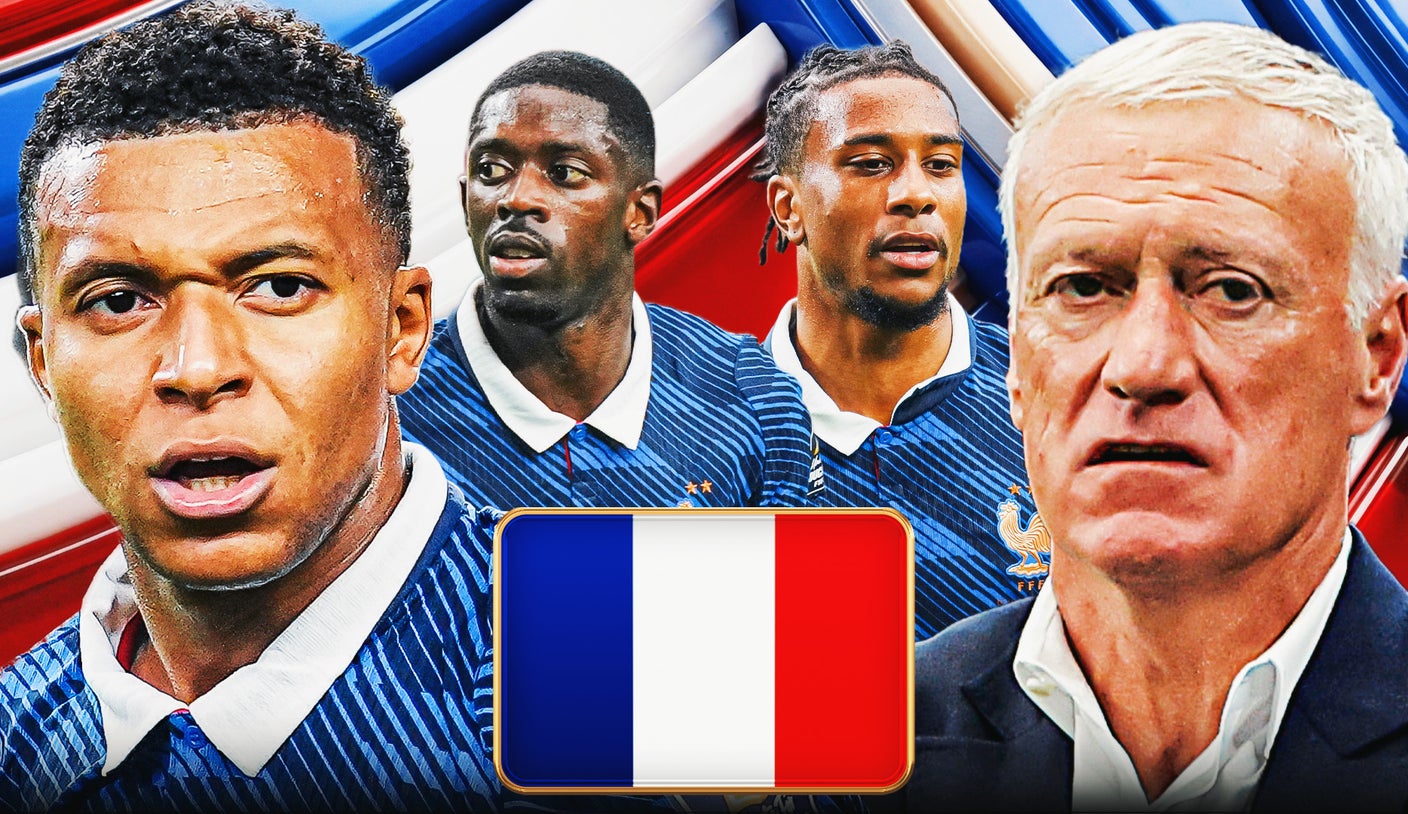
By now you’ve probably seen the clip on repeat. The moment Kylian Mbappé realized his World Cup dream was slipping away.
It was the 58th minute when Pedro Porro drove a right-footed shot into the back of the net, giving Spain the second goal in what became a 2-0 semifinal victory over France on Tuesday. Standing nearby, Mbappé watched the sequence unfold. As the ball crossed the line, he flung his left arm into the air, wiped his face with his jersey, then walked back toward midfield.
One of soccer’s biggest stars and a player capable of changing a game on his own was unable to do so this time. Not against a perfectly organized and disciplined Spanish side that frustrated France at every turn and made the tournament favorite look ordinary.
Afterward, Mbappé accepted responsibility.
“You take all the glory when you win and when you don’t win, you have to take the s***,” Mbappé said in all honesty. “It’s part of the game, it’s part of my game, it’s part of my life. And as the captain, I have to take all the responsibility. I have no problem with that. We wanted to go to the final. We didn’t go.”
(Photo by Hannah Peters – FIFA/FIFA via Getty Images)
What does this result — and France now preparing for the third-place match against England instead of the final against Argentina — start to say about Mbappé’s legacy? That’s a word often thrown around during major tournaments, used as a measuring stick for the world’s greatest players, fairly or not.
Entering this summer, France was expected to make a third consecutive run to the final. Les Bleus lifted the trophy in Russia in 2018, Mbappé’s World Cup debut. At 19 years old, he scored four goals, including one in the 4-2 victory over Croatia in the final. That made him only the second teenager in history to score in a World Cup final, following Pele in 1958.
Then four years ago, Mbappé raised the bar by scoring eight goals in Qatar, including the historic hat trick that forced Argentina into a penalty shootout in what will likely be remembered as one of the best World Cup finals ever played. Mbappé, then 23, won the Golden Boot — though he accepted the award with a blank expression, devastated that his squad couldn’t pull off the comeback.
This year’s tournament was supposed to be the next step in Mbappé’s rise. And things started out that way. The 27-year-old scored eight goals, tying Lionel Messi atop the Golden Boot race. But in Tuesday’s semifinal, he managed just three shots and none on target. He let his frustration boil over when he was shown a yellow card in the 86th minute after he collided with Spanish goalkeeper Unai Simon. Moments later, his free kick from outside the box soared over the crossbar.
We’ve seen Mbappé single-handedly rescue France. But Spain was superior.
“It’s a team that loves to have control of the game, to have control of the ball, and that’s what we let them do,” Mbappé, dejected, said after the match. “It’s difficult when you don’t change the play of Spain.”
Mbappé is sitting on 20 goals across three World Cups, only behind Messi’s leading 21. He will undoubtedly shatter that record by playing in two or three more World Cups.
Even so, in the immediate aftermath of this defeat, the conversation around him has changed. He looked like the clear successor to Messi — and to be clear, he still can be. The two found themselves on opposite ends of the 2022 final where they traded spellbinding moments in a performance that simultaneously felt like the continuation of a rivalry and the passing of the torch.
(Photo by Kirill KUDRYAVTSEV / AFP via Getty Images)
At club level, he has yet to win a Champions League title and this past season at Real Madrid was disrupted by injuries and off-field drama. His former club, Paris Saint-Germain, has captured consecutive Champions League crowns while rivals Barcelona won a second straight La Liga title after beating Real Madrid in an El Clásico showdown that Mbappé missed.
Still, he arrived at this World Cup looking as dangerous as ever. But with Spain and Argentina advancing, this year’s final offers another version of the changing of the guard with Lamine Yamal against Messi. Yamal, who turned 19 on Monday, will play in his first World Cup final at the same age Mbappé was when he reached his first. He has scored one goal so far this tournament and would have recorded another against France if not for an offside call. He’s yet to have his big moment, though there’s a feeling that it’s coming.
This could have been Mbappé’s time to lead France to a second World Cup title in three cycles and avenge heartbreak from four years ago. He’ll be 31 years old at the next one, though if we’ve learned anything from this summer it’s that age doesn’t necessarily matter. Either way, there will be a long wait for that next opportunity.
Read the full article here