


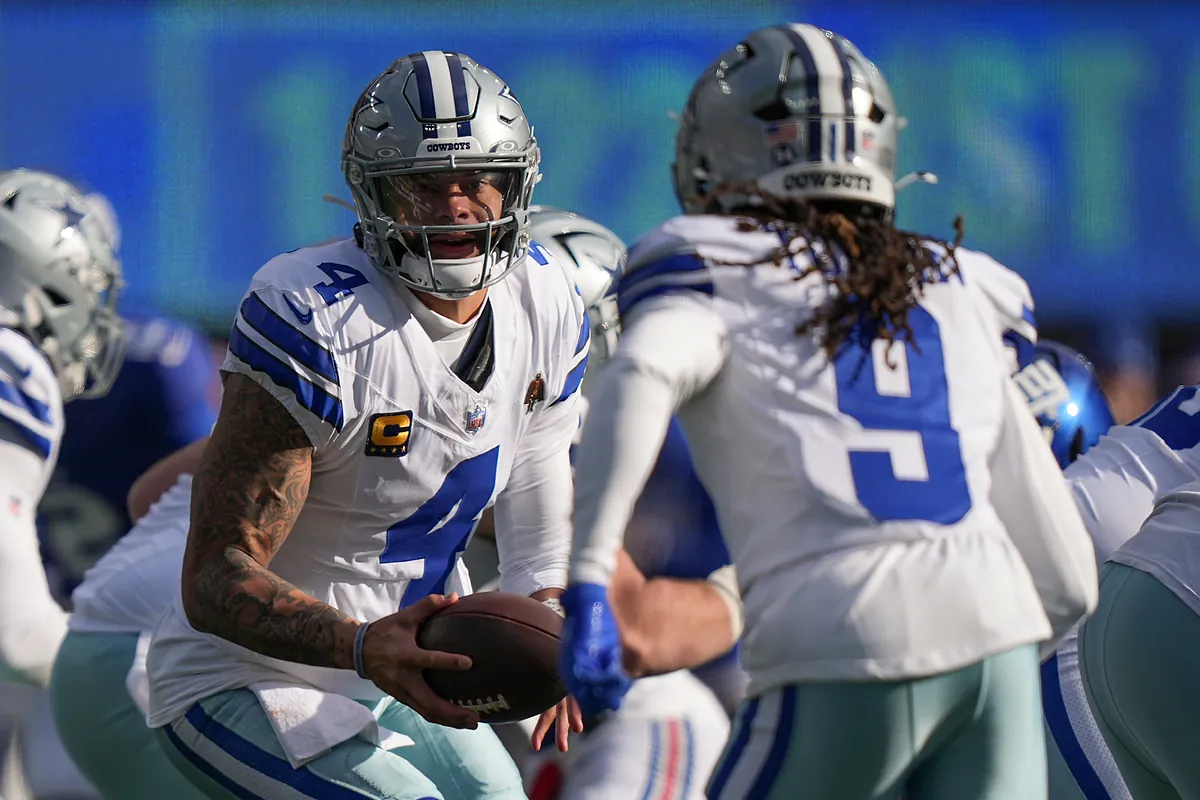
When Jerry Jones and the Dallas Cowboys front office decided to let Rico Dowdle walk after a 1,000-yard season, fans were quite mixed on the decision. While Dowdle had been only a role player until 2024, it seemed like the running back’s best ball was ahead of him.
Dowdle ended up signing with the Carolina Panthers on a team-friendly deal, then put together another 1,000-yard season. But the Cowboys didn’t bat an eye, because they had Javonte Williams on their team. Brought in on an extremely cheap deal for a player of Williams’ talent, the 25-year-old had a breakout season for the Cowboys in 2025, asserting himself as the team’s bellcow with a 1,200-yard season.
Dallas Cowboys lock up Javonte Williams, have plenty of running back depth heading into 2026 season
Williams was set to be a unrestricted free agent this offseason, but Jones worked quickly to secure his running back of the future this time around. On Saturday, it was announced that Williams and the Cowboys agreed on a three-year, $24 million deal to keep him in Dallas.
With Williams under contract for the next three seasons, the front office can go into free agency and the NFL Draft knowing that the running back position has been dealt with. Especially because behind Williams are a pair of talented, young running backs ready to contribute whenever the coaching staff deems them ready.
Jaydon Blue was actually expected by many to end up as the team’s starter at running back in his rookie season, but some off-field reservations by the coaching staff limited him to a minor role. He should get much more playing time in his second season, if he handles his football business as he should.
Then there’s Phil Mafah, a bigger power back who impressed in the preseason before an injury saw him end up on Injured Reserve for nearly the entire season. Mafah, like Blue, should see a much larger role in 2026.
Even Malik Davis, who has been with the team for several years, made impressive contributions for the offense last season. But if Williams keeps playing like he did in 2025, none of them may even be needed.
Read the full article here