


College football has a commissioner, and his name is Local Judge.
The system we’ve seen built around college football in the 21st century won’t break because of the money, but because we allowed a player to gamble on the sport without the penalty of banishment. This system won’t break because one judge in the next county over made one ruling, but because college football’s most powerful individuals will not come to an agreement that protects and betters the sport they claim to love.
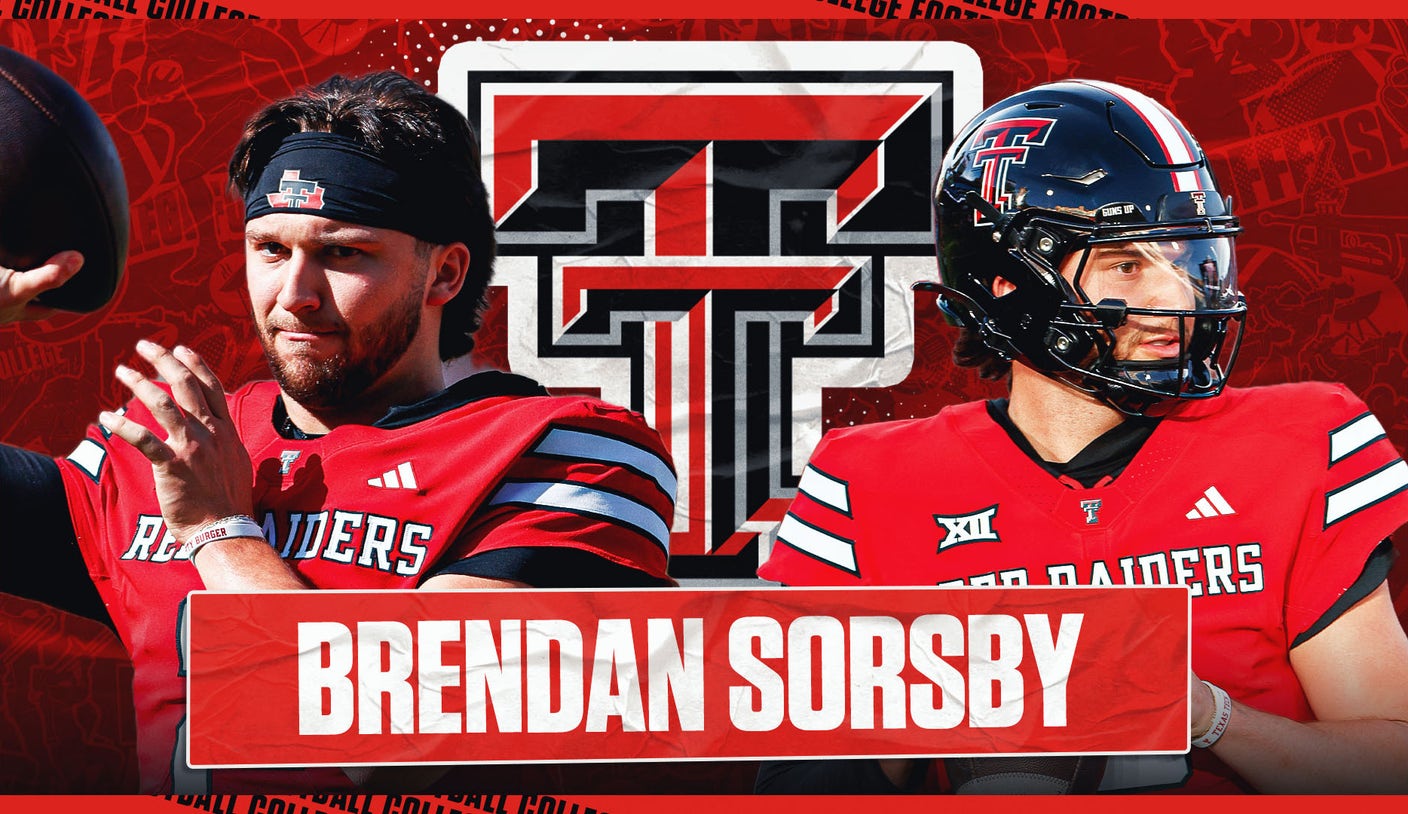
Texas Tech quarterback Brendan Sorsby was granted a temporary injunction on Monday, allowing him to play for the Red Raiders this fall, despite being declared ineligible by the NCAA for betting on college sports, including bets made on his own team while at Indiana.
So, this begs the question: where do we go now if we can’t protect the integrity of competition?
That is the question facing many administrators, coaches and fans after the ruling came in from Judge Ken Curry, who is from Fort Worth, Texas, and was brought to Lubbock County for this case. The temporary restraining order prevents the NCAA from being able to block Sorsby’s eligibility for what will be his final collegiate season.
Texas Tech QB Brendan Sorsby was granted a temporary injunction, which clears the way for him to play for the Red Raiders this fall. (Photo by Bryan Byerly/ISI Photos/ISI Photos via Getty Images)
Sorsby acknowledged placing thousands of bets over the past four years during his time at Indiana, Cincinnati and now Texas Tech, which have totaled upwards of $90,000, a clear violation of NCAA rules.
Curry also unilaterally suspended Sorsby for the first two games of Texas Tech’s 2026 season against “Ain’t Played Nobody Conference” members Abilene Christian and Oregon State.
This last stipulation in Curry’s ruling brings back around a case Sorsby’s attorney, Jeffrey Kessler, cited as evidence of the NCAA’s inconsistency in enforcing its gambling bylaws: Former Indiana volleyball assistant coach Brett Agne was found to have made more than 700 bets of more than $327,000 in five months — including 27 on IU football and men’s basketball.
Agne received a two-year show cause order and a 10-game suspension but, importantly, no outright ban from coaching NCAA sports. Agne no longer coaches at Indiana and was recently coaching professional volleyball for the Indy Ignite, a women’s professional indoor volleyball team that competes in Major League Volleyball (MLV).
The NCAA believed Sorsby’s actions warranted permanent ineligibility from playing college football, and according to some athletic directors and coaches, there simply shouldn’t be any exception to that rule.
“We’re too f—ing greedy right now,” a Big 12 assistant coach told me. “We’re out for ourselves. Yeah, it goes without saying we want their kid [Sorsby] to be OK, but what about the whole doggone sport? No one wants the rules to apply to them, and they want the screws turned to everybody else.”
TCU AD Mike Buddie and Kansas State AD Gene Taylor have suggested that Big 12 teams might elect not to play Texas Tech this season. (Photo by Ian Johnson/Icon Sportswire via Getty Images)
Georgia athletic director Josh Brooks and Nebraska athletic director Troy Dannen have each publicly said they will not schedule the Red Raiders in non-conference matchups. Big Ten athletic directors are expected to meet to discuss a league-wide mandate that effectively boycotts scheduling Texas Tech in their non-conference affairs. Kansas State athletic director Gene Taylor is also saying the quiet part out loud.
“We’ve had some serious conversation about it,” Taylor told Yahoo Sports. “There is still a lot to be discussed. We aren’t scheduled to play them this year, but it’s something we have to look at from a college football perspective. This is greater than the Big 12.”
It’s greater than college football, too.
American sport is built on the belief that competition is fair. It’s the reason that eight members of the 1919 Black Sox team received the harshest treatment imaginable for fixing games. It’s the reason Pete Rose’s bust will never see the inside of the Baseball Hall of Fame after betting on the sport.
The integrity of the sport matters more than any institution, team or player. We must believe the game is, without question, being played to win, not to cover a spread or feast on long odds for the sake of money made.
On Monday, a Texas judge unknown to most college football fans issued a ruling that could prove more consequential than any controversy the sport has faced this offseason. As a local judge, though, he got to play college football commissioner for a day.
What’s worse is that another judge in another county will eventually make the next decision, because leaders still cannot agree on how to govern the sport and stop the evil that is greed from continuing to pillage our otherwise thriving village that is college football.
Curry is hardly the first instance of this. In the past four months alone, judges in Tennessee, Mississippi and Oklahoma have been asked to rule on college football eligibility cases.
Former Tennessee quarterback Joey Aguilar sued for an extra year of eligibility, arguing his junior college seasons should not count toward his NCAA clock. A chancellor in Tennessee disagreed. Had he won his case, he was likely to make seven figures in NIL and revenue-sharing at Tennessee.
A Mississippi judge reached the opposite conclusion with Ole Miss QB Trinidad Chambliss, granting the soon-to-be 24-year-old another year of eligibility.
Then in April, Oklahoma linebacker Owen Heinecke secured an injunction allowing him to play the 2026 season despite already participating in the NFL Scouting Combine.
Texas Tech QB Brendan Sorsby placed thousands of bets totaling at least $90,000 over the past four years. (Photo by Ian Johnson/Icon Sportswire via Getty Images)
Sorsby going in front of a local judge and being granted a temporary restraining order against the NCAA that allows him to play college football is the latest instance of eligibility disputes being decided in courtrooms.
This offseason has shown us that college football not only lacks the kind of enforcement it wants, but the enforcement it deserves.
And yes, it’s only June.
Read the full article here