



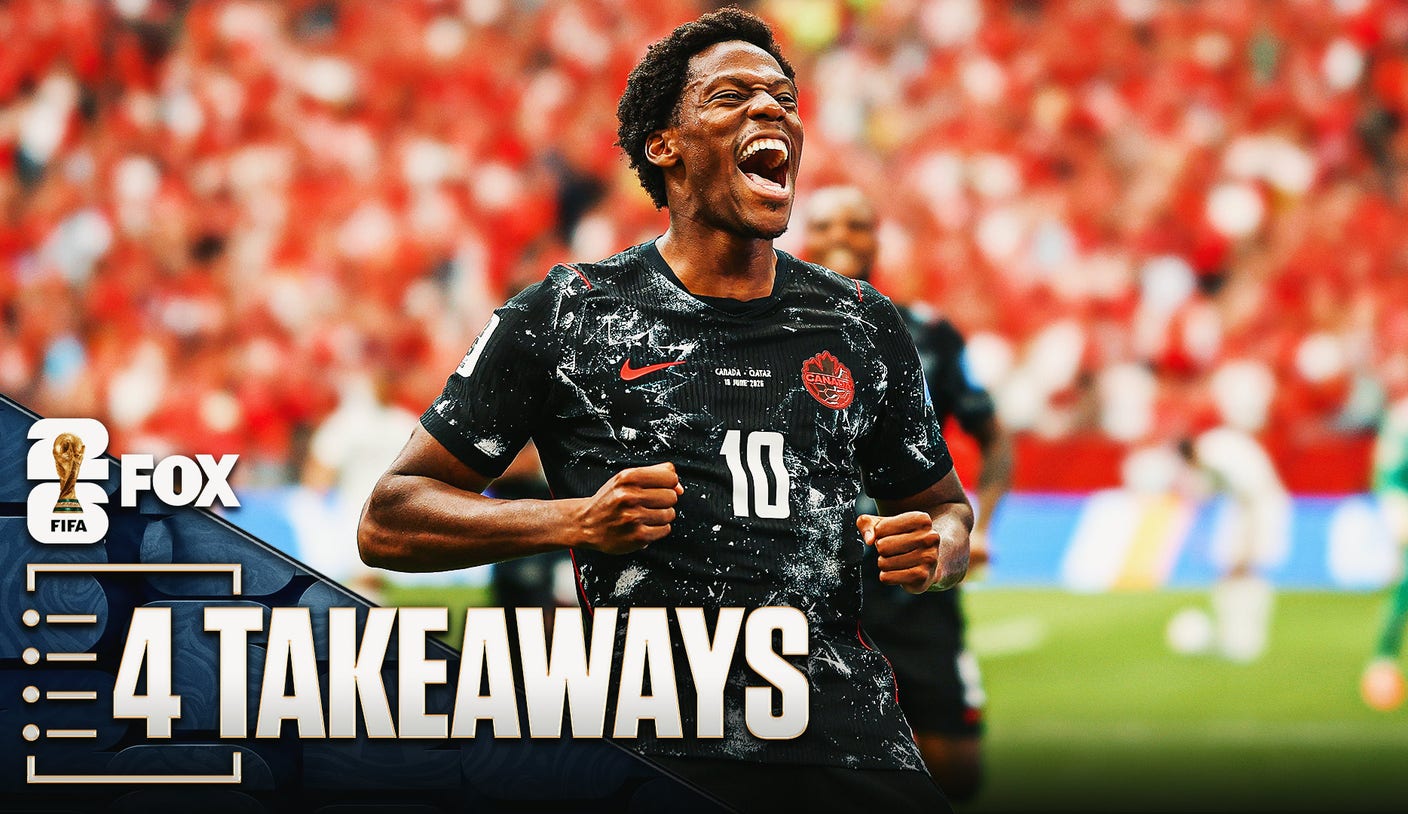
At long last, Canada has won a World Cup game. In its eighth attempt across three tournaments, Canada was lifted by Jonathan David’s hat trick in a comfortable 6-0 win over Qatar in Vancouver, moving to the top of Group B with four points from its first two matches at the 2026 FIFA Men’s World Cup. Qatar’s performance, meanwhile, was marred by two red cards, including a vicious tackle that seriously injured Canada’s Ismaël Koné.
The result puts Canada on the verge of advancing to the knockout stage, and it can win the group with either a victory or a draw against Switzerland. Qatar, meanwhile, now needs a stunning upset in its final game against Bosnia and Herzegovina to have any chance of advancing.
Here are my four takeaways from the match:
1. Larin & David: Superb Together
(Photo by Fran Santiago/Getty Images)
Before this World Cup, Canada’s biggest question was the form of strikers Cyle Larin and Jonathan David. Both have scored important goals and built impressive club resumes, but Larin had gone 14 games without scoring for Canada, while David was coming off a poor season with Juventus that fell well short of the level he had shown in France’s Ligue 1.
In the opener against Bosnia and Herzegovina, Canadian head coach Jesse Marsch started David. After David struggled to make an impact, he was replaced by Larin, who scored the equalizer in a 1-1 draw. Against Qatar, Marsch switched to a two-striker formation with Larin and David playing together. It could not have gone any better.
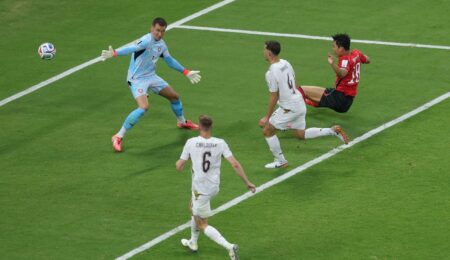
David and Larin showed excellent chemistry in the blowout win. David scored twice and Larin once, and both were repeatedly involved in Canada’s goals. On the opener, David’s shot was saved by Qatar goalkeeper Mahmud Abunada, but the rebound fell to Larin, who headed it home.
The third goal followed a similar pattern, with the roles reversed: Larin’s shot was saved, and David was there for the easy finish.
The second goal was a beautiful individual effort from David, who volleyed home a ball that came off a deflected shot from Tajon Buchanan.
Then finally, with Canada running away with it late and Qatar down to nine men, David took an attempted shot from Nathan Saliba and slotted it past Abunada.
David finished the game with fantastic stats that included eight attempts, five on target, and three goals. Larin, meanwhile, was 10/13 in passing with three blocked shots, two on target and a goal. This was on the heels of rescuing Canada in the first game.
Just as important as the goals, both Larin and David now have momentum heading into more important games at this World Cup. The narrative now is not about their struggles, but rather their quality.
This is a formation that Marsch might now be considering for future games. David and Larin can play together and the two of them can overload the defense with strength and physicality.
2. The High Line Suffocated Qatar
(Photo by Ercin Erturk/Anadolu via Getty Images)
In Qatar’s first game, it managed a 1-1 draw against Switzerland, in large part because the Swiss lacked urgency, which turned into frustration. Marsch was not going to make the same mistake with Canada going against an inferior opponent. The American coach had his team play with a very high line that immediately pressured Qatar every time one of its players had the ball.
When Canada won the ball, typically in Qatar’s half, Canada was almost immediately into a dangerous position. It wore down Qatar, which were making poor decisions towards the end of the first half.
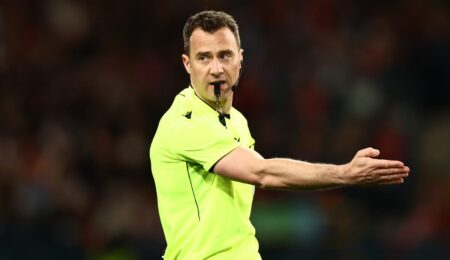
In the 33rd minute, a dangerous Canadian attack resulted in a red card for Qatar’s Homam Elamin, which essentially made a comeback impossible.
From there, the blowout was on, and it allowed Canada to score enough goals to move atop the group and ensure that the team only needs a draw against Switzerland in the finale to win Group C.
3. Johnson And Buchanan Dominated The Right
(Photo by Dale MacMillan/Soccrates/Getty Images)
In addition to Larin and David, Canada also had standout performances from right back Alistair Johnson and right winger Tajon Buchanan, who both dominated their side of the field. Nearly every dangerous play was created by either Johnson, Buchanan or both.
Buchanan, a speedy winger for Villarreal, was explosive, and it was his run down the middle that drew the red card for the denial of an obvious goal-scoring opportunity. Johnson, who is a starter in Scotland with Celtic, was instrumental in his crosses and his passes into the final third.
Both Johnson and Buchanan are of a similar background. Both were born in Canada in 1998 but came to the United States to play NCAA soccer, Johnson with St. John’s then Wake Forest, and Buchanan with Syracuse. Both then went into MLS via the MLS Superdraft. Johnson went to Nashville SC, followed by CF Montreal. Buchanan was with the New England Revolution.
Now in 2026, both are with teams that were in the Champions League this past year and who will be in Europe’s top competition again next year.
4. Kone’s Gruesome Injury Casts A Pall
(Photo by Jared C. Tilton – FIFA/FIFA via Getty Images)
The worst moment of the game — and the tournament — came in the 56th minute when Assim Madibo brutally fouled Canadian midfielder Ismaël Koné. In the aftermath, the Canadian players became enraged toward the Qatari bench when the severity of the injury became obvious.
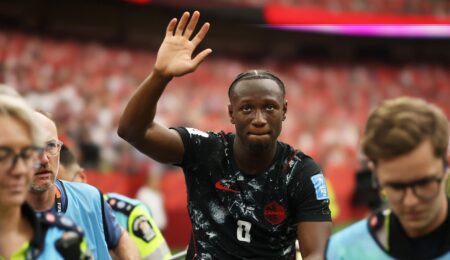
Koné was stretched off but was able to acknowledge the enthusiastic Canadian fans with his leg fully wrapped. The Canadian players then huddled on the field together, and some were in tears.
After Canada took a 4-0 lead, goalscorer Nathan Saliba found a Koné jersey and held it up to the crowd, who gave the gesture a warm ovation.
Moving forward in this World Cup, Koné’s injury will surely continue to be a rallying cry for this Canadian team, which is tight-knit and wants to use this tournament to lift the sport in the country.
Canada vs Qatar Extended Highlights | 2026 FIFA World Cup™
Read the full article here