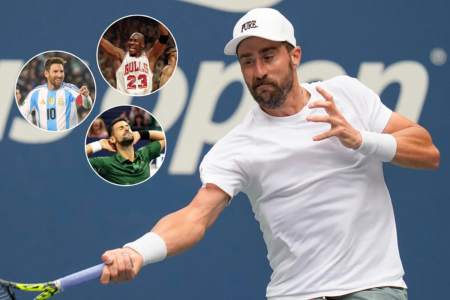





At the Shanghai Masters, Alexander Zverev stirred controversy when he implied that tennis tournament directors might be manipulating conditions to favor Carlos Alcaraz and Jannik Sinner.
Speaking after a straight-sets win over Valentine Royer, Zverev said he sensed a trend toward uniform court speeds that align with the playing styles of the sport’s elite.
“I hate that court speeds are the same in all tournaments. I know that the directors of all major events are moving in that direction because they want Jannik and Carlos to perform well and potentially reach the final,” he said.
Zverev bemoaned what he sees as a loss of diversity in how tennis surfaces play. He argued that in previous eras, different surfaces-clay, grass, and hard courts-offered distinct tactical challenges, forcing players to adapt.
The German believes that now, with conditions evening out, the game is flattening stylistically: “You couldn’t play tennis the same way on a grass court, hard court, and clay court. Nowadays, you can play almost the same way on every surface,” he added.
“I don’t like it, I’m not a fan of it. I think tennis needs game styles, tennis needs a little bit of variety, and I think we’re lacking that right now.”
Zverev aligns with Federer
His comments echo similar observations voiced by Roger Federer, who during an appearance on the Served With Andy Roddick podcast criticized how consistent court and ball speeds seem to diminish the contrast between surfaces.
Federer speculated that tournament directors may prefer seeing Alcaraz and Sinner in finals, tailoring conditions accordingly: “The tournament directors think: ‘I prefer to have Sinner and Alcaraz in the final.’ In a way, it works for tennis,” Federer told Roddick.
Federer lamented that in his playing days, tournaments varied significantly in court speed, which rewarded different styles in different environments.
He argued that today’s homogeneity often allows dominant baseline players to excel across the board, rather than rewarding specialists adapted to certain surfaces.
Zverev‘s criticism received a measured response from Jannik Sinner after his opening match in Shanghai. Asked whether he believed courts were being tailored in his favor, Sinner replied: “Me and Carlos, we don’t make the courts. It’s not our decision.
“We try to adapt ourselves in every situation. I feel like every week is still a bit different. I’ve played some great tennis even on faster courts. But I’m not making the courts, so I just try to adapt and play my best tennis, and that’s it.”
Alcaraz and Sinner dominance: Are rivals just envious?
The broader landscape of men’s tennis gives context to this debate. Alcaraz and Sinner have dominated recent seasons, splitting Grand Slam titles between them and maintaining top positions in the rankings. Zverev, meanwhile, has often been in their shadow-despite being among the sport’s elite talent.
Zverev‘s grievances also reflect frustrations felt by other players who believe modern tennis is trending toward predictability.
If surfaces become interchangeable, styles reliant on speed, serve, or variety may be hindered. And if major tournaments subtly drift toward conditions favoring baseline consistency, the argument goes, elite names with those strengths will benefit disproportionately.
Whether Zverev‘s theory holds up under scrutiny is another matter. Critics could point to many factors affecting court speed-ball type, weather conditions, maintenance practices-that aren’t easily manipulated to favor specific players.
Yet even raising the question introduces pressure on tournament organizers to defend their approach or reexamine how they calibrate courts.
Read the full article here