




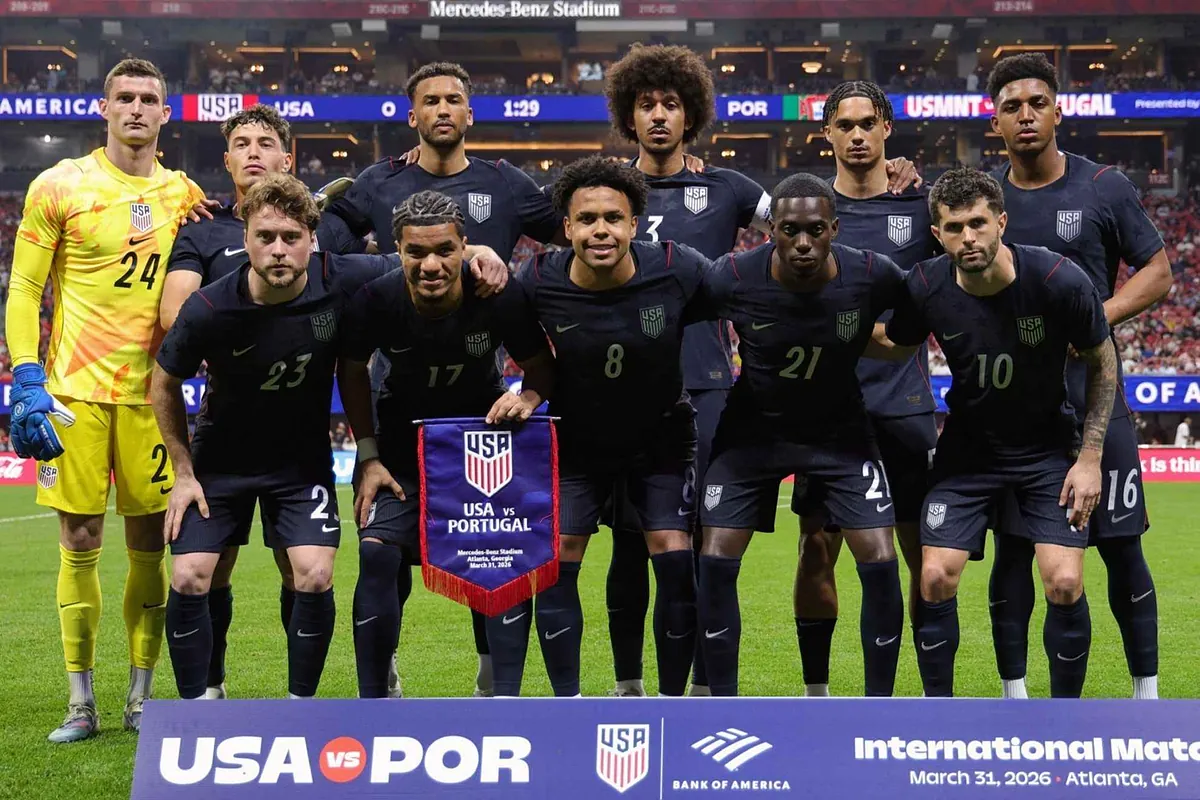
For a program that once believed it had broken through on the global stage, the drought has lasted far too long. Since reaching the quarterfinals of the 2002 FIFA World Cup, where they narrowly lost 1-0 to Germany national soccer team, the United States has failed to consistently return to that level. The question now is unavoidable: has this been a systemic failure, or simply the result of circumstance?
The answer lies somewhere in between, but it leans more toward structural shortcomings than bad luck. In the years following 2002, U.S. Soccer built a reputation on organization, athleticism, and discipline. That identity helped the team remain competitive, but it also masked deeper issues in player development.
While global powers invested heavily in technical training and youth academies, the American system remained fragmented. Pay-to-play models limited access to elite development for many players, and the lack of a unified philosophy across youth levels created inconsistencies in how talent was nurtured.
Players competed physically but lacked quality
The result was a generation of players who could compete physically but often lacked the technical quality to break down top-tier opponents in high-pressure matches. That gap became evident in tournaments like the 2006 and 2010 World Cups, where the United States struggled to assert itself against more polished teams.
The launch of Major League Soccer and the growth of domestic academies were supposed to address those issues. In many ways, they have. The current player pool is more talented and technically refined than ever before. Players like Christian Pulisic, Weston McKennie, and Gio Reyna represent a new generation shaped by both domestic and European development systems.
Yet despite that progress, results have not followed at the World Cup level. The U.S. failed to qualify for the 2018 tournament, a low point that exposed how fragile the system still was. Even when the team has returned to the global stage, it has struggled to take the next step against elite competition.
Continuity has been a problem for USMNT
Part of the problem is continuity. Coaching changes, shifting tactical identities, and inconsistent roster decisions have prevented the team from building long-term cohesion. International success often depends on stability, something programs like Germany and France have mastered over decades.
Another issue is the competitive environment. While MLS has improved, it still does not consistently replicate the intensity and tactical sophistication of Europe’s top leagues. American players who move abroad often develop faster, which creates a split pathway that the national team must constantly manage.
However, labeling the entire system as a failure would be too simplistic. The U.S. has made meaningful strides in infrastructure, scouting, and player development. The emergence of dual-national recruits and the increasing number of Americans in top European leagues show that progress is real.
The real issue is that expectations have changed faster than results. After 2002, the United States was seen as an underdog capable of surprising established powers. Today, with greater investment and a deeper talent pool, the expectation is to consistently compete in the knockout stages. That shift has raised the standard without fully closing the gap.
Read the full article here