



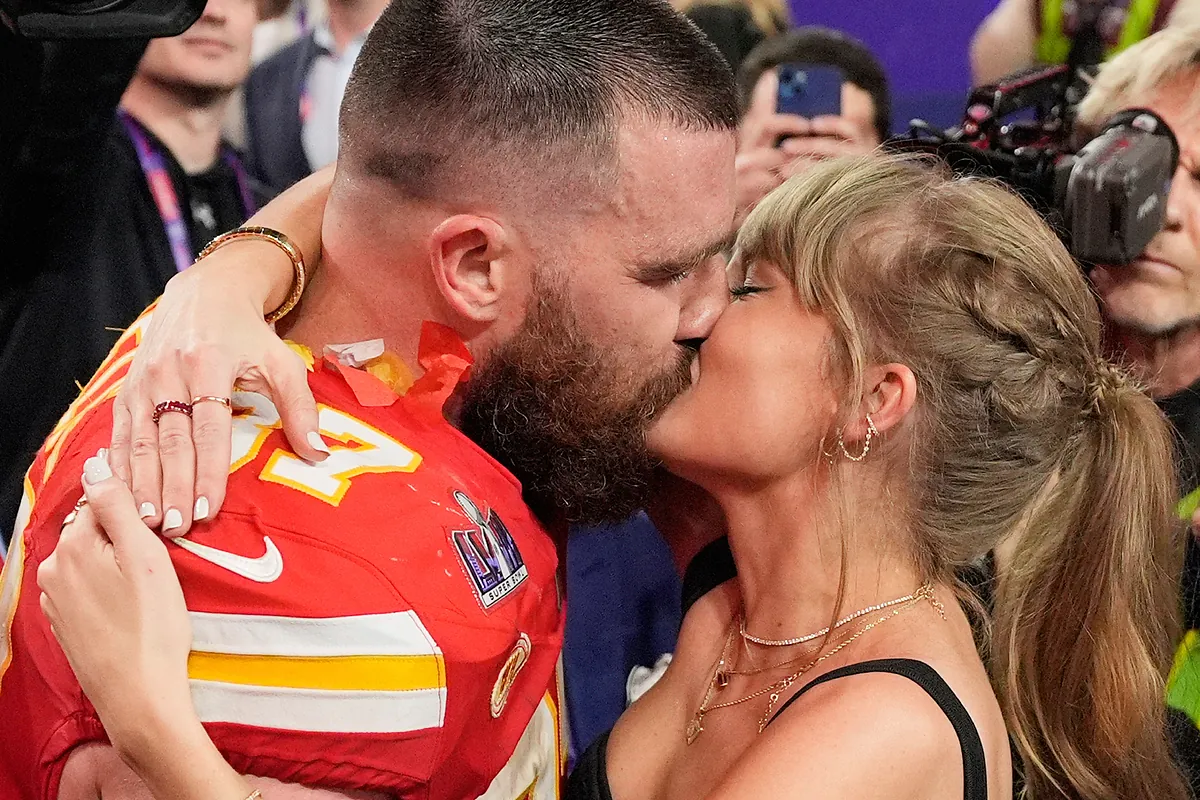
Travis Kelce‘s engagement to Taylor Swift has been one of the most publicized love stories in sports and entertainment, but even the most celebrated couples can draw commentary from experts outside their inner circle.
That’s especially true when a high-stakes moment on the football field fuels debate about personality, pressure, and interpersonal behavior.
Earlier this month, Kelce told listeners of his New Heights podcast, where he and his brother Jason interviewed George Clooney, that he and Taylor Swift have “never once” gotten into an argument during more than two years together. The reaction was swift and polarized.
Headlines questioned whether such peace is authentic or sustainable, while social media pundits dismissed it as unrealistic or a product of celebrity privilege.
But beneath the celebrity sheen lies a real conversation among psychologists and relationship specialists about what conflict, or the absence of it, means in romantic partnerships.
Critics of Kelce‘s claim argued that never arguing could be a red flag, a sign that one or both partners avoid difficult conversations or suppress genuine feelings.
According to Dr. Argie AllenWilson, a couples therapist formerly with Drexel University‘s Couple & Family Therapy Department, conflict isn’t inherently toxic; how couples handle it is what matters.
“Fair fighting” can be a gold standard, she says, because it builds skills in communication and emotional repair that avoidant couples may never develop.
At the same time, other experts have pushed back on the premise that arguments are the only meaningful measure of relational health.
Licensed psychotherapists note that many couples navigate disagreements calmly, quietly, or collaboratively without escalating into what most people would label a fight. Some of this discrepancy stems from how individuals define “arguing.”
For some, a heated, raisedvoice dispute is a fight; for others, it’s simply a disagreement well resolved through conversation.
Why conflict still matters even without fireworks
Psychological research shows that completely suppressing conflict carries potential risks. Experts highlight that avoiding hard conversations can lead partners to bury emotions that eventually resurface as resentment or withdrawal.
In a study of communication patterns among couples, avoiding topics instead of addressing them led to worse outcomes in satisfaction and stability over time.
Relationship theorists also emphasize that surface disagreements often mask deeper emotional needs.
Dr. AllenWilson points to the danger of assuming that conflict avoidance equals compatibility. “People don’t like conflict,” she says, and that can tempt partners into equating no arguments with a great relationship, even when important issues remain unspoken.
Real intimacy involves the trust to heal after disagreements, she explains, not the illusion that nothing ever goes wrong.
Observers of Kelce and Swift‘s dynamic have noted that public fascination with their calm can reveal as much about cultural discomfort with nuance as it does about their private lives. The scrutiny reflects broader anxieties about how normal relationships “should” look.
Read the full article here