




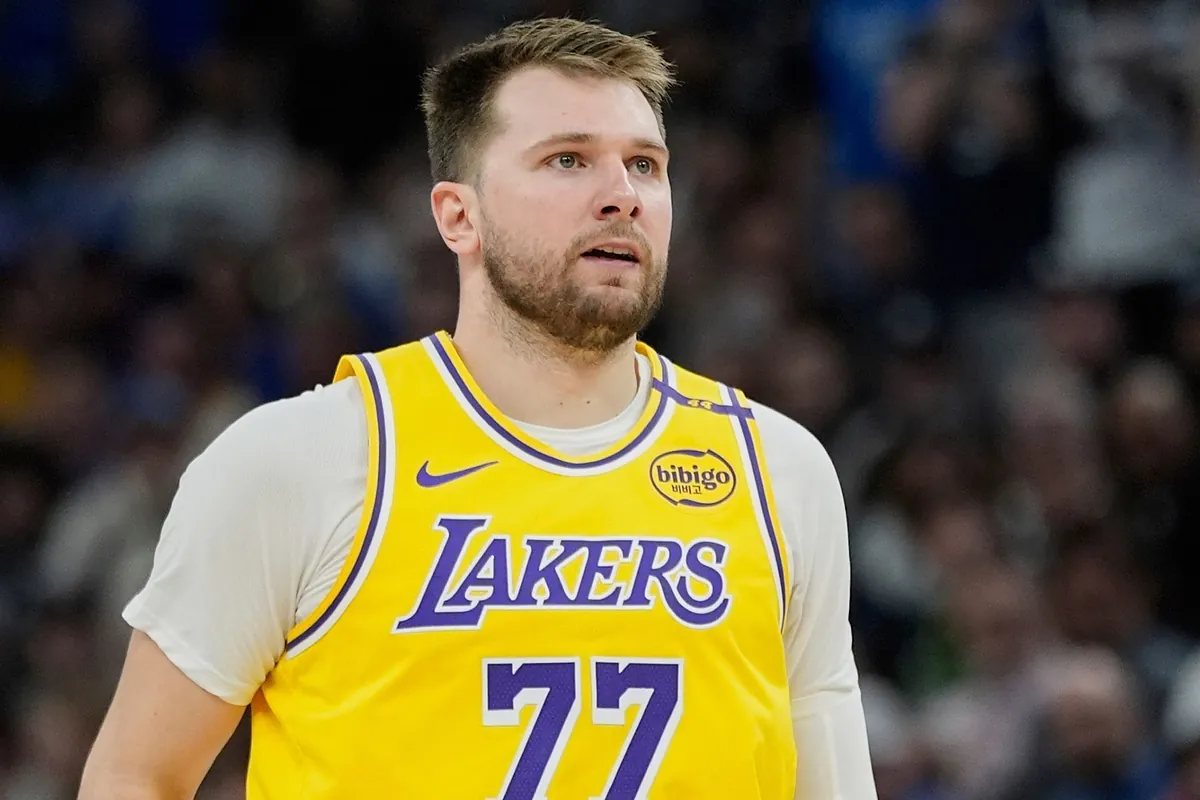
The urgency surrounding Luka Doncic‘s injury has quickly turned into a wider debate, not just about when he will return, but how he is choosing to get there.
With the playoffs looming, the Los Angeles Lakers star has travelled to Spain for treatment on a Grade 2 hamstring strain, a move that has drawn mixed reactions from medical experts and analysts alike.
Doncic‘s decision reflects the stakes. After suffering the injury against the Oklahoma City Thunder, initial timelines suggested a multi-week absence that could sideline him for the start of the postseason.
For a team already dealing with injuries, the prospect of missing its primary offensive engine at a critical stage has forced an aggressive approach to recovery.
According to Shams Charania, Doncic travelled to Spain to undergo an injection-based procedure aimed at accelerating healing in the hamstring.
The specifics haven’t been fully disclosed, but the approach is believed to involve regenerative therapies that are more accessible overseas.
“I’m told Luka Doncic is currently in Spain,” Charania said on ESPN.
“He traveled there because he’s undergoing an injection procedure in that Grade 2 hamstring area to see if he can promote healing and at the end of the day expedite his return process.”
However, some medical professionals have questioned whether the trip itself was necessary. Sports medicine physician Dr. Jesse Morse pointed to similar treatments available in the United States, describing a placental-based tissue injection used in clinical settings.
“This is a connective tissue matrix, an amniotic tissue we’ve been using in our clinic since 2015,” Morse explained. “The first time we used it was actually from the team doctor of the San Antonio Spurs… this is not new.”
He added that such treatment could cost around $20,000, suggesting that comparable options exist without the need for international travel.
Why Spain still made sense for Doncic
Despite those questions, the decision is not without context. European clinics often provide access to therapies that face stricter regulatory pathways in the United States, including certain forms of platelet-rich plasma and stem cell-based treatments.
For Doncic, the choice of Spain also carries a personal dimension. Having spent his formative years with Real Madrid, he is familiar with the country, its medical infrastructure and its support network, factors that can influence recovery as much as the treatment itself.
There is also precedent. Athletes across multiple sports have travelled abroad for specialised procedures in the hope of reducing recovery timelines, particularly when championships are at stake.
While Doncic works toward a return, the Los Angeles Lakers are navigating the immediate impact. The team is also without Austin Reaves, who is sidelined with an oblique injury, leaving a significant void in scoring and playmaking.
That strain was evident in their recent loss, where even a dominant outing from LeBron James could not compensate for the missing firepower. With the Western Conference standings tightening, every game now carries added weight.
A high-risk, high-reward path
Hamstring injuries are notoriously difficult to manage, with a fine line between accelerating recovery and risking further damage. For Doncic, the decision to seek treatment abroad represents a calculated gamble, one that prioritises a faster return but carries inherent uncertainty.
The outcome could define the Los Angeles Lakers‘ postseason trajectory. If the treatment shortens his absence, it may prove decisive. If not, it will raise further questions about whether the journey was worth it.
For now, the focus remains on timing. The Los Angeles Lakers need their star back, and Doncic is doing everything possible to make that happen, even if it means crossing continents in pursuit of it.
Read the full article here