


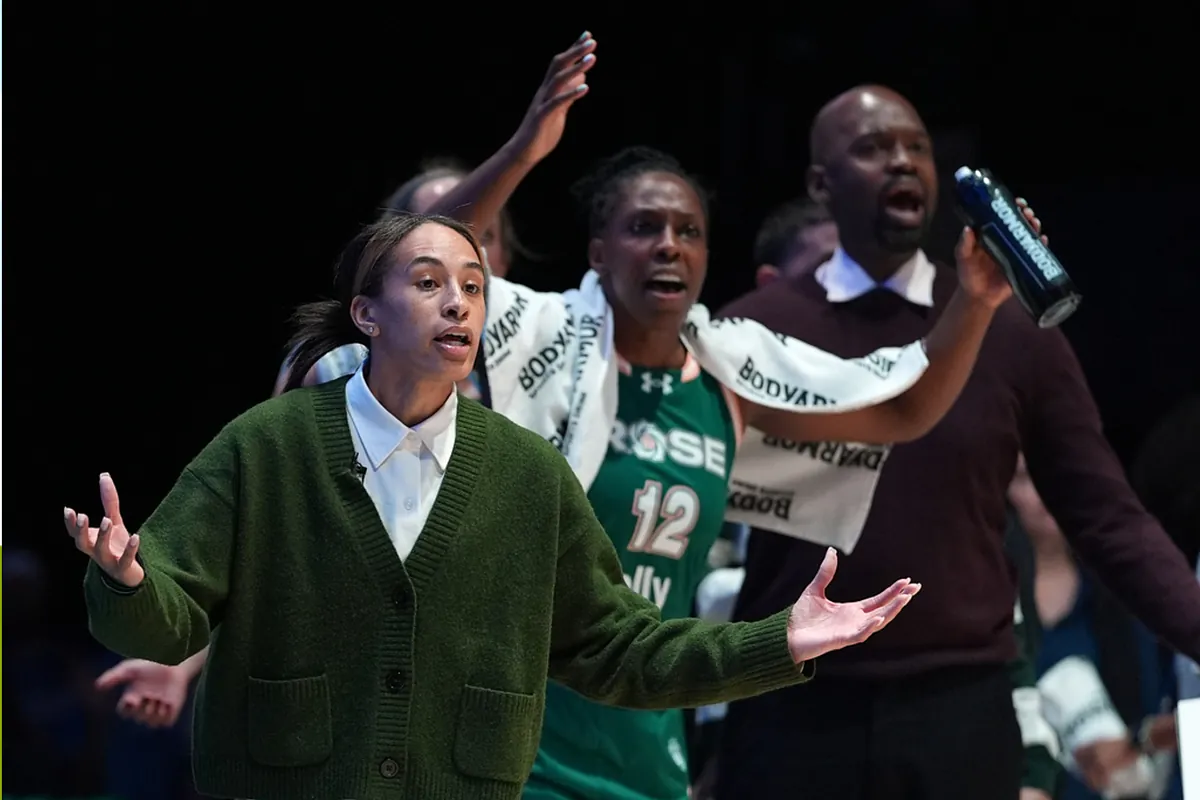
Unrivaled launched with a bold mission: to offer a faster, cleaner, player-first alternative to traditional women’s basketball leagues. The offseason 3v3 circuit promised innovation, freedom, and a better on-court product. But just days into its second season, an old and familiar problem has resurfaced – and it’s one many players hoped to leave behind.
The officiating dilema.
What was supposed to be a refreshing departure from the WNBA is now drawing uncomfortable comparisons, with critics and players alike questioning whether Unrivaled is drifting toward the same frustrations that have long plagued women’s pro basketball.
Early whistle problems raise red flags at Unrivaled
The concern gained traction after Front Office Sports reporter Annie Costabile summed up the issue bluntly on X: “One similarity between the WNBA & Unrivaled: officiating needs work.”
That criticism quickly found a real-world example in Cameron Brink’s highly anticipated Unrivaled debut. Playing for Breeze BC against Phantom BC, Brink saw her impact erased almost immediately by foul trouble. She checked in late in the first quarter and was whistled for her first foul within 40 seconds while defending Kiki Iriafen on a drive. Two more fouls followed in rapid succession, one on a loose-ball tie-up and another on a contested shot attempt, giving her three fouls before the quarter even ended.
When she returned in the third quarter, the pattern continued. A moving screen call came seconds after she checked back in, followed by yet another foul while battling for a rebound. Five fouls in just seven minutes of action. Her night was effectively over.
For a player whose game is built on physicality, rim protection, and presence in the paint, this kind of officiating doesn’t just reduce minutes, it fundamentally changes how she can play. It forces elite defenders to become tentative, stripping away the very traits that make them special.
And Brink isn’t alone.
A familiar pattern from Angel Reese to CBA talks
Last season, Unrivaled’s inaugural year saw similar concerns around Angel Reese. Her aggressive interior style repeatedly drew tight calls, often pushing her to the bench early. Several games followed the same script: Reese establishing position, absorbing contact, and still getting penalized. She even became the first player ejected in league history – a moment that sparked debate about whether physical players were being officiated out of their natural game.
The frustration felt eerily familiar to longtime WNBA fans, where inconsistent whistles have been a recurring grievance. So much so that officiating standards have resurfaced as part of broader conversations during ongoing CBA negotiations between the WNBA and the WNBPA.
That makes the timing especially ironic.
Unrivaled co-founder Napheesa Collier recently pointed to the league as proof that a player-centered, sustainable model can thrive. Speaking during opening week, she said:
“Well, our (CBA) deadline is coming up right now… Being on this side, with Unrivaled, I know what it takes to run a sustainable business. So I think if they can’t find a model that makes that happen, they need to put people in place who can. Because we’ve proven that it is possible. There is a way. And we’re thriving in that.”
Her message was clear: Unrivaled is supposed to be the blueprint for the future. But if officiating issues persist, the league risks inheriting the very problems it set out to escape.
Unrivaled still has time to correct course. But if it truly wants to remain different, addressing the whistle might be the most urgent test yet.
Read the full article here