



The Miami Dolphins arrived at December with postseason ambitions and a roster built to contend. Just days later, they find themselves searching for answers. A disappointing loss, a season slipping away, and a major decision at quarterback have reshaped the narrative around the franchise and its leader under center.
Monday night’s 28-15 defeat to the Pittsburgh Steelers was more than a loss. It dropped Miami to 6-8 and officially ended their playoff hopes. The offense struggled to find consistency, protection broke down, and turnovers again became a problem. By Tuesday, head coach Mike McDaniel acknowledged publicly what many had already concluded: the quarterback play had not been good enough.
That admission quickly turned into action. Miami decided to bench Tua Tagovailoa and hand the offense to rookie Quinn Ewers. The move sent shockwaves through the locker room and instantly became one of the most talked-about quarterback decisions of the week.
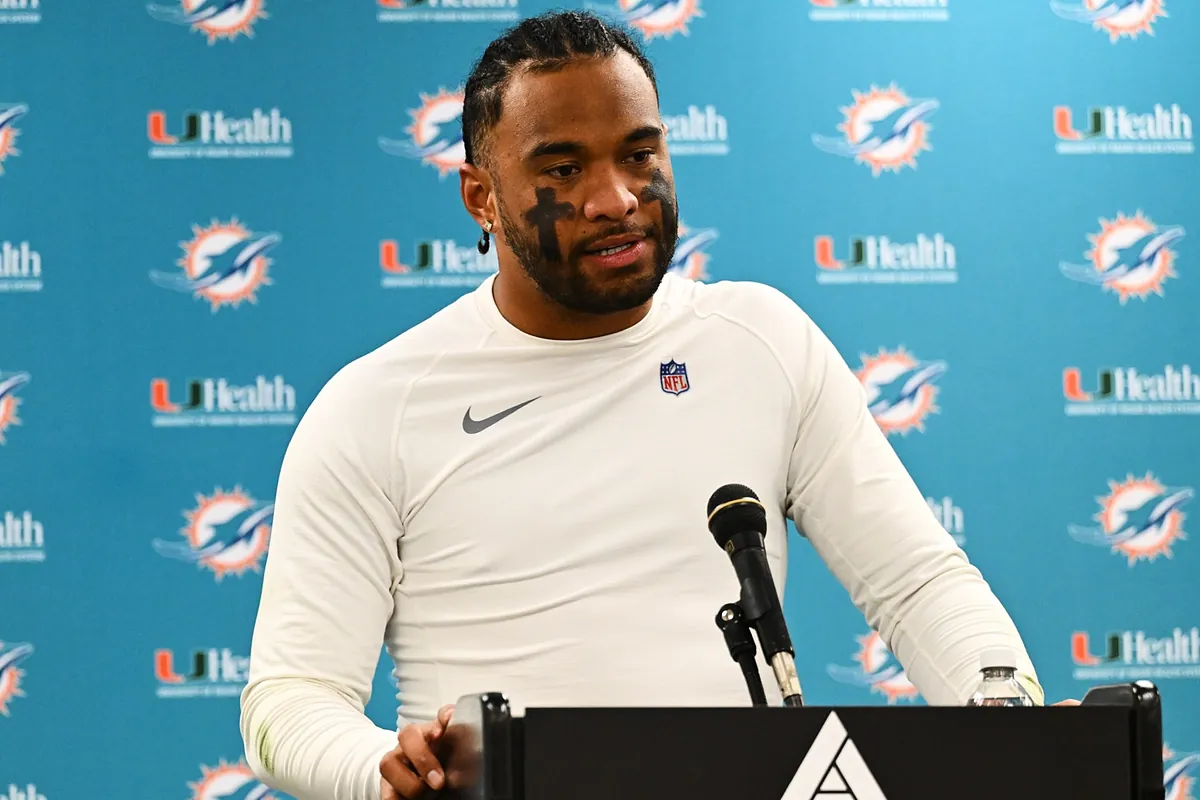
Tagovailoa did not hide his disappointment. Speaking to reporters on Wednesday, he was direct and reflective. “I’m not happy about it, but it’s something out of my control,” he said. He also pointed inward, stating that his own performance played a major role in the decision. NFL insider Josina Anderson reported that Tagovailoa handled the news professionally, even as his role dropped to third-string quarterback.
I’m not happy about it, but it’s something out of my control
A performance-driven decision with long-term consequences
The numbers explain why Miami felt forced to act. Against Pittsburgh, Tagovailoa threw his 15th interception of the season, the most in the league, and took four sacks. His two touchdown passescame late, when the outcome was already decided. Miami’s offensive efficiency has declined in recent weeks, with turnovers and stalled drives becoming a pattern.
Now the spotlight shifts to Ewers, who will make his first NFL start on Sunday against the Cincinnati Bengals. The matchup offers a low-pressure environment on paper, but the implications are significant. This is not just a short-term experiment. It is an evaluation.
Tagovailoa’s future complicates everything. He signed a four-year, $212.1 million extension in 2024, with heavy guarantees still ahead. Releasing him next season would create a $99 million dead cap hit, a figure that limits Miami’s flexibility and ensures this situation will not resolve quietly.
For now, Tagovailoa watches from the sideline, frustrated but accountable. Miami, meanwhile, steps into uncertain territory, hoping that a bold move at quarterback can provide clarity after a season that unraveled faster than expected.
Read the full article here