


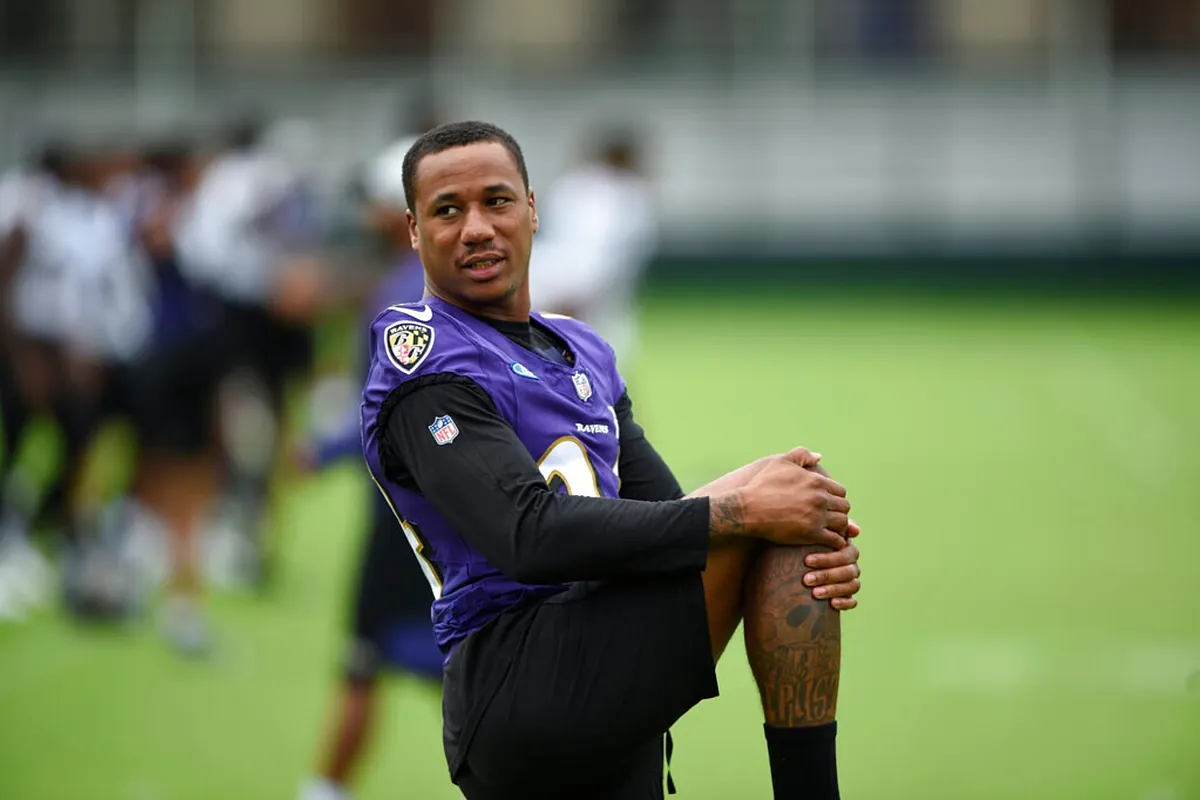
Despite the Kansas City Chiefs emerging as one of the NFL’s most successful franchises over the past decade, not every star has found a long-term home under head coach Andy Reid.
One of the most notable examples is former first-round cornerback Marcus Peters, a 2015 Defensive Rookie of the Year who was traded away after just three seasons.
Recently, Peters offered a candid account of how frustrated he felt when he learned the Chiefs were moving on without him.
“I didn’t really want to go. I didn’t want to go nowhere,” Peters said. “I didn’t ask for no trade. I didn’t do anything. I was in LA, and I got a call from my agent saying, ‘Hey, you might be getting traded’.
“I was lowkey pissed off because I didn’t want to go nowhere, just be honest. I love playing ball in KC. I love coming into Arrowhead Stadium and being able to perform it. That’s why you got my best out there.”
Selected 18th overall in the 2015 NFL Draft, Peters made an immediate impact.
That season, he recorded 60 combined tackles, eight interceptions, 26 pass deflections and two defensive touchdowns, all in 16 games. Those numbers earned him Defensive Rookie of the Year honors, an AllPro selection, and his first Pro Bowl nod.
In his first three seasons with the Chiefs (2015-17), Peters tallied 19 interceptions and 55 passes defensed over 45 games.
His playmaking ability quickly made him a disruptive force in the secondary and a favorite among Kansas City fans.
Offfield issues and organizational impatience
Despite his onfield success, Peters’ tenure in Kansas City was marred by offfield incidents and clashes with team personnel.
The Chiefs suspended him after an incident in which he threw a penalty flag into the stands and returned to the sideline without proper uniform, violating team conduct policies.
He was also involved in shouting matches with assistant coaches and drew criticism from ownership for not standing respectfully during the national anthem.
Those incidents, the organization determined, were red flags. In March 2018, the Chiefs traded Peters to the Los Angeles Rams in exchange for a fourthround pick in the 2018 draft and a secondround pick in 2019.
Chiefs general manager Brett Veach defended the move at the time, saying, “After a thorough evaluation of our roster, we decided it was in the best interest for us and for Marcus to move in different directions.
“We appreciate Marcus’ contributions to our football team and wish him the best of luck as he continues his playing career.”
But Peters remembers things differently. “I have some mixed feelings about KC,” he said.
“Most importantly, when I just was young, I was 22 coming into the league with a lot of money. But a whole lot of expectations that I fully exceeded. But I don’t think I was ever really just given a chance to settle, though.
“When I was trying to settle because I had so much other stuff, leaving baggage, coming from college, they never really allowed for me to ease in.”
Peters’ take paints a picture of a young player who felt rushed and undersupported during what should have been a formative period in his career.
After his time with the Rams, Peters was traded to the Baltimore Ravens in exchange for linebacker Kenny Young and a 2020 draft pick, continuing a nomadic phase of his career.
While he helped the Rams reach the Super Bowl that season, Los Angeles fell short in the big game against the New England Patriots.
Interestingly, the Chiefs and Rams recently revived a similar trade dynamic prior to the 2026 season, this time involving AllPro cornerback Trent McDuffie.
The Rams sent a package of draft picks, including the No. 29 overall pick in 2026, to Kansas City for McDuffie, mirroring the earlier exchange of defensive backs.
For Chiefs fans, Peters’ reflections underscore a broader theme in franchise history: success on the field doesn’t always translate to harmony behind the scenes.
While Kansas City has rightly earned praise for its sustained excellence, the organization’s handling of talent, particularly at cornerback, has sometimes come under scrutiny.
As Peters put it, his heart was in Kansas City, but the relationship, in his view, was never given the time or space it deserved to fully develop.
Read the full article here