


The latest incident involving Tiger Woods has once again placed the legendary golfer at the center of concern, raising familiar questions about his decision-making and long-term well-being.
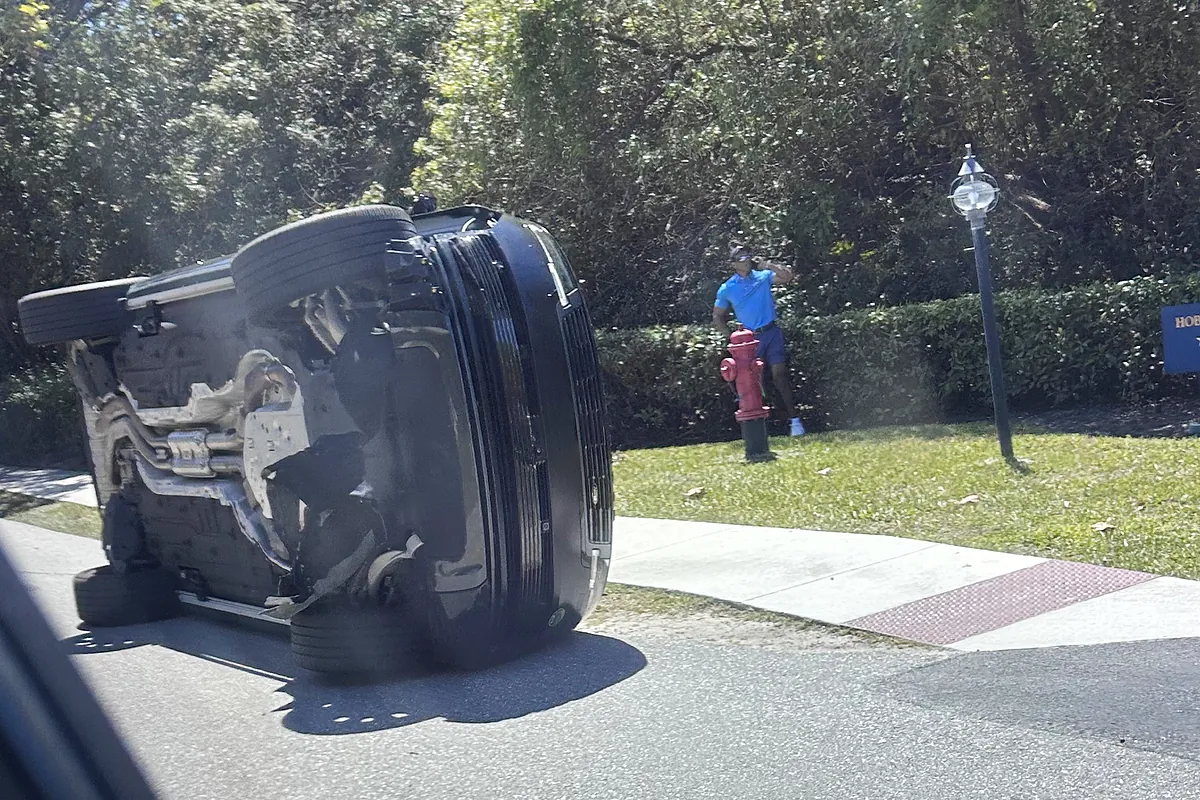
Following a recent rollover crash in Florida that led to charges including DUI, property damage, and refusal to provide a urine sample, the spotlight has returned to both his personal struggles and the network of individuals who have consistently supported him through adversity.
For many observers, the situation feels like a troubling echo of past events.
Over the years, Tiger Woods has endured a series of high-profile setbacks, including his 2017 DUI arrest and the devastating 2021 crash in California that left him with severe leg injuries.
Each time, his recovery has depended not only on medical intervention but also on the presence of a tight-knit inner circle that has helped him navigate both physical and emotional challenges.
Among the most important figures in that circle is Rob McNamara, a longtime confidant and executive within Woods’ business ventures.
Their relationship dates back decades, and McNamara has evolved from a professional associate into a trusted advisor who plays a critical role in Woods’ life.
Speaking previously about their dynamic, Tiger Woods noted, “I mean, he knows my game… he’s got a good eye and he has seen me go through changes and iterations in the game of golf.”
That level of trust has proven invaluable, particularly during periods when Woods has been unable to rely on traditional coaching due to injury.
McNamara’s familiarity with Woods’ game and mindset has allowed him to provide guidance in moments when precision and understanding are essential.
A support network tested once again
Beyond professional relationships, family has also remained a cornerstone of stability for Tiger Woods.
His late mother, Kultida Woods, was widely regarded as a constant source of strength throughout his career, standing by him during both triumph and controversy.
Her passing in 2025 marked a significant emotional loss, one that Woods acknowledged when he described her as his “biggest fan and greatest supporter.”
Despite personal challenges, Woods has maintained a strong co-parenting relationship with his ex-wife, Elin Nordegren, with whom he shares two children.
Their ability to remain united in supporting their family has been one of the more positive aspects of his post-divorce life. Woods himself once reflected on this bond, stating, “Having the relationship that I have now with her is fantastic… the most important things in our lives are our kids.”
His current relationship with Vanessa Trump has also drawn attention, particularly as she has been seen supporting him at recent events.
Meanwhile, close friends such as Rory McIlroy and Justin Thomas continue to play key roles within his professional and personal circles, offering encouragement and camaraderie.
However, the recurring nature of these incidents suggests that even a strong support system may not be enough on its own.
Critics argue that Tiger Woods must take greater responsibility for avoiding situations that jeopardize both his safety and legacy.
With access to virtually unlimited resources, including the ability to hire drivers or implement stricter safeguards, the expectation for better judgment is understandably high.
As the golf world reflects on yet another chapter in Woods’ turbulent journey, the focus now shifts to what comes next.
His resilience has been proven time and again, but the question remains whether he can break the cycle of setbacks that continue to overshadow his remarkable achievements.
For Tiger Woods, the path forward may depend not just on the support of his “guardian angels,” but on his willingness to make the changes necessary to ensure that history does not keep repeating itself.
Read the full article here