




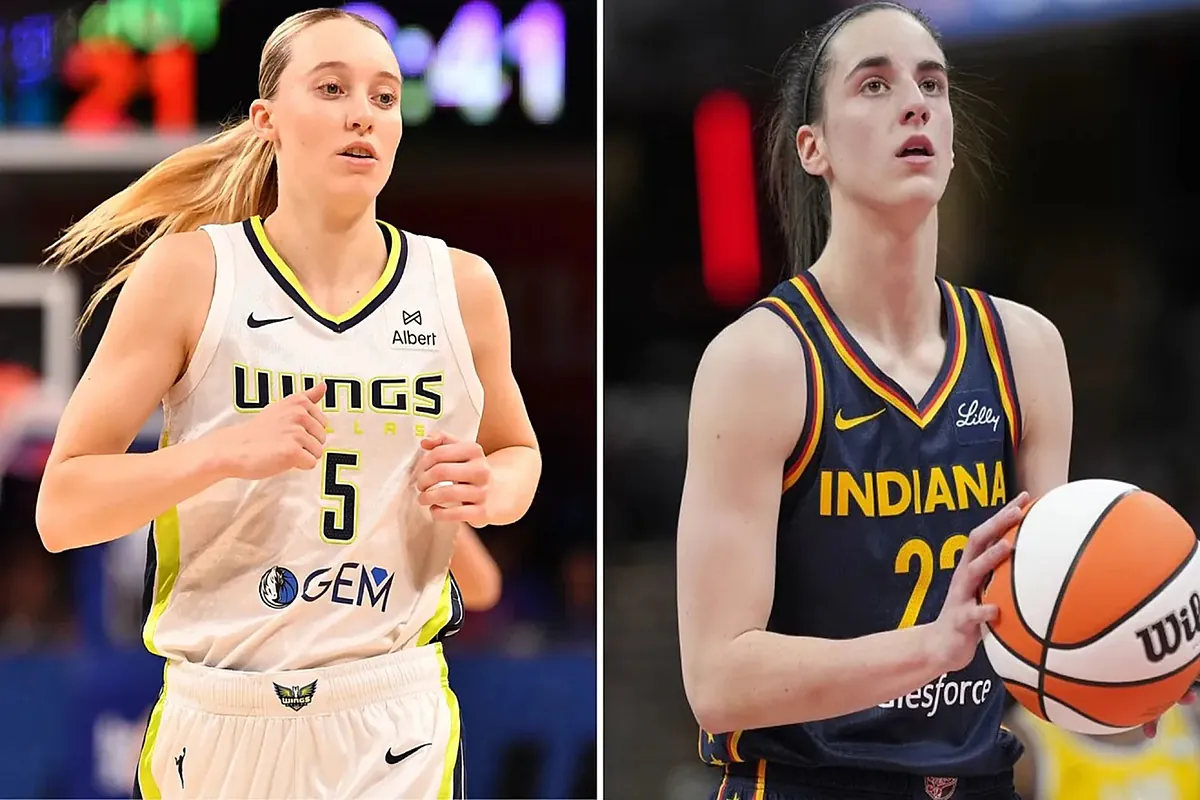
Caitlin Clark and Paige Bueckers are among the most influential young players the WNBA has ever seen, yet their current salaries do not come close to matching their impact on the league.
Both stars earn similar pay under the WNBA’s rookie contract structure, a system that prioritizes draft slot over market value or cultural influence. As excitement builds around a new collective bargaining agreement (CBA), many assume that meaningful salary growth is inevitable.
However, growing discussion suggests that the league’s most high-profile rookies may not benefit as much as expected.
This possibility was recently addressed by national reporter Sabreena Merchan during The Athletic Women’s Basketball Show. Merchan noted that while salary increases are likely part of the upcoming negotiations, there is still significant uncertainty surrounding how rookie contracts will be handled.
She emphasized that past CBAs show that pay increases have not always been evenly distributed across the league.
Looking back at the 2020 CBA offers a clear example. That agreement raised the league minimum salary, which immediately benefited players earning below the new threshold.
However, players who were already making more than the minimum, including some established and high-performing athletes, did not receive any increase at all.
As a result, certain second-round picks and lower-paid players saw notable raises, while some All-Star-level players experienced no financial change.
How the next CBA could affect Clark and Bueckers
A similar approach could emerge in the next CBA. Early discussions reportedly suggest a league minimum near $200,000, which would represent a significant improvement for most players.
Many rookies would automatically see their salaries jump simply by being elevated to the new floor. But if the league repeats the same structure, salaries may stop there, without additional adjustments tied to draft position, performance, or visibility.
This is where Clark and Bueckers could be disproportionately affected. Both currently earn more than the existing minimum but still fall short of the proposed new baseline.
If salaries are simply leveled up to the minimum, they would receive no added compensation beyond that point. Meanwhile, players currently earning far less could experience much larger relative increases.
The concern isn’t about limiting gains for others, but rather about recognizing elite talent appropriately. Clark and Bueckers are not yet free agents and have limited negotiating power while on rookie contracts.
Despite helping deliver unprecedented attention, viewership, and commercial interest to the league, their pay may not reflect that contribution under a flat salary adjustment system.
As the WNBA continues its rapid growth, the new CBA represents a pivotal moment. How the league chooses to structure rookie pay will signal whether it is prepared to reward the stars who are driving its popularity and shaping its future.
Read the full article here