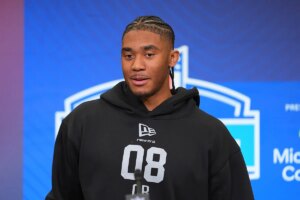





Paige Bueckers has broken her silence on the collective bargaining deadlock, and she is openly questioning whether true dialogue is taking place.
In her view, the current dynamic resembles a standstill rather than productive negotiation.
While the WNBA enjoys surging attendance, sponsorship growth, and heightened media exposure, labor talks have failed to keep pace.
Bueckers suggests that without movement from both sides, the league’s upward trajectory could be complicated by unrest.
Spending her offseason competing in Unrivaled, the 24-year-old has become one of several prominent voices pressing for progress. She frames the dispute not merely as a financial disagreement, but as a matter of structural fairness.
“At this point, it’s not really a negotiation,” Bueckers told media. “Both sides aren’t moving. So I feel like we need to continue to have these conversations, continue to actually have change implemented for us to move.
“We as players, we don’t want a strike. We want to have a season. I love playing basketball. That’s all I want to do. But again, there are things that need to be handled.”
What is the CBA situation about as Kelsey Plum calls for a strike to be averted
The primary sticking point concerns how league income is allocated, and the divide is technical yet consequential. The players’ association has advocated for 30 percent of gross revenue, whereas league officials prefer calculating shares from net revenue.
Because net revenue deducts expenses before distribution, the league’s approach would effectively deliver about half of the union’s proposed figure. As a result, players argue the structure undervalues their role in driving demand.
League representatives counter that fiscal prudence is essential, particularly as expansion and investment continue. They assert that their framework ensures franchises avoid sustained losses, while gradually improving compensation levels.
Negotiations intensified after the union established a March 10 deadline, thereby increasing pressure for measurable advancement. In response, the league presented a counteroffer days earlier, signaling flexibility but not conceding on revenue methodology.
The revised proposal features earlier access to maximum contracts for rookies and incoming players, along with a salary cap increase to $5.75 million. Long-term estimates indicate that number could approach $8.5 million by 2031.
Additionally, the league has moved to clarify rules surrounding core designations, which have been contentious in prior discussions. Minimum salaries are projected to exceed $230,000, reflecting notable gains compared to previous standards.
Under the expired agreement, top salaries were roughly $250,000, and earning ceilings were comparatively limited. Nevertheless, players contend that higher base pay does not substitute for a more proportional revenue-sharing formula.
For many athletes, including Bueckers, the broader objective is alignment between league prosperity and player earnings. As broadcast agreements and commercial partnerships expand, they believe compensation mechanisms should scale accordingly.
Kelsey Plum, serving as a vice president of the union, reinforced that position while addressing speculation about a potential work stoppage. She emphasized that withholding labor would harm both stakeholders.
“Obviously, a strike would be the worst thing for both sides, because we are in a [revenue sharing system], so no revenue, no revenue to share,” said Plum, who plays for the Los Angeles Sparks.
Read the full article here