



For more than a decade, the idea of a second clash between Manny Pacquiao and Floyd Mayweather Jr. lingered in boxing circles like unfinished business. Fans debated it, promoters teased it, and rumors surfaced regularly – yet nothing ever materialized.
The long-awaited sequel consistently appeared close, only to slip away amid shifting priorities and complex negotiations.
According to Pacquiao‘s camp, the breakthrough finally came when the conditions around the fight became less complicated. Jazz Mathur, chairman and CEO of Limitless X Holdings, Inc. and CEO of Manny Pacquiao Promotions, explained that groundwork had been laid years earlier.
“This was a lot of work,” said Mathur. “It took a lot of time. Manny tried – I wouldn’t say failed – but planted seeds. It just took the right time and the right team in place to be able to get it done.”
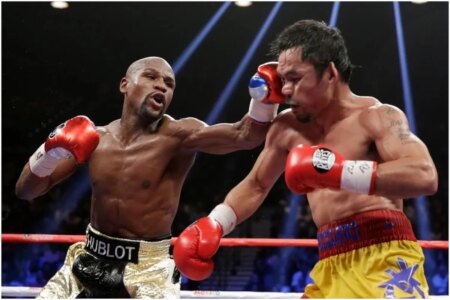
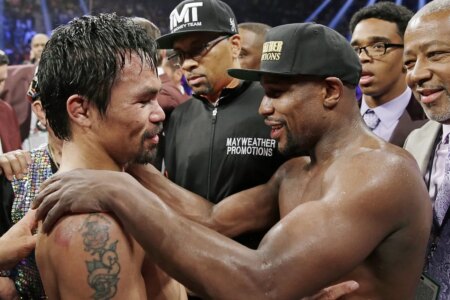
Manny Pacquiao and Floyd Mayweather Jr. first met in May 2015 in a showdown branded “The Fight of the Century.” Hosted in Las Vegas, the contest ended with Mayweather earning a unanimous decision victory.
Financially, it shattered records, generating over $600 million and drawing approximately 4.4 million pay-per-view purchases. Despite its commercial triumph, debate over the outcome and the fighters’ performances persisted, fueling interest in a potential rematch.
New platform changes the game
In the years following that historic night, discussions resurfaced periodically but rarely advanced beyond early talks. Reports as recently as October indicated renewed negotiations, though familiar obstacles remained. Insiders suggested that convincing the fighters was never the true stumbling block.
Instead, coordinating the broader business framework – from broadcast rights to promotional alignment – repeatedly slowed progress.
The decisive factor this time was the emergence of a global streaming partner willing to rethink boxing distribution. The rematch, now scheduled for September 19 in Las Vegas, will stream worldwide on Netflix.
The move represents one of the platform’s boldest entries into live professional boxing and signals a shift away from the traditional pay-per-view model that defined their first encounter.
By consolidating broadcast rights under a single global distributor, negotiations became more streamlined. The simplified structure reduced many of the logistical hurdles that previously complicated talks.
With a modern streaming giant providing worldwide reach, the event could be positioned as both a sporting spectacle and a digital-era milestone.
After years of stalled conversations and near-misses, Pacquiao-Mayweather 2 ultimately materialized not because of sudden urgency, but because the environment around it finally made sense. Timing, technology, and teamwork – long elusive – aligned at last.
Read the full article here