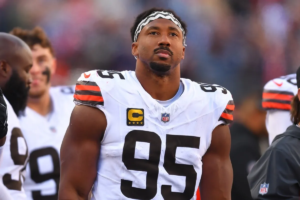



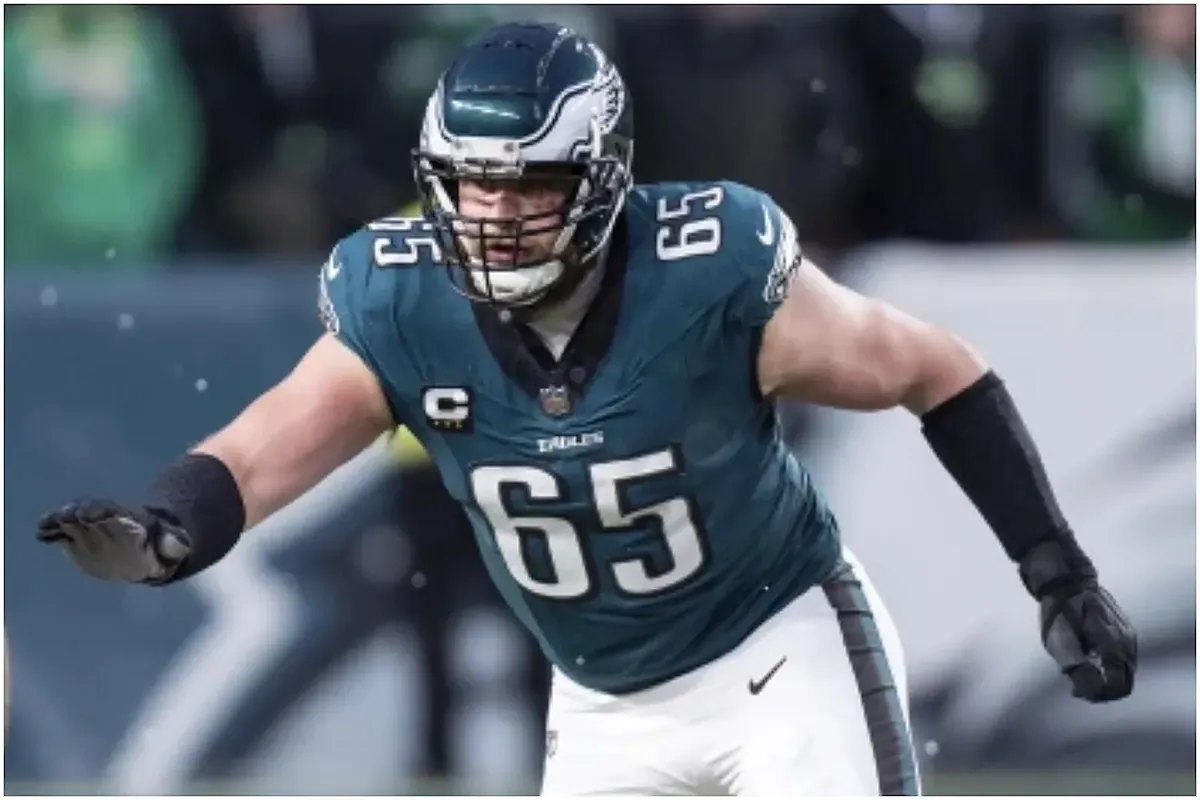
Philadelphia Eagles star Lane Johnson made his opinion on the NFL’s evolving stance on the “tush push” abundantly clear this week-without uttering a single word.
The veteran offensive tackle took to social media to share a laughing emoji in response to Adam Schefter‘s Wednesday report, signaling his amusement at the league’s latest developments.
This small gesture carries weight, representing a subtle victory for the franchise that famously turned a short-yardage tactic into a national talking point.
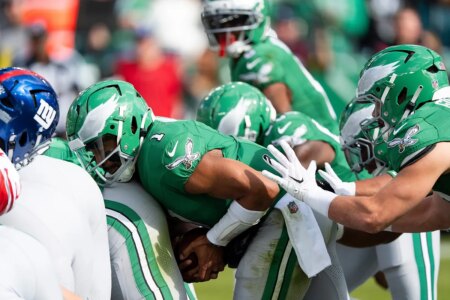
The “tush push,” a quarterback sneak augmented by teammates shoving from behind, was nearly banned at the upcoming NFL owners’ meeting in Phoenix. The play had become a flashpoint, celebrated for its effectiveness but criticized for bending the boundaries of traditional football norms.
By striking the maneuver from potential prohibition, the league has effectively allowed teams to continue using a tactic that played a pivotal role in Philadelphia Eagles‘ 2024 championship run.
The push-style sneak gained notoriety during that Super Bowl-winning season, where the Philadelphia offense leveraged it to consistently gain critical short-yardage advantages.
Opposing franchises, including the Green Bay Packers, decried the play, arguing it undermined competitive fairness.
By the 2025 annual meeting, the Packers spearheaded a proposal to eliminate the “pushing element,” narrowly missing passage by just two votes.
While the play remained legal, scrutiny from the league and opposing coaches was intense.
From dominance to decline: Why the league has cooled on banning the play
Interest in outright banning the tactic has diminished, largely due to its declining effectiveness. As defensive coordinators adjusted strategies, dedicating more practice to countering the shove, the statistical edge it once provided has largely dissipated.
NFL Competition Committee Co-Chairman Rich McKay noted that traditional, unassisted quarterback sneaks now demonstrate a higher success rate than the choreographed push version.
“I don’t know that it’s the end of the debate,” McKay said. “I think there’s still people who are concerned with the whole pushing element.”
Rather than banning the play, the NFL’s current focus has shifted toward refining officiating and ensuring that referees consistently manage the scrum.
By emphasizing precision and enforcement over prohibition, the league hopes to maintain fairness while allowing teams the tactical freedom to employ a strategy that has historically shaped key short-yardage scenarios.
For Lane Johnson and the Philadelphia Eagles, this development marks a symbolic win, validating the creative approach that contributed to one of the franchise’s most dominant offensive performances in recent memory.
It also reflects a broader trend in professional football, where innovation and adaptation often challenge existing rules-but can become normalized once the competitive edge diminishes.
The discussion surrounding the “tush push” underscores the NFL’s ongoing balancing act: maintaining fairness, protecting the integrity of the game, and letting teams innovate in ways that enhance the spectacle for players and fans alike.
Read the full article here