



The landscape of professional women’s basketball has shifted overnight, and the financial reality for its biggest stars is finally catching up to the hype. Thanks to a landmark agreement between the WNBA and the Players Association, a new collective bargaining agreement (CBA) is set to rewrite the record books. We’re moving past the era of “pennies on the dollar” as players prepare to receive a significantly larger slice of a revenue pie that is absolutely exploding.
This isn’t just a “thank you” for years of service; it’s a direct response to the massive merchandise spikes and constant arena sellouts driven by a generational bridge of talent. On one side, you have the established brilliance of icons like A’ja Wilson, Napheesa Collier, and Breanna Stewart.
On the other, a wave of youngsters like Caitlin Clark, Paige Bueckers, and Angel Reese have turned the league into a global powerhouse. With the current NCAA March Madness tournament showcasing even more “pro-ready” talent than ever before, the WNBA is making sure it has the financial structure to keep these stars at home.
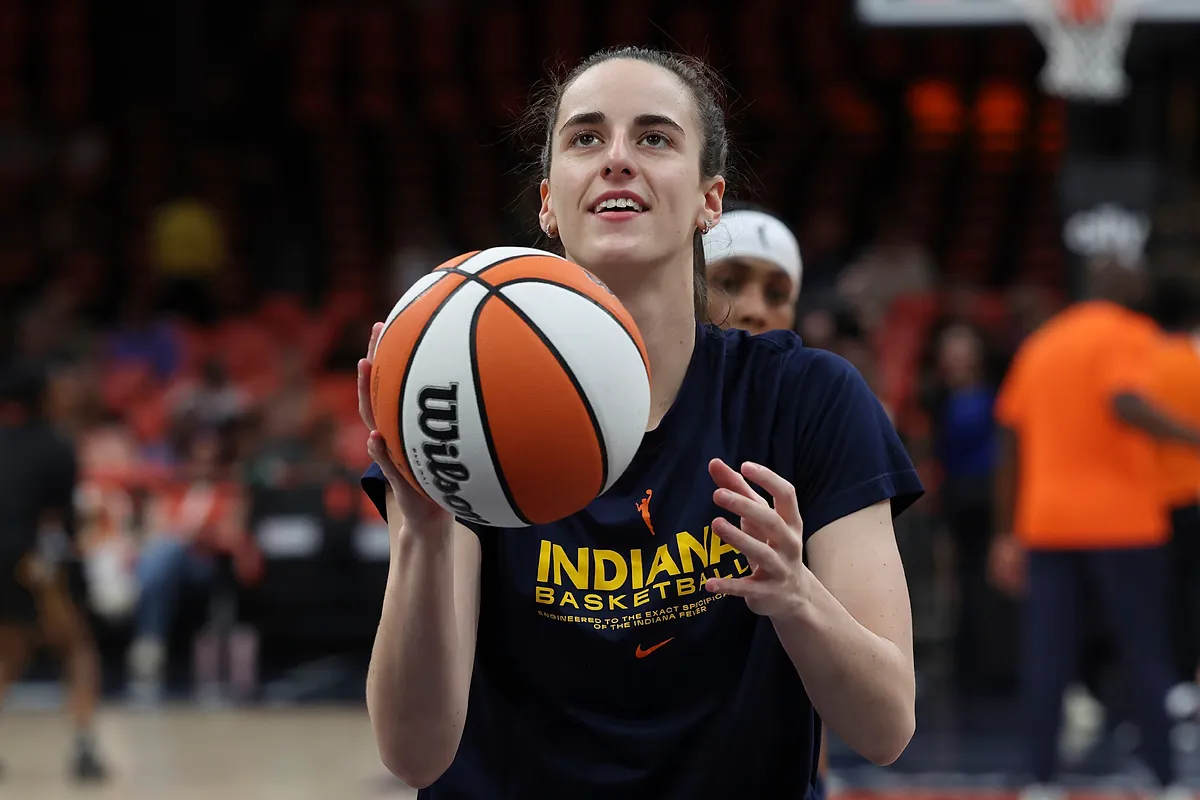
The EPIC Provision: How Caitlin Clark Fast-Tracks to a $1.7M Supermax
For fans who were shocked to see Caitlin Clark earning less than $80,000 during her 2025 campaign, the new CBA brings a massive sigh of relief. Starting in 2026, the Indiana Fever superstar is expected to see her salary leap to roughly $530,000, nearly seven times her previous pay.
This jump is fueled by a brand-new mechanism called the “Exceptional Performance on Initial Contract” (EPIC) provision. Essentially, the EPIC rule is a “fast-track” for young players who dominate the league immediately. Because Clark secured Rookie of the Year and All-WNBA honors right out of the gate, she has unlocked a specific career path:
- 2026: A projected salary of $530,000.
- 2027: Eligibility for a maximum salary of $1.3 million.
- 2028: The potential to sign a staggering $1.7 million Supermax contract.
This provision ensures that the league’s most bankable stars aren’t trapped on “rookie-scale” wages while they are driving the league’s valuation into the billions.
A New Financial Era for the Fever and the Wings
Caitlin Clark isn’t the only one benefiting from this financial improvement. Her Indiana teammate, Aliyah Boston, is also max-eligible this year, which could give the Fever one of the most expensive, and talented, frontcourts in history.
Meanwhile, the Dallas Wings are likely already crunching the numbers for Paige Bueckers, whose own path to a max deal is projected for 2028.
For the reader, the “value add” here is clear: the WNBA is no longer just a developmental project; it is a high-stakes financial machine. By establishing a clear pathway for stars to reach seven-figure earnings before their second contract even ends, the league is protecting its greatest assets. We are watching the professionalization of the WNBA salary cap in real-time, and for players like Clark, the “Supermax” isn’t just a dream-it’s a scheduled appointment.
Read the full article here