





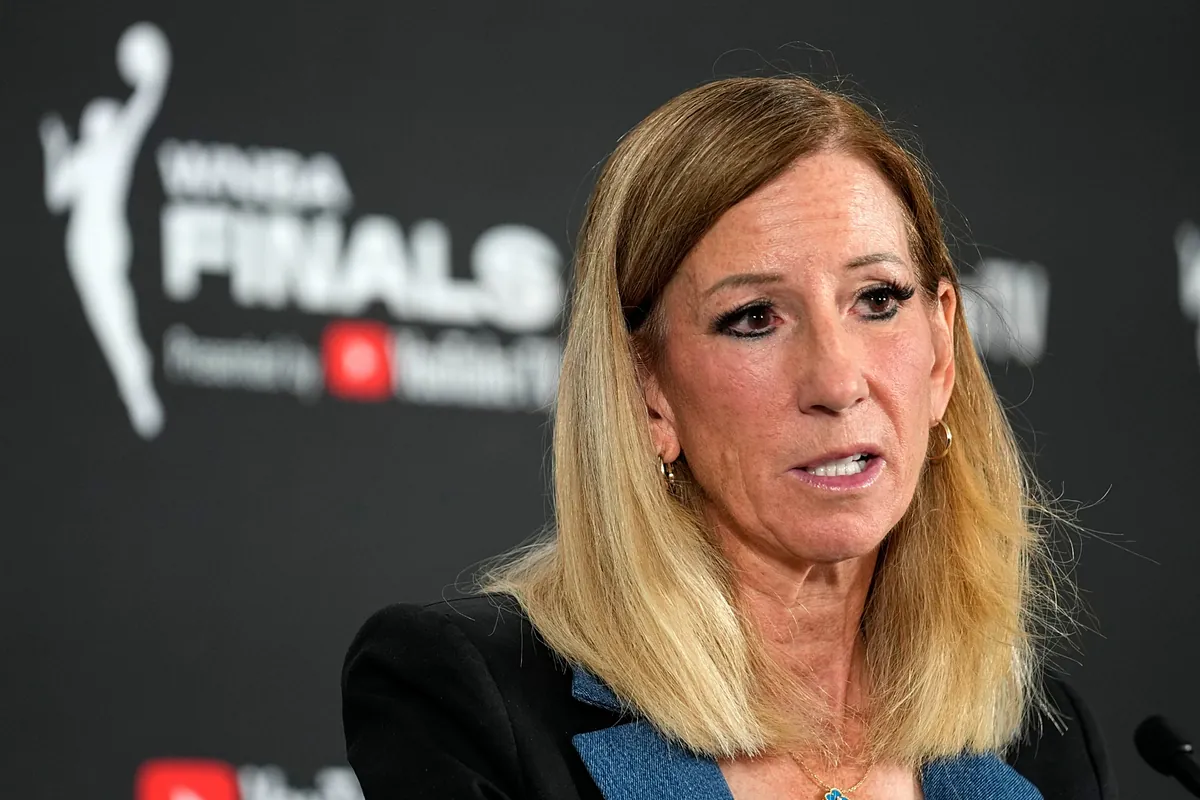
The 2026 WNBA season was saved by a narrow margin. With the deadline already gone, the league and the WNBPA finally signed a new Collective Bargaining Agreement that secured the upcoming season. Despite this, some analysts believe this could mark the end of Cathy Engelbert’s leadership of the league.
On March 18, after tense weeks of impasse, the WNBA and the Players Association finally signed the new CBA, which will be in effect for the next seven years.
The agreement guarantees players a considerable salary increase, long-overdue benefits, and a share of the league’s profits.
Press reports indicate that the players unanimously approved the new agreement, as did the league’s board of owners. Despite this, Engelbert’s days may be numbered.
Team owners are not happy with Engelbert
In a recent episode of the Flagrant and Funny podcast, Front Office Sports analyst Annie Costabile stated that team owners are concerned about Engelbert’s management.
“Leading up to this deal, there was a lot of speculation, serious speculation about her future,” Costabile said. “Once this deal is done, there will be a transition of power.”
I don’t think that this deal changing that. When you look at Cathy’s tenure, it aligns with the idea that there would be a transition of power in the near future.
Beyond the long impasse and the fact that negotiations nearly collapsed, the owners’ doubts stem from a deal that saved the league at the time, but which was always viewed with suspicion, the analyst asserted.

The deal that saved the WNBA but doomed Engelbert
In 2022, when the COVID-19 pandemic wreaked havoc on the WNBA’s already shaky finances, Engelbert sold a 16% stake in the league for $75 million.
I’ve talked to a lot of sources within the league, owners specifically, who have concerns about Cathy going back to the 16% stake sale for $75 million.
Costabile explained that at the time, the sale was seen as a moment of celebration, “But there were a lot of people inside who were like, ‘This is a mistake.'”
According to Costabile and other analysts, that stake, which today would be worth between $600 and $640 million, was what prevented them from offering the players a better deal, stalling negotiations, and, in turn, casting doubt on Engelbert’s leadership.
Read the full article here