




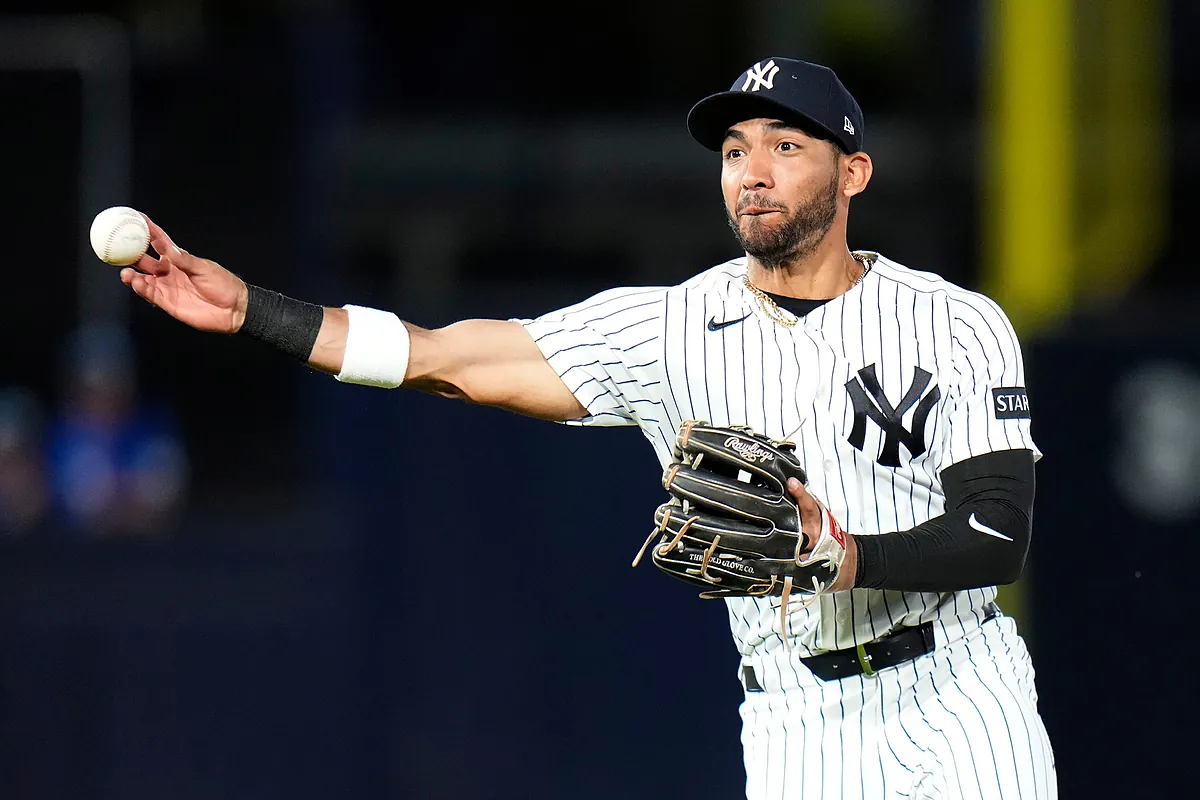
Major League Baseball’s long-awaited automated strike-zone challenge system made its official regular-season debut Wednesday night, and the first player to test it was a New York Yankee.
José Caballero found himself at the center of baseball history when he signaled for the first Automated Ball-Strike (ABS) challenge during the league’s 2026 opener between the New York Yankees and the San Francisco Giants. The moment, brief as it was, represented a turning point for a sport that has spent years debating how technology should intersect with the human element of umpiring.
Caballero challenged a called strike during his at-bat, tapping his helmet to signal the review as required under the new rule. Within seconds, the stadium scoreboard displayed the digital strike-zone graphic showing the pitch location.
The verdict? The umpire had it right.
The call stood, handing the home-plate umpire an early win in baseball’s newest in-game review process.
Still, the moment carried symbolic weight. It marked the first real-time use of a system that has been tested for years in the minor leagues and during spring training before finally arriving on baseball’s biggest stage this season.
Caballero‘s willingness to challenge the call was hardly surprising to those who have followed the Yankees closely. The versatile infielder had already shown a willingness to test the system during preseason games, and manager Aaron Boone has encouraged players to trust their instincts when deciding whether to use a challenge.
“We want to be really good at it,” Boone said earlier in camp. “We want to be the best at it. I feel like our guys, we’ve been preaching around here long enough about controlling the strike zone.”
While the challenge didn’t overturn the call, it offered a live demonstration of how the ABS system works in the regular season, and how quickly it can resolve a disputed pitch.
How MLB‘s new strike-zone challenge system works
The ABS challenge format represents a compromise between traditional umpiring and a fully automated strike zone.
Rather than replacing the home-plate umpire entirely, the system allows players to challenge a called ball or strike if they believe the call was incorrect. Each team receives two challenges per game, and they retain them if the challenge is successful.
Only the batter, pitcher, or catcher can request a review, and the decision must be made almost instantly after the pitch. The player signals the challenge by tapping his helmet or cap, prompting the umpire to initiate the automated check.
Behind the scenes, the technology relies on a network of Hawk-Eye cameras positioned around the ballpark. These cameras track the exact trajectory of each pitch and compare it to the batter’s personalized strike zone, which is calculated based on the player’s measured height.
Within roughly 15 seconds, the system determines whether the ball clipped the strike zone and displays the graphic for fans in the stadium and on television broadcasts.
Read the full article here