





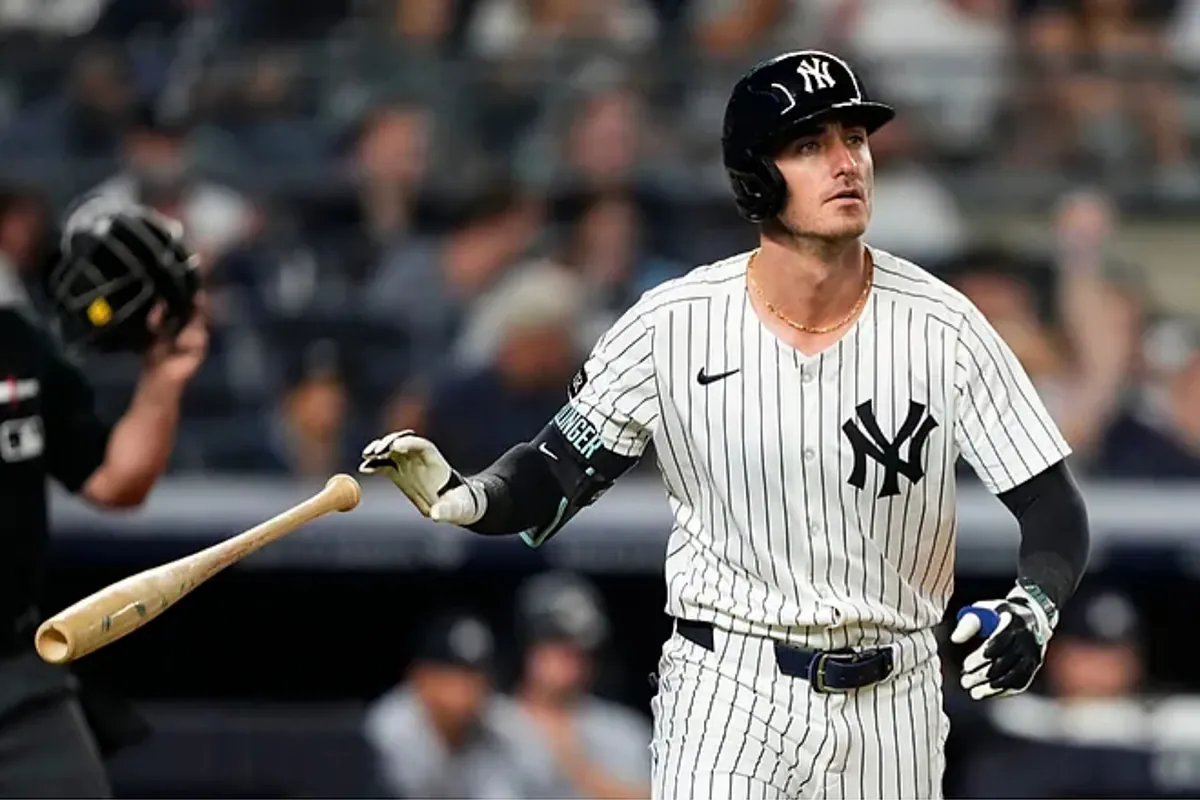
The New York Yankees have finalized a landmark contract with slugger Cody Bellinger, one that not only locks him into the Bronx through the second half of the decade but also features a first-of-its-kind clause tying his opt-out rights to the number of seasons played rather than calendar seasons.
If the league goes into a lockout, which might be a real possibility after the current CBA expires following the 2026 campaign, Bellinger‘s contract also “stops” its service time.
This provision, ultimately designed to insulate both sides from the looming threat of a labor stoppage, highlights the growing sophistication of major-league contracts in an era of increased uncertainty in collective bargaining negotiations.
The five-year, $162.5 million deal keeps Bellinger under contract with the Yankees through the 2030 season, including a $20 million signing bonus and a full no-trade clause.
Historically, opt-outs in such deals occur after defined seasons. But the looming expiration of the current collective-bargaining agreement and the possibility of a lockout being more real than ever means that both the Yankees and Bellinger‘s agent have decided to alter the structure of the deal.
According to the report, New York and Bellinger agreed that the standard post-2027 and post-2028 opt-outs would instead be tied to the number of “Championships played,” effectively ensuring that the franchise receives on-field value in the event of a labor stoppage.
It’s claimed that instead of offering him the chance to opt out after the 2027 and ’28 seasons, the way every other contract is written, it offers him the chance to opt out after ‘the second and third Championship played.
Analyzing how this contract protects all parties involved
This contractual language appears to benefit both parties.
Bellinger gets the opportunity to revisit free agency after meaningful seasons on the field, while the Yankees will have a safety net against scenarios where games are lost and the club’s investment doesn’t yield corresponding performance.
Traditional language could allow a player to exercise an opt-out in a calendar year that featured minimal or no baseball due to a lockout, leaving a team undercompensated for its long-term commitment.
Beyond the contractual mechanics, the deal represents a significant commitment by the Yankees to build around Bellinger as a key piece of their lineup.
In his first full season with New York, he hit .272 with 29 homers and 98 RBIs over 152 games, including a robust .302 average with 18 homers and 55 RBIs at Yankee Stadium.
His defensive versatility, which allowed him to play 149 games in the outfield and seven at first base without a stint on the injured list, only adds to the value he brings.
At 30, Bellinger brings both peak performance and veteran presence to a roster with championship aspirations.
He was a two-time All-Star before signing this deal and carries a lifetime .261 batting average with 225 homers and 695 RBIs. Prior to joining the Yankees, his career included stints with the Los Angeles Dodgers and the Chicago Cubs, with notable accolades including the 2017 National League Rookie of the Year Award and the 2019 NL MVP.
Innovative clause adds stability amid labor uncertainty
By tying opt-outs to seasons played rather than years elapsed, the Yankees have introduced what could become an influential template for future deals in an era of potential labor unrest.
The clause effectively protects against scenarios where a work stoppage truncates seasons and disrupts contractual milestones.
While the language may read as technical, its importance cannot be understated in context. Major League Baseball and the Players’ Association are on a collision course as they negotiate key issues – from salary structures to arbitration reform – with the current agreement set to expire at the end of the year.
In practical terms, the clause aligns both team and player incentives: Bellinger is assured that his opt-out opportunities will come after he has produced on the field, while the Yankees secure the benefit of his bat and glove for meaningful seasons, regardless of external disruptions.
Seen through that lens, this is less a gimmick and more a thoughtful adjustment to evolving realities in designing MLB contracts for years to come.
Read the full article here