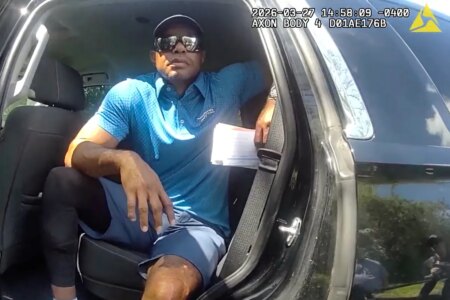







Tiger Woods faces a battery of serious legal challenges following his arrest in Martin County, Florida, on Friday afternoon.
Shortly after 2:00 PM, Woods’ Land Rover reportedly attempted a high-speed overtake before swerving and rolling onto its side.
While Sheriff John Budensiek confirmed there were no injuries, he emphasized that Woods showed clear “signs of impairment” and now faces charges of DUI, property damage, and refusal to submit to a lawful test.
The most significant hurdle for Woods may be Florida’s newly tightened “Implied Consent” laws. While Woods provided a breathalyzer sample that returned negative (0.00% BAC), he refused a subsequent request for a urinalysis.
The “Refusal” trap and property damage penalties
Under a Florida law that went into effect on October 1, 2025, a first-time refusal of a chemical test is no longer a civil matter-it is a second-degree misdemeanor.
This criminal charge carries:
- A potential sentence of up to 60 days in jail.
- A $500 fine.
- An automatic one-year administrative license suspension.
Furthermore, because the incident involved a high-speed rollover and property damage, Woods is also charged with a first-degree misdemeanor.
In Florida, a DUI with property damage is punishable by up to 12 months in jail, 12 months of probation, and mandatory community service.
Woods’ legal standing is further complicated by his 2017 arrest, where he avoided a DUI conviction by entering a first-time offender diversion program and pleading to reckless driving.
A complicated history with Florida diversion
While that prior charge was technically dismissed, Florida prosecutors often view second encounters with increased severity. Because Woods has already utilized a “one-time” diversion opportunity, he is likely ineligible for similar leniency.
For a second DUI offense occurring more than five years after the first, Florida statutes dictate mandatory fines between $1,000 and $2,000, the installation of an ignition interlock device (IID) for at least one year, and a permanent criminal record.
Given the high-speed nature of the accident and the refusal to cooperate with testing, the court may lean toward the maximum allowable penalties to deter future incidents.
Read the full article here