




In the NBA, trust travels faster than talent – and collapses even faster.
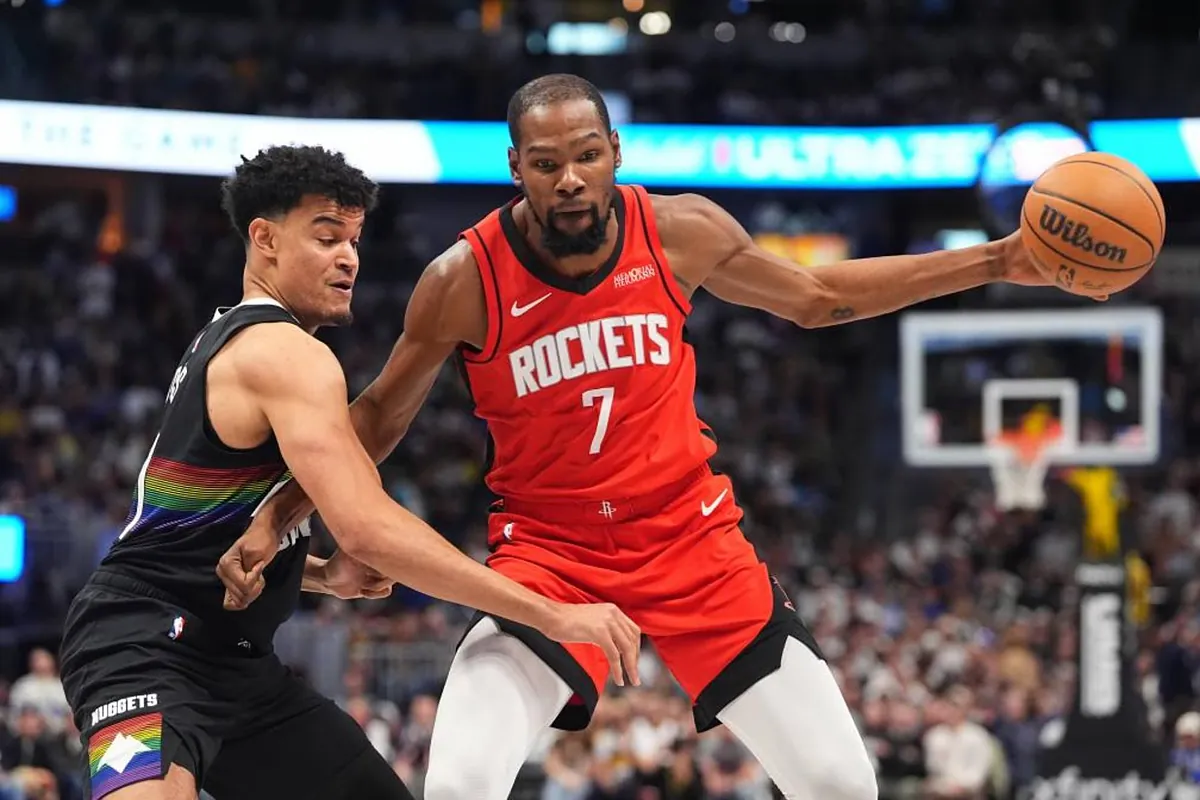
That’s the tension now hovering over the Houston Rocketsafter a resurfaced “burner account” controversy involving Kevin Durant reignited debate during All-Star weekend. The alleged posts weren’t new. The reaction was.
When Draymond Green addressed the situation on the Feb. 19 episode of The Draymond Green Show, he didn’t accuse Durant directly. Instead, he explained the ripple effects.
“I personally would address it publicly if it’s a public thing… you leave it up for people to decide what they want to decide,” Green said.
That framing shifted the story. This stopped being about tweets. It became about hierarchy – about who holds authority inside a contender’s locker room.
And Houston, at 33-20, is very much a contender. The Rockets rank top-six in offense, top-five in defense, and carry a +5.06 net rating – the statistical profile of a team built for May, not just April. On paper, this is one of the most balanced rosters Durant has led since his time with the Golden State Warriors.
Durant is averaging 25.8 points per game. Alperen Sengun is flirting with a nightly triple-threat line at 20.7 points, 9.4 rebounds, and 6.3 assists. The talent is obvious.
The issue is late-game stability. Houston is 13-15 in clutch contests and 1-5 in overtime. That’s not a roster flaw. That’s a cohesion question.
Green touched on exactly that dynamic. “When stuff happen in the public eye, it’s hard to just address it behind closed doors… everybody still have their opinion.”
Inside a playoff race, perception becomes performance.
When leadership gets complicated
The alleged account – @GetHigher77 – reportedly criticized teammates and questioned roles, including labeling Sengun unable to “shoot or defend,” calling Jabari Smith Jr. unreliable, and mocking others. In isolation, that’s social media noise. Inside a contender, it becomes destabilizing.
Superstars can challenge teammates privately. Championship teams demand it. But public ridicule – even perceived public ridicule – changes power structures.
Players begin responding differently. Conversations tighten. Trust narrows.
Green didn’t claim Durant posted anything. He warned about what happens if teammates believe he did. “I don’t know how you walk back into practice… it probably feel like a Key & Peele sketch,” he said – a line delivered like humor but rooted in psychology.
Every Durant team has faced a version of this leadership paradox. In Oklahoma City, Russell Westbrook set the emotional tone. In Golden State, Green and Stephen Curry did. In Brooklyn, no clear voice emerged. In Phoenix, Devin Booker anchored culture.
Houston is different. Head coach Ime Udoka enforces discipline. Sengun dictates offensive rhythm. The young core supplies energy. Durant closes games.
That structure works – until pressure demands emotional clarity.
The Rockets dominate for 46 minutes. Then, in crunch time, isolation creeps in. Roles blur. Authority tightens.
Green’s subtext was simple: public controversy plus silence creates private interpretation. Private interpretation creates factions. Factions lose close games.
The numbers already reflect that tension.
Houston’s ceiling is no longer purely about talent. It’s about trust. If clarity arrives – whether through direct communication or simply collective buy-in – the Rockets immediately profile as a Western Conference finals threat. If uncertainty lingers, they become vulnerable to a first-round upset regardless of seeding.
Durant guarantees a high floor. But playoff series are won by teams that understand not just who takes the last shot – but who emotionally owns the moment.
Read the full article here