




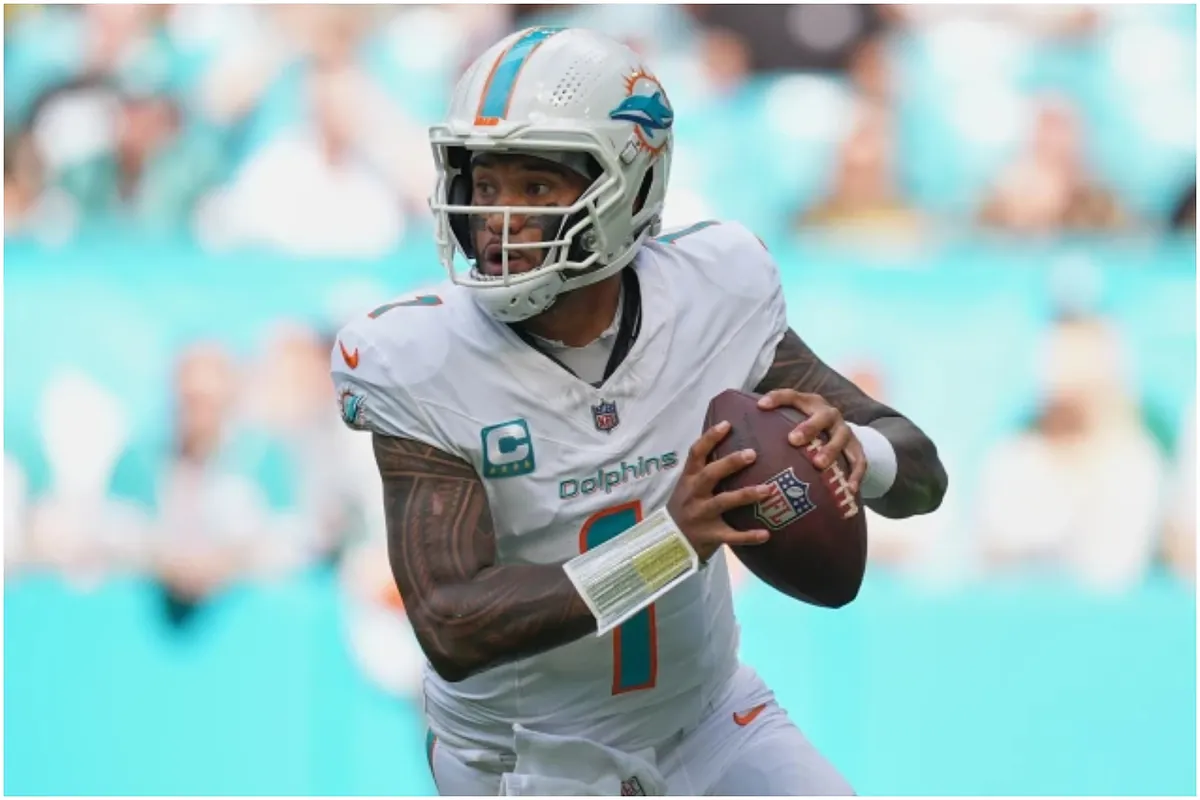
The health concerns around Tua Tagovailoa are once again part of the national conversation. During a recent appearance, ESPN analyst Stephen A. Smith issued a stark warning, suggesting the Miami Dolphins quarterback may be “one head injury away” from potentially seeing his NFL career come to an end.
He expressed serious concern over Tagovailoa’s concussion history, stating that another significant head injury could realistically force the quarterback to consider retirement.
“He’s too fragile to be an NFL quarterback”
While Smith did not cite medical information, his remarks centered on the cumulative impact of concussions and the league’s stricter protocols in recent seasons. His core message was clear: the margin for error has grown extremely thin for Tagovailoa.
“He’s small, he’s afraid of getting hit, and you can’t blame him. Look at what he’s been through. Look at the concussions… The problem is that he’s too fragile to be an NFL quarterback. He’s proven that, and it’s prevented Miami from being successful. They’re making the right decision

His perspective was not based on privileged medical records, but rather on the cumulative impact of the head injuries Tagovailoa has sustained since entering the league. In a modern NFL defined by stricter concussion protocols and a heightened awareness of long-term brain health, Smith argued that the “margin for error” has essentially vanished for Tua.
A bridge yet to cross
While his words may sound harsh, it references a humane truth often ignored in sports: the quality of life after football. The future debate for Tua is not just about whether he can complete elsewhere, it is about whether he can safely navigate life as a father and a husband in twenty years.
The Dolphins’ recent benching of Tagovailoa and reports of looking toward a “fresh start” in 2027 suggest the organization might be aligning with Smith’s grim outlook. For Tua, the jersey number 1 has always represented his rank on the field, but as the 2026 offseason looms, it may now represent the one hit he can no longer afford to take.
Read the full article here