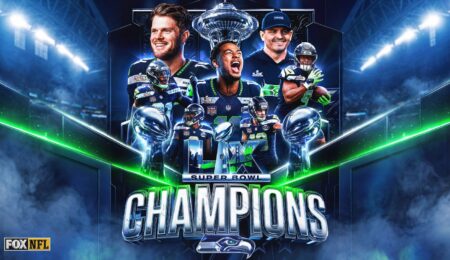




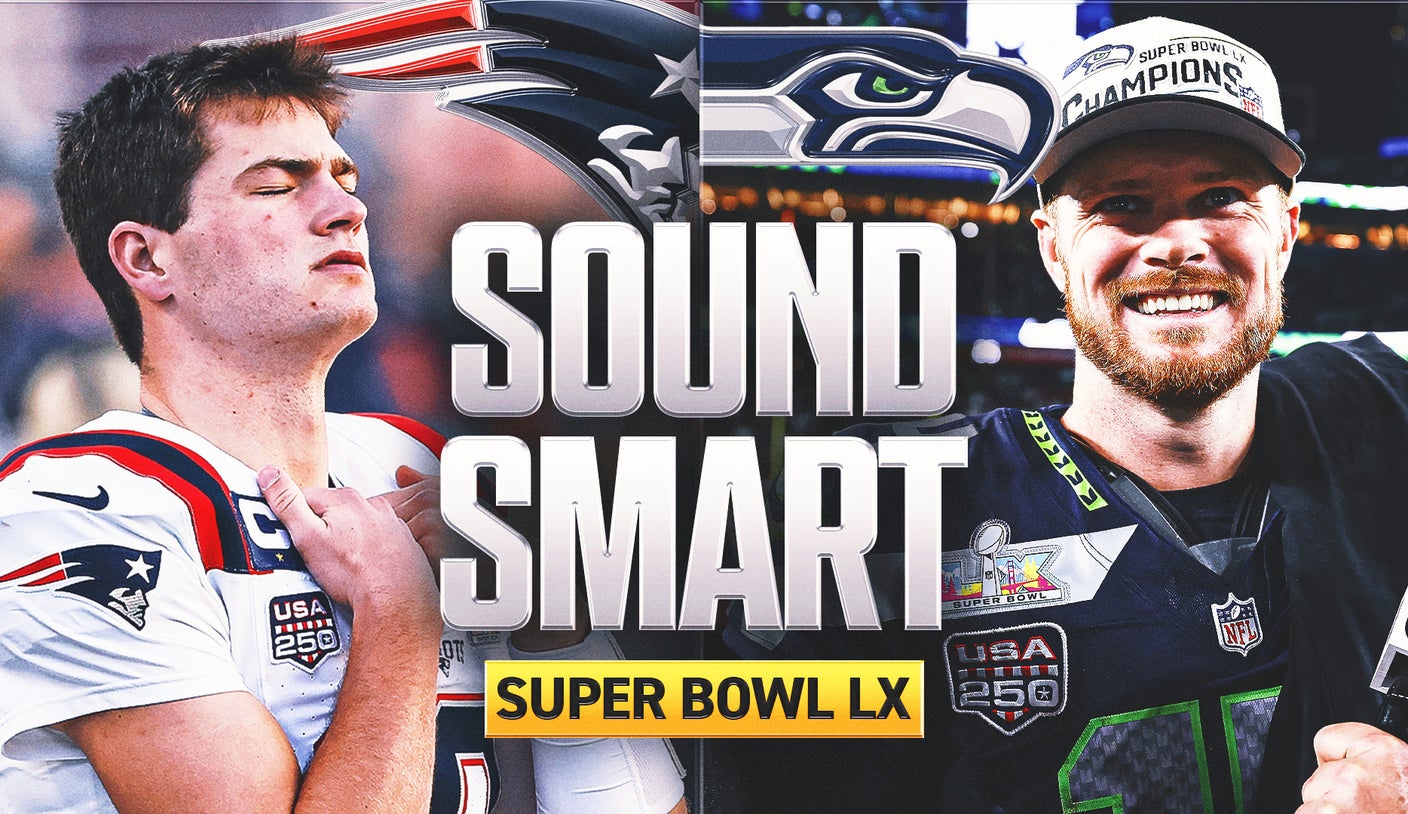
You saw the Seattle Seahawks wholly dominate the New England Patriots in Super Bowl LX to the tune of 29-13. You saw Drake Maye struggle — and look like the second-youngest quarterback to play in the Super Bowl. You saw the Bad Bunny concert — and perhaps you noticed the musical artist carrying the ball into the end zone for a touchdown before any of the Seahawks or Patriots players. The defenses were that good.
But let’s try to spin it forward, dive deeper and think outside the box about what we witnessed. This is “Sound Smart,” where we prepare you for Monday morning with observations from the Super Bowl. If I do my job, you’ll be fluent in the NFL’s grand finale.
1. IF THERE’S ONE THING YOU SHOULD KNOW
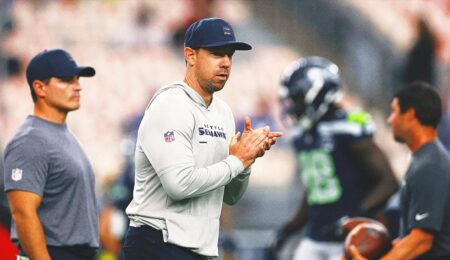
Seahawks coach Mike Macdonald just delivered his magnum opus with that defensive game plan.
There were points where Sam Darnold looked frantic. Totally out of control.
And there were points where it nearly played right into the hands of the Patriots’ defenders, quite literally. With hindsight, it was all so unnecessary. Darnold didn’t have to do … anything. If he’d wanted, the Seahawks could’ve handed off the ball to Kenneth Walker III from start to finish. The Seahawks relied mostly on Jason Meyers’ leg for the first half and its defense … for the entire season.
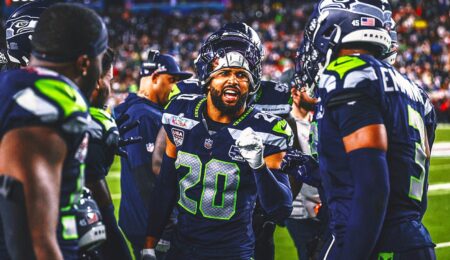
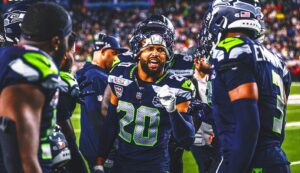
Man, that Seahawks defense.
“We were mad that they scored points at all,” Leonard Williams said postgame on NFL Network.
It was so good that it must’ve ruined most Super Bowl parties. How many people thought about turning off the game in the fourth quarter? How many did? And I hope that comes across as a compliment to Seattle, because even the most fair-weather of NFL fans could’ve seen that the Seahawks had this game under control. They’d rendered it boring at a level that they should take pride in.
“I would like to put the focus on the defense,” Walker said on NFL Network, despite winning Super Bowl MVP honors himself. “We wouldn’t be able to get this far without those guys. They call themselves ‘the darkside,’ and the darkside came out to play.”
The Seahawks held the Patriots to 13 points. Seattle didn’t allow New England into the red zone — let alone the end zone — until the fourth quarter.
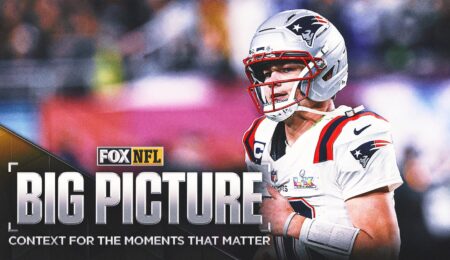
It was Maye — not Darnold — who appeared to be seeing ghosts. It was probably the worst performance of Maye’s NFL career, which includes a deeply forgettable rookie season when he and the Patriots went 3-9 in his starts. Maye simply couldn’t anticipate any of Seattle’s savvy blitzes, particularly those from cornerback Devon Witherspoon, who finished with four pressures and one sack on his six blitzes. Yes, Witherspoon is a defensive back, which speaks to the unusual and tricky game plan that Mike Macdonald had for Maye.
The young QB was helpless, not getting accurate passes to his open players — and, in some cases, not even seeing them when they got open. Maye threw two interceptions, took six sacks (and 11 QB hits), and saw six pass deflections. The Seahawks scored 17 points off three Maye turnovers (2 INTs, 1 fumble). Macdonald absolutely stuck it to the Patriots, using their young MVP finalist against them.
“DeMarcus Lawrence was joking with the team about needing a Harvard education to play in this defense, because there’s so many blitzes and pressures,” Williams told NFL Network. “We’re constantly making adjustments based on what the offense is doing. We want to make the last call and make the last move.”
For all the hype that Mike Vrabel was the second coming of Bill Belichick from an X’s and O’s standpoint, it was actually Macdonald who delivered the Super Bowl masterclass in coaching, reminiscent of what Belichick once did.
2. PEELING BACK THE CURTAIN
So what went so wrong for Maye?
This wasn’t the Maye that we’d seen in the regular season — the guy who nearly won MVP.
This wasn’t even the Maye that we’d seen in the postseason — the guy who relied upon his defense and did just enough to get by.
His poor play on the biggest stage will inevitably lend itself to outlandish takes. But Maye wasn’t a fraud. There will be people — who didn’t watch him in his other 20 games this year — who claim that he was never as good as his statistics made him out to be. Don’t buy it. He beat out a great number of good defenses. But this one broke him.
“We couldn’t gain any rhythm [or] field position. We’ve got to get into better drives offensively,” Vrabel told reporters afterward. “We were just playing catch-up. … But ultimately, turnovers cost us.”
Vrabel refused to call out his quarterback.
“We can sit here and put it all on one guy, but you’ll be disappointed because that won’t happen,” Vrabel added. “It’s starts with the coaching staff.”
The Seahawks only blitzed on 13.2% percentage of Maye’s dropbacks, and against those blitzes, he was 3 of 6 for 18 yards, an interception and a sack, per Next Gen Stats. He also saw six pressures at an 85.7% pressure rate. When Seattle sent an extra rusher, it got to Maye. And most of the time, he didn’t know it was coming, unable to read the defense pre-snap.
But those blitzes were the exception. Seattle didn’t blitz on 86.8% of Maye’s dropbacks. They didn’t need to. Between all of Maye’s dropbacks, he faced pressure 52.8% of the time. And he threw both of his interceptions against pressure. His protection let him down. And then, even when the line improved, he was rushing and missing easy throws.
“What [plays] would I like to have back? Go back to the beginning. Redo it,” Maye told reporters after the game. “Too many plays in the first half, there were plays where I could’ve made a better throw or a better decision.”
It’s uncharacteristic of Maye’s game that he couldn’t beat the Seahawks’ pressure. In the Pats’ 20games leading up to the Super Bowl, he ‘d completed 115 of 193 passes for 1,677 yards, 12 touchdowns and five interceptions against pressure.
What the Seahawks did was different. What the Seahawks did was a whole lot better than anything he’d seen.
“If you don’t make plays, you’re sitting at a podium crying,” said Maye, who was teary-eyed for much of his postgame interviews.
In the Super Bowl, Maye’s final stats (27-43, 295 yards, two touchdows, two interceptions) don’t reflect all the times that he missed straightforward throws. They don’t show the disappointing moments when he failed to do what had been so simple for him in the five months that got him to the Super Bowl in the first place.
I’ll list a few: There were simple slant and seam routes where Maye threw behind Hunter Henry and Stefon Diggs; there were back-shoulder throws where Maye didn’t put the ball on frame for Demario Douglas and Henry; there was a moment where Diggs found himself wide open on third down and Maye couldn’t keep his eyes downfield; there was the overthrow when Austin Hooper sprung open in the fourth quarter.
Most inexplicable: There was the final interception to safety Julian Love. The throw looked unlike anything we’d seen from Maye all year. And it was on a deep pass, where Maye had established himself as one of the league’s most remarkable talents.
3. THE GOOD, THE BAD & THE UGLY
For the Seahawks (who deserve the adlibs below) …
The Real MVP: CB Devon Witherspoon — In coverage, he allowed just two catches on two targets for 16 yards. He was a shutdown corner. And that could’ve been enough. But Macdonald had bigger plans. The coach sent Witherspoon after Maye on six different blitzes. Witherspoon had one sack and four pressures. Maye never seemed to see Witherspoon coming.
Really good: Kenneth Walker — His performance didn’t just fuel the Seahawks offense. It also put money in the bank for Walker, who is a pending free agent. He was the only explosive player on the Seahawks offense. And as it turned out, he was all they needed: 27 carries and 135 rushing yards.
Good: Special teams — Yeah, it was that kind of Super Bowl, where we’re praising the third and often-forgotten phase. Kicker Jason Meyers was 5 of 5 on field goals and 2 of 2 on extra points — which made him the runaway leading point scorer (17). Punter Michael Dickson managed to boom his punts for 47.9 yards per punt, which included three punts inside the 20-yard line. And the team contained an elite punt returner in Marcus Jones to just two returns for four yards.
Bad: Sam Darnold — The team carried him and gently pushed him aside as the Seahawks took more and more control of the game through their defense. They simply needed him not to give away the game, which (to his credit) he quickly realized — and complied. He completed just 50% of his passes for 202 yards and a touchdown and took one sack. His completion percentage over expected was -9.4%, and he struggled significantly against pressure. The biggest credit to Darnold was that none of his mistakes cost the team — but there were plenty that could and probably should have.
Ugly: Jaxon Smith-Njigba — It’s almost ungenerous to classify him as the ugly duckling, in part because he missed a portion of the game while doctors evaluated him for a concussion. But he didn’t have that typical novocaine presence. (Like Denzel Washington said in Remember the Titans: “Like novocaine — just give it time. Always works.”) No, Smith-Njigba finished with four catches on 10 targets for 27 yards. He was supposed to be the best player on the field, and he basically no-showed despite playing 70.4% of the Seahawks’ offensive snaps.
For the Patriots …
Good: CB Christian Gonzalez — the Patriots CB was outstanding, spending most of his time in coverage against the best receiver in the NFL, Jaxon Smith-Njigba. Gonzalez nearly intercepted a pass to Smith-Njigba at the end of the first half to hold the Seahawks to a field goal. And Gonzalez also laid out for a nicely-thrown ball to Rashid Shaheed over the middle of the field at the beginning of the second quarter. He was New England’s most dominant player.
Bad: OC Josh McDaniels — We dove into Maye’s significant shortcomings, so let’s use this opportunity to talk about McDaniels’ struggles. He couldn’t figure out how to get his quarterback to settle in against this defense — nor could he figure out how to get his QB ready for the pre-snap complications. We didn’t see anything special from McDaniels. No trick plays. And we didn’t see any of McDaniels’ signature screen passes, which might have helped to neutralize the pass-rush. His quarterback wasn’t good at the beginning. But he went from bad to worse as Macdonald gained a bigger and bigger advantage over McDaniels.
Ugly: LT Will Campbell — It was just a devastatingly tough game for the rookie, who finished with one sack allowed and a game-high 14 pressures, per Next Gen Stats. He allowed pressure on 26.4% of the Patriots’ dropbacks. He also had a false start where he got absolutely pummeled after the whistle.
In Sound Smart, we’re diving deeper and thinking outside the box about the week that was in NFL action.
Read the full article here