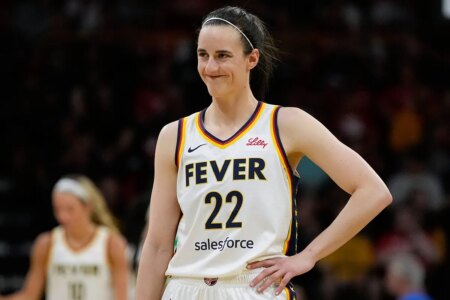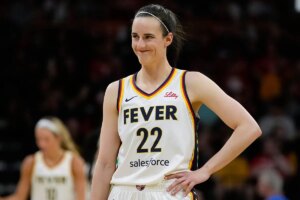






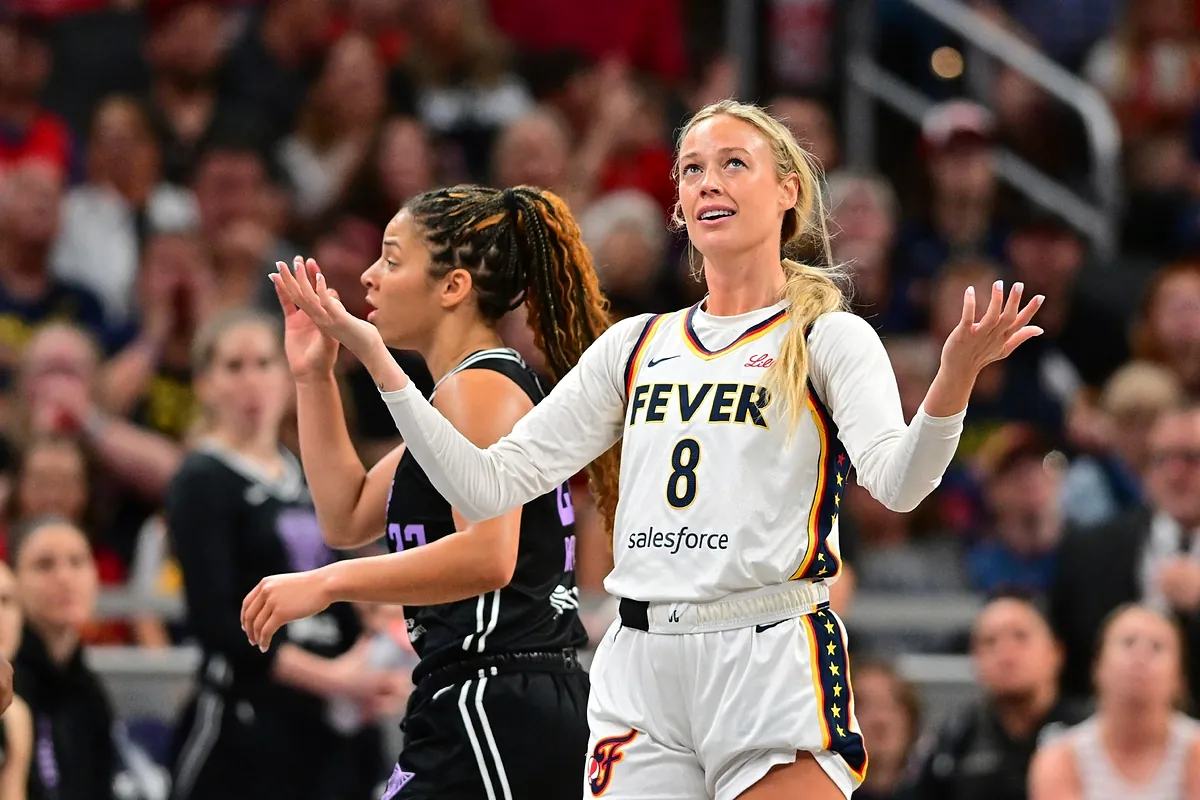
Sophie Cunningham, the outspoken guard for the Indiana Fever and one of the most visible voices in women’s basketball today, found herself trending online after an off-beat exchange about OnlyFans during a recent interview.
The moment, which quickly spread across social platforms, offered an unfiltered glimpse into the way elite athletes today navigate career uncertainty, financial limitations in the WNBA, and the broader pressures of building a personal brand.
On a December 21 episode of Sundae Conversations with interviewer Caleb Pressley, Cunningham fielded a provocative question that strayed far from typical basketball talk.
Pressley, known for his irreverent style, asked Cunningham whether she thought she could “just make money on OnlyFans” instead of relying on league platforms to cultivate her audience.
Cunningham, clearly amused and unfazed, quickly delivered a clear response: “No, I think you do need the leagues. Because that’s the platform to have all these fans.”
Pressley then noted that “OnlyFans can be a platform in themselves,” to which Cunningham quipped, “Maybe Plan B can support that platform.”
The exchange was part of the discussion that touched on pay, opportunity, and the reality of being a professional women’s basketball player.
Though the OnlyFans moment drew the most attention, Cunningham also addressed, with characteristic candor, the financial realities of WNBA life.
When the topic turned to compensation, she acknowledged with a laugh that pay in the league is modest compared with other professional sports, a reality many WNBA players confront as they build careers both on and off the court.
Cunningham has been a vocal supporter of increased pay in the WNBA
Sophie Cunningham has carved out a reputation as one of the WNBA‘s most unfiltered voices, frequently speaking openly about league leadership, pay equity, and the challenges that players face.
Earlier this year, Cunningham was vocal in criticizing the WNBA‘s leadership structure, asserting that those in power “don’t know sh-t about basketball” and urging greater accountability from the league office.
Cunningham has also used her platform to talk about labor concerns in the league. As collective bargaining negotiations unfold, players across the WNBA have voiced frustration about contracts, travel conditions, and compensation, a dispute that has at times put the possibility of work stoppages on the table.
Cunningham‘s path has also mirrored the shifting opportunities for women’s basketball players off the hardwood. In late 2025, she signed with Project B, a new global women’s league seeking to capitalize on rising interest in the sport.
The move shows that players are no longer limited to one traditional league, and alternative ventures, athletic and commercial, are becoming a bigger part of the conversation.
Read the full article here