





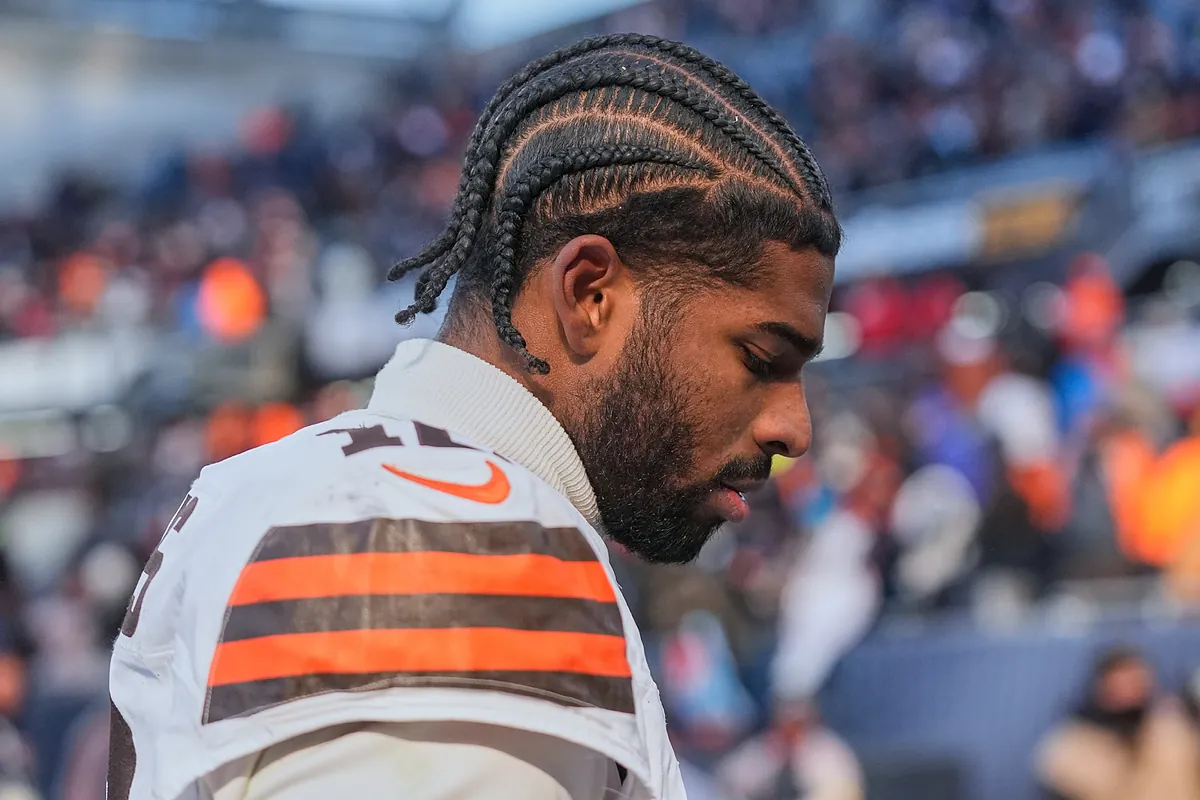
Cleveland Browns rookie quarterback Shedeur Sanders endured another difficult afternoon in Week 15, finishing a 31-3 loss to the Chicago Bears with a stat line that reflected the offense’s struggles.
Sanders completed 18 of 35 passes for 177 yards and threw three interceptions, a performance that drew scrutiny as the Browns‘ season continues to unravel. Yet inside the locker room, belief in the rookie quarterback remains intact, particularly from one of his closest on-field allies.
Tight end Harold Fannin Jr., also a rookie, emerged as Sanders‘ most vocal supporter following the loss. Fannin has quickly become a security blanket for Sanders, leading the team with 14 targets against Chicago and catching seven passes for 48 yards.
Rather than deflecting responsibility, Fannin acknowledged his own role in helping the quarterback improve and was candid about areas he wants to sharpen.
“Browns TE Harold Fannin Jr. said he has things he wants to clean up after Bears loss,” wrote Scott Petrak of the Chronicle-Telegram.
“Said he can be more decisive in routes, give Shedeur Sanders a cleaner picture.”
That emphasis on clarity speaks to the challenges Sanders has faced as a rookie navigating complex defenses.
While one of his interceptions came after the ball slipped through the hands of wide receiver Jerry Jeudy, the overall performance underscored how much work remains.
Coaches and analysts alike have noted that Sanders is still adjusting to the speed of the NFL game, particularly against disciplined defenses like Chicago’s.
Building Chemistry Through Accountability
Fannin‘s comments highlight a growing chemistry that could shape Sanders’ development over the final stretch of the season.
League analysts have frequently pointed out that young quarterbacks benefit most from dependable tight ends who can create clear throwing windows and serve as reliable options on critical downs.
Former NFL quarterback Dan Orlovsky has said on ESPN broadcasts that tight ends who “run decisive routes and show early” can dramatically ease a rookie quarterback’s transition.
Sanders‘ overall numbers this season reflect both promise and inconsistency. Through multiple starts, he has completed 52.2 percent of his passes for 946 yards, five touchdowns, and six interceptions.
The Browns have made it clear they intend to continue evaluating him during the second half of the season, giving Sanders opportunities to show growth despite the team’s struggles.
Fannin, meanwhile, has quietly become one of the most productive rookies at his position. Through his first 14 games, the third-round pick has hauled in 66 receptions for 667 yards and four touchdowns.
His emergence has not gone unnoticed by opposing defenses, which makes his commitment to cleaner route-running even more important.
NFL Network analysts have often emphasized that rookie quarterback and tight end pairings succeed best when both players grow together through film study and accountability. That approach appears to be taking shape in Cleveland.
Rather than pointing fingers, Fannin‘s willingness to adjust his own game reflects a broader effort within the offense to support Sanders.
The Browns will need more consistency from everyone involved if they hope to see meaningful progress. Sanders‘ audition as a potential long-term option continues, and performances like Week 15 raise legitimate questions.
Still, with teammates like Fannin focused on improvement and communication, the foundation for growth remains in place.
As Cleveland prepares for Week 16, the spotlight will again be on Sanders. Whether he can turn support into results may determine not only how the season finishes, but how the Browns view their rookie quarterback moving forward.
Read the full article here