





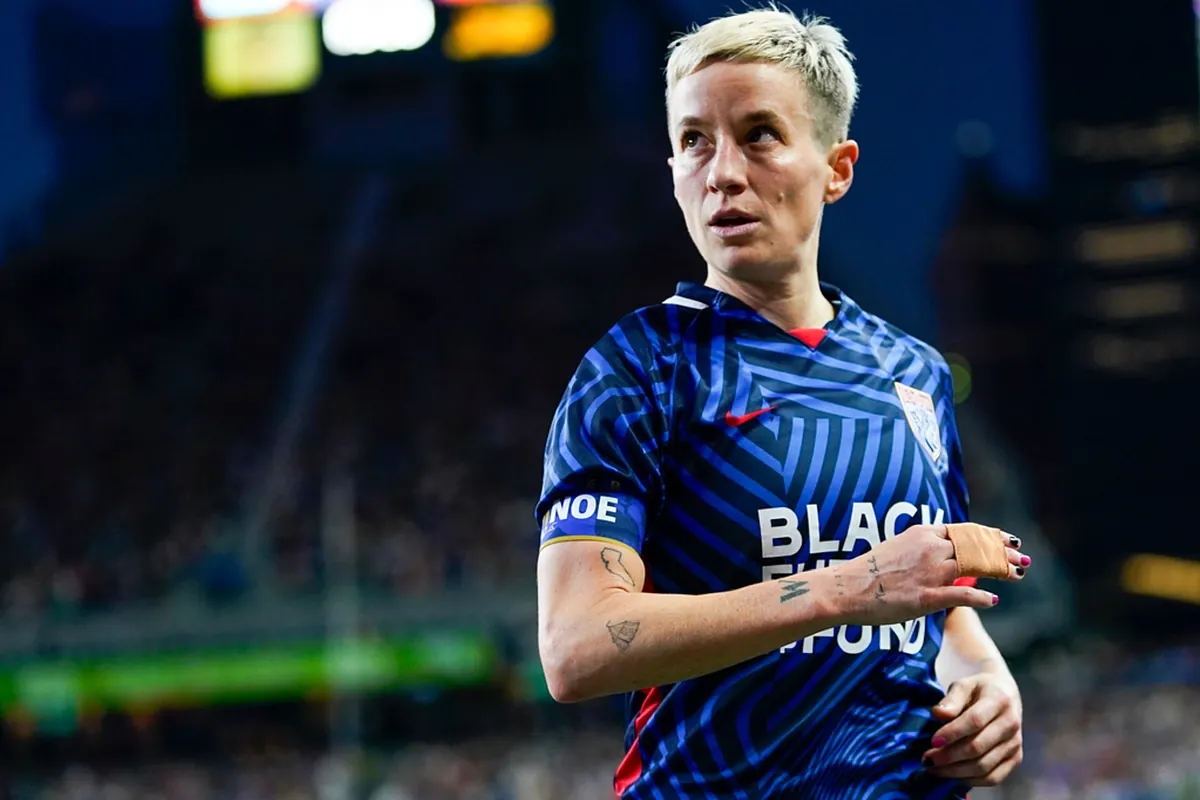
Megan Rapinoe, one of the most outspoken figures in women’s soccer history, is facing fresh scrutiny for what critics describe as her silence on a dramatic situation involving the Iranian women’s national football team.
Seen as one of the most highprofile voices in women’s sports, Rapinoe has remained largely quiet on the matter until this week, prompting both praise and criticism from farflung corners of the athletic and political worlds.
Piers Morgan, the British media commentator and former television host, recently took to X to call out Rapinoe, labeling her response, or perceived lack of one, “telling, damning, and hypocritical.” His comments have reignited debate about the role of elite athletes in international political issues, especially when those athletes have built public brands around advocacy.
The controversy centers on events during the 2026 AFC Women’s Asian Cup in Australia, where several players from the Iranian women’s national football team sought safety in the host country amid fears for their personal security if they returned home.
The asylum bids followed a tense match in which members of the team declined to sing Iran’s national anthem, prompting state media coverage and nationwide concern for their safety.
Rapinoe breaks her silence
Rapinoe, a former star of the United States women’s national team and one of the most outspoken athletes in recent memory on issues ranging from gender equity to LGBTQ rights, used a recent episode of her and her fiancée, Sue Bird‘s, podcast A Touch More to acknowledge the situation facing the Iranian players.
The episode aired March 19, more than two weeks after the Iranian team declined to sing its national anthem before a Women’s Asian Cup match in Australia, an act that ignited a firestorm back home.
In some corners of Iranian state media, those players were labeled “wartime traitors,” an accusation that carries grave implications given the country’s severe political climate.
Rapinoe spoke about the pressures facing the players after they were seen refusing to sing Iran’s national anthem at the Women’s Asian Cup, and later sought asylum in Australia. Her remarks focused on the courage she believes the players showed and her hopes for their safety and futures.
“The incredible courage and bravery it would take knowing what that could potentially mean for their family back home. The bravery and courage to protest the national anthem, basically in protest of the Iranian regime and not singing the national anthem during a match,” she said.
“I, of course, fully support their decisions to seek asylum and seek a better life and to try to escape an incredibly oppressive regime in that situation.
“I hope the ones that have chosen to stay feel a sense of peace and hope about a potential for a new life in Australia or otherwise.”

Rapinoe herself has been no stranger to controversy throughout her career. An advocate for equal pay and LGBTQ rights, she helped bring heightened attention to gender equity in sports, including as part of the U.S. women’s national team‘s push for equal compensation.
Read the full article here