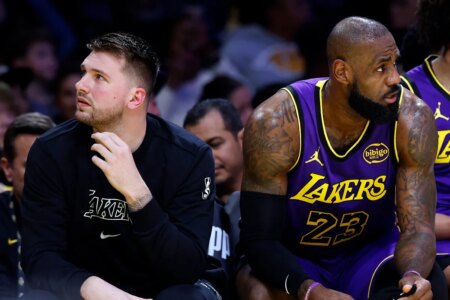






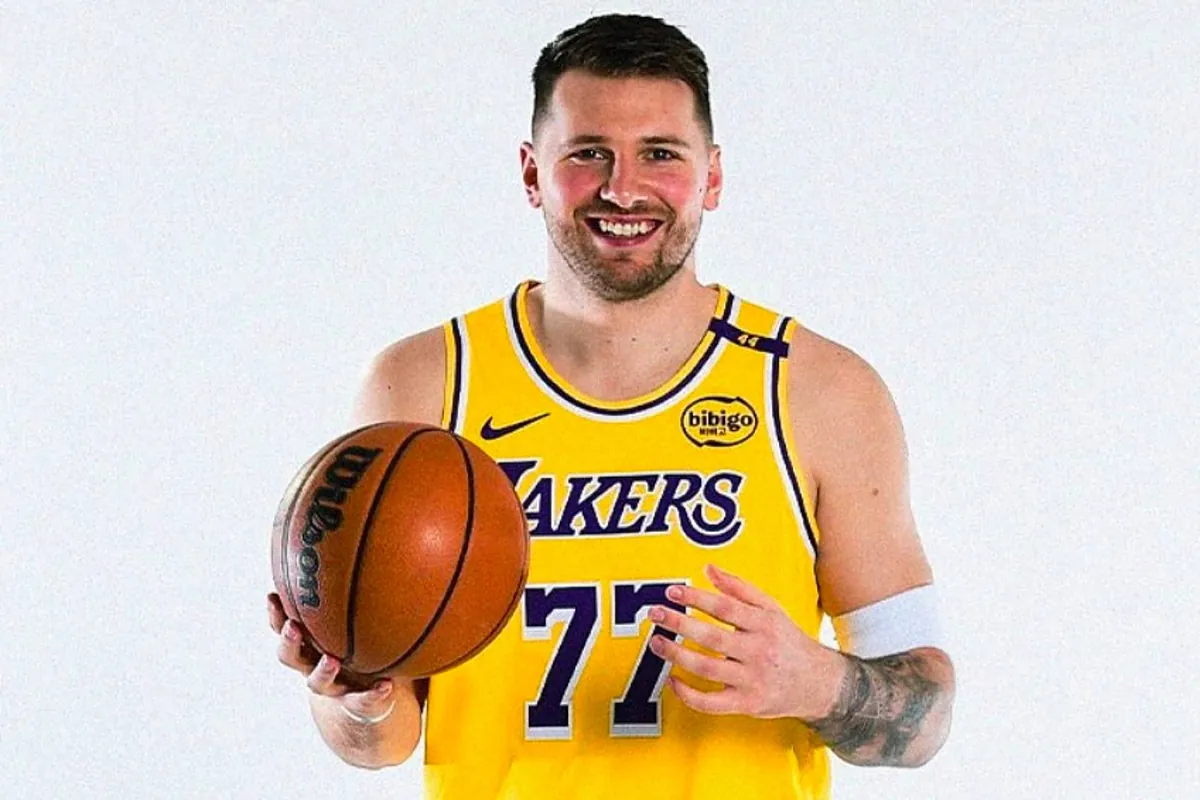
When Luka Doncic was traded from the Dallas Mavericks to the Los Angeles Lakers last season, the basketball world was rocked.
The 26-year-old had been the face of the Mavericks for years due to his role as a perennial All-Star and franchise cornerstone, and the deal sent shockwaves through the NBA.
In a candid conversation on Cousins with Vince Carter and Tracy McGrady, Doncic opened up about the emotional toll of leaving Dallas and the unexpected competitive twist: seeing his former boss, Mark Cuban, “miserable” when they met on the court.
“Yeah, I’m trying that now.”
That brief line, responding to McGrady’s comments about wanting Cuban to look miserable in games against his former star, captures a level of intensity rarely expressed so openly by a player toward a former organization.
It reflects both personal heartbreak and the competitive nature that defines elite athletes.
The emotional weight of a home lost
For years, Doncic envisioned finishing his career in Dallas. Fans embraced him as a generational talent, and he carried the franchise through deep playoff runs, including an NBA Finals appearance.
But when the blockbuster deal sent him to Los Angeles in exchange for, among others, Anthony Davis, the dream was abruptly upended.
Speaking about his first month in Los Angeles, Doncic admitted there was a period of adjustment. Leaving behind the familiar uniforms, the city he’d grown to love, and the fans who adored him was difficult.
“It’s a lot to get in, you know,” he said, expressing the emotional complexity of such a life-altering change.
But within a year, the narrative has shifted. While the transition was hard initially, spending time by the beach and getting comfortable in his new surroundings has helped anchor him both personally and professionally.
Performance and competitive vindication
Since the trade, Doncic has arguably silenced any doubters with his on-court performance.
In four games against Dallas as a Laker, he boasts a 4-0 record with staggering averages of 33.0 points, 10.0 assists, and 9.0 rebounds. In other words, he’s nearly averaging a triple-double in every matchup against his former team.
That dominance isn’t just statistical, it’s psychological. These performances give weight to his desire to see Cuban and the Mavericks “miserable.”
And while that sounds harsh in isolation, it’s rooted in the emotional upheaval that comes when a beloved chapter of a player’s life closes unexpectedly.
Cuban, a flamboyant owner known for his passionate involvement, helped make the Mavericks a perennial contender and remains a beloved figure in Dallas.
But the trade, which was executed under new majority ownership, left him detached from the process, a reality he has admitted still stings.
In interviews, Cuban acknowledged he would have handled the situation differently and regretted not having more control over the outcome.
This adds a layer of mutual frustration to their competitive rivalry: the player who didn’t want to leave and the former owner who didn’t want to see him go.
The impact of the trade
The trade reshaped not just the two franchises but also broader league narratives. With Doncic now leading the Lakers’ offense, and doing so at an elite level, it wouldn’t be a stretch to say the Lakers are firmly in championship conversations.
Doncic himself is averaging a league-high 33.4 points per game, along with 8.7 assists and 7.9 rebounds, numbers befitting a generational superstar.
For Dallas, the aftermath has been rocky. The return package has yet to yield the immediate returns fans hoped for, and the franchise remains in transition. The emotional void left by Doncic‘s departure continues to shape fan sentiment and the Mavericks‘ identity.
What makes this story resonate beyond trade mechanics is its human element: a young talent uprooted from the only NBA home he knew, an owner reflecting on what could have been, and a rivalry that now plays out every time they share a court.
In a league driven by numbers and narratives, this chapter – equal parts heartbreak and redemption – will be remembered as much for its emotional impact as its competitive significance.
Read the full article here