




It’s pretty easy to make a Hall of Fame case for Justin Verlander, the 21-year veteran whose final start of his career comes on Saturday for the Tigers. He’s won three American League Cy Young awards and an AL Most Valuable Player award, was named to the All-Star team in half his years in the majors after his first full-season campaign in 2006, and has missed more bats than almost anyone in history across a whopping 556 starts.
The bigger question is about whether Verlander, an all-time great, is also an inner-circle Hall of Famer. Just what kind of legend is Cooperstown going to enshrine five years from now, when the ex-Tigers, Astros, Mets and Giants hurler gets placed on the ballot for the first time? There’s a case to be made that Verlander is not just one of the best of his generation but one of the very best pitchers ever, even among Hall of Famers.
Consider what it means to have thrived as long as Verlander has, for one. In MLB’s lengthy history dating back to the 19th century, 12,077 different pitchers have recorded at least one out, with 12,115 total taking the mound to at least face a batter. Verlander, if he gets at least one out on Saturday, will rank 65th all-time in innings pitched; if he somehow gets through six innings in his first start back from the IL – unlikely, considering, but let’s dream a little – he would be tied for 64th with Hall of Famer CC Sabathia. Just in terms of how many outs he recorded and innings he put behind him, never mind the quality of those innings, Verlander is in the top 0.005% of all pitchers that have ever taken the mound.
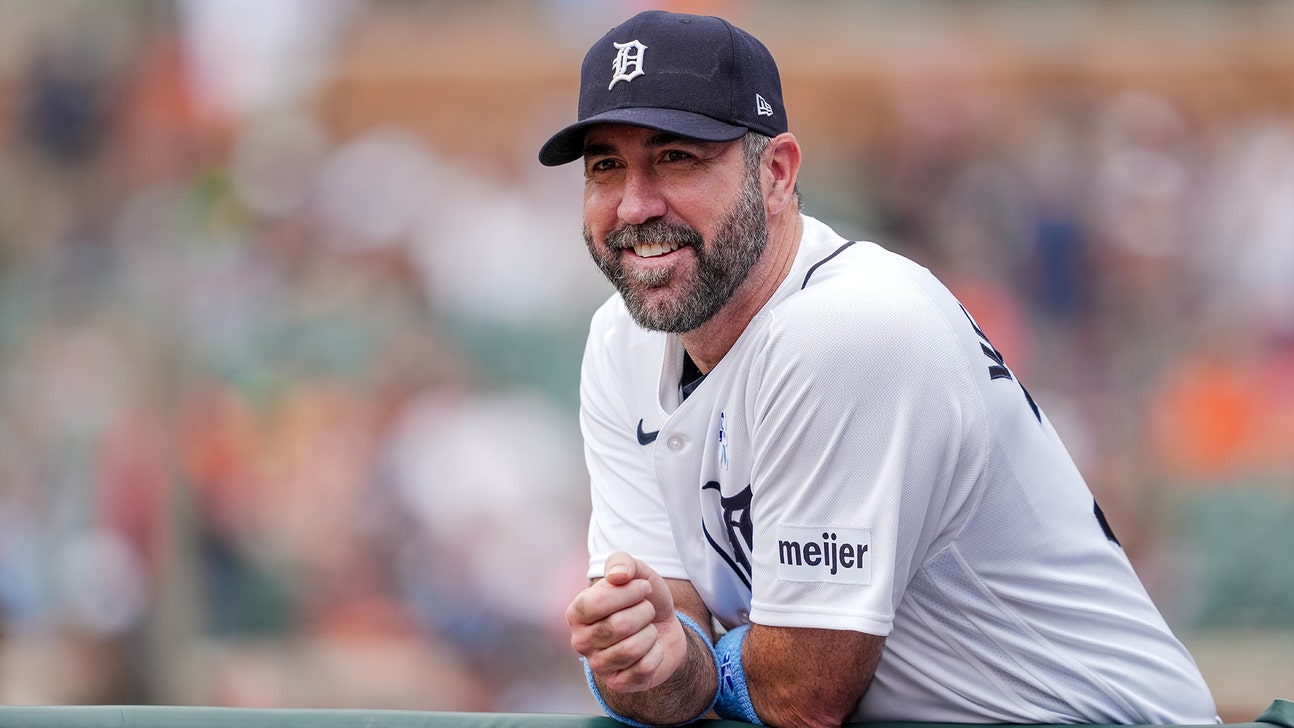
While with the Tigers in 2011, Verlander made the leap from great pitcher to the one that will be remembered years after he retires. (Photo by Leon Halip/Getty Images)
Sabathia, along with Verlander, is one of four pitchers to debut in the 21st century to make it into the top 100 in innings pitched: the other two are longtime White Sox and Marlins starter Mark Buehrle, and future Hall of Fame starter, Zack Greinke. For as good as someone like Jacob deGrom has been, he is also a pitcher for which “health is a skill” comes to mind: deGrom is the active leader in ERA at 2.69, well ahead of Verlander’s 3.33 mark, but the innings difference between the two pitchers (1,873) is greater than deGrom’s career innings output (1,698 ⅓) – Verlander has been nearly twice as valuable despite the gap in ERA due to volume.
Of course, you don’t get to throw that many innings without them being quality ones. The “worst” pitcher in that foursome is Buehrle, who didn’t have a below-average season on his résumé until his final one in the majors – even then, Buehrle led the American League in walks per nine (1.5) and threw 198 ⅔ innings, putting a bow on a borderline Cooperstown case. Verlander faltered on a couple of occasions during his peak, and his 40s were nowhere near as good as his 20s or 30s, but the overall picture is one of historic dominance. Again, he has a 3.33 ERA in his career, which spans 21 seasons. He rebounded from a tough start to 2025 to finish with an above-average ERA as a 42-year-old with San Francisco last summer. Injuries were the only thing that kept us from finding out if he could pull that off one last time this time around.
Verlander ranks 66th all-time in innings – soon to be 65th, and is 37th in wins, with 266. Wins aren’t a great measure of a pitchers’ ability, no, but 266 is a lot of them, and more than we’re likely to see from any pitcher in the modern game, too – Verlander was able to amass that many in no small part because of his ability to pitch deep into games. He has the 65th-lowest hits per nine ever (7.6912), is 40th in strikeouts per nine (8.9563), 42nd in strikeout-to-walk ratio (3.5328), 54th in adjusted ERA+ (128), 57th in WHIP (1.13363), and eighth in strikeouts, with 3,554. Depending on how Max Scherzer’s Sunday goes – or if Scherzer pitches again in 2027 – Verlander might move back to ninth, since the two are just four Ks apart entering 2026’s final weekend. Whether eighth or ninth, though, that’s more strikeouts than over 12,000 pitchers before him managed.
Justin Verlander won two World Series in his career, the first with the Astros in 2017 after he was traded by the Tigers midseason, and again in 2022 when he ended up winning his third and final Cy Young at the age of 39. (Photo by Cooper Neill/MLB Photos via Getty Images)
Longevity is the name of the game here. Like with health being a skill, being able to perform at a high level for so long is key to Verlander being an inner-circle type. Like with deGrom, Félix Hernández, at his peak, was probably a better pitcher than Verlander. Hernández’s career lasted for a comparatively short 15 years, though, and his peak for under half of that time. Verlander, though, is wrapping after 21 seasons total and 19 full ones, with a peak that began with his first Cy Young in 2011 at age 29, and encompassed at least 11 of those years total, in which he produced a 2.95 ERA over 2,098 innings with 2,233 strikeouts. Verlander closed out his peak by having one of the greatest-ever seasons for a pitcher his age: in 2022, at age 39, Verlander led the majors with a 1.75 ERA while limiting opponents to just six hits per nine innings, winning his third Cy Young and helping to lead the Astros to another World Series championship.
Just 14 pitchers have at least an ERA as good as the one from Verlander’s peak, and with as many or more innings and strikeouts in their entire career – Verlander’s 11-year peak looks an awful lot like Sandy Koufax’s entire 12-year career: a 2.76 ERA, 2,324 innings and 2,396 strikeouts. Verlander could have had a Hall of Fame case based on those 11 seasons alone, is the thing, but he had another eight full campaigns to go with them, and those were nothing to sneeze at, either: before Verlander first won a Cy, he already had four seasons worth between four and 5.5 wins above replacement to his credit.
So, what does this all add up to? Verlander ranks 24th among starting pitchers all-time in Baseball Reference’s wins above replacement calculations – the combination of quality and volume has been matched by very few arms in MLB’s lengthy history. By another measurement designed specifically for measuring Hall of Fame worthiness, Verlander comes out even better. JAWS, which combines overall career WAR with peak WAR to paint a picture of longevity vs. peak – think, compiler vs. true dominance – has Verlander 18th when you adjust for the absurd innings totals that starters used to get in the late-19th and early 20th centuries. For some additional context, the recently retired Clayton Kershaw ranks 20th there, Greinke is 25th and Scherzer 27th. Those were special arms at their best, and Verlander’s the greatest among them.
MLB Related Stories
Every single pitcher ahead of Verlander on this list is in the Hall of Fame, and most are considered inner circle by the masses. Walter Johnson, Cy Young, Roger Clemens, Lefty Grove, Tom Seaver, Greg Maddux, Randy Johnson, Christy Mathewson, Warren Spahn, Pedro Martinez, Bob Gibson, Steve Carlton… these are the kinds of pitchers that have had a career better than Verlander’s. Names that transcend their own era and not just enter the Hall of Fame, but become the benchmarks by which future pitchers are judged. Verlander, indeed, has been that kind of starting pitcher, one those who saw him pitch when they were young will use as a measuring stick against newer pitchers when they and Verlander are old.
Verlander is the best pitcher of his generation, a shoo-in first-ballot Hall of Famer and one of the greatest to ever take the mound ever. He had the dominance, he had the longevity, he had the health and the unhittable stuff and has missed bats like few before him. On Saturday, MLB will say goodbye to one of its all-time greats, but his career will live on into the future, just like other greats before him.
Read the full article here