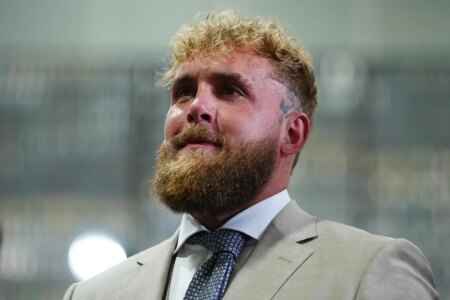




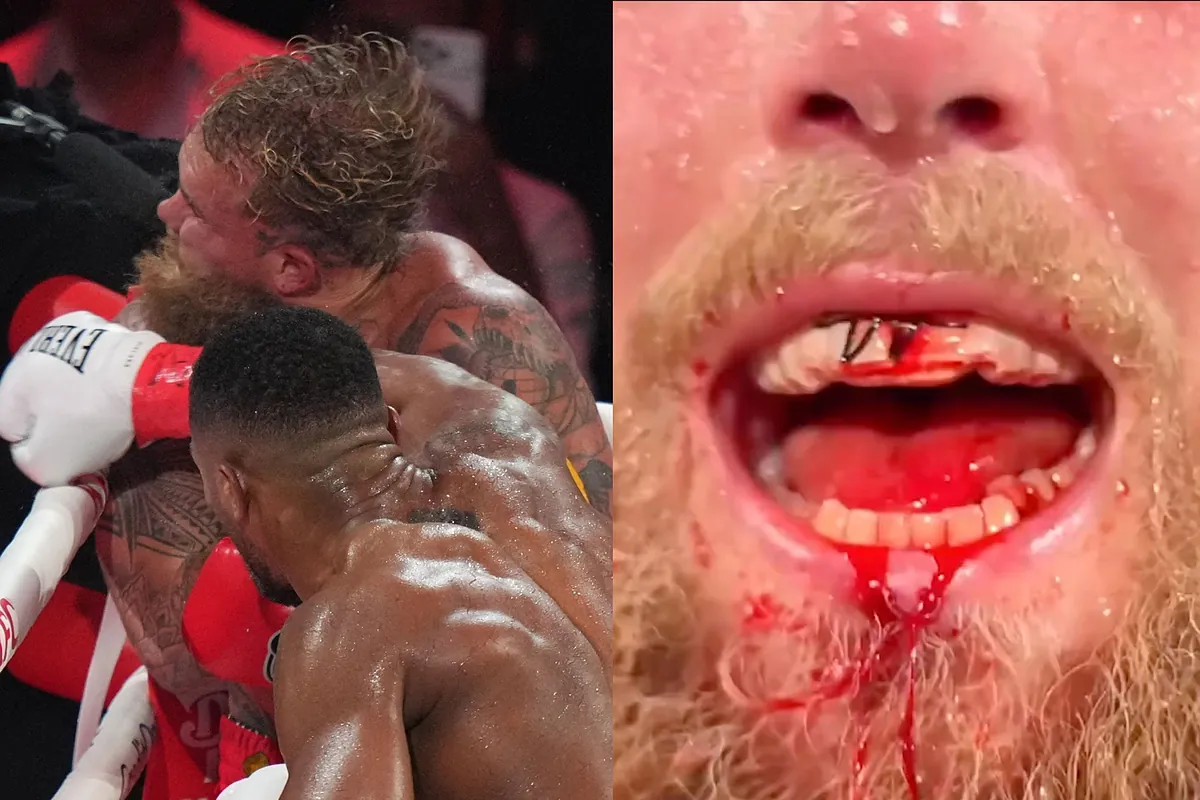
The aftermath of the fight didn’t end when the referee stopped it. Jake Paul later appeared on camera revealing the physical damage caused by Anthony Joshua, showing clear injury to his jaw that reignited conversation across the boxing world. What fans saw was serious damage something only a true heavyweight could inflict.
Still visibly shaken, Paul explained that the knockout wasn’t just decisive, but brutal. The way he spoke, the way he moved his mouth, and the careful way he pointed to the injury told a deeper story than any highlight clip ever could. For the first time, he truly felt the power of a ruthless professional.
Jake Paul shows the aftermath of the ruthless knockout
The fight itself ended in the sixth round. From the opening bell, Joshua controlled distance, tempo, and pressure, breaking Paul down methodically and striking at the right moments without mercy or hesitation. By the end, the damage was written on Paul’s face, especially along his jaw.
More details emerged in the aftermath. Paul revealed that Joshua’s punches fractured his jaw in two places, requiring medical evaluation. He admitted he would take time away before even considering a return, acknowledging that this loss was different both physically and mentally.
Until this fight, Jake Paul had continued to push forward in his boxing career, facing very different opponents such as Julio César Chávez Jr., Mike Tyson, Mike Perry, and Ryan Bourland. He entered the bout with a 12-2 record, with his only losses coming against Joshua and Tommy Fury.
For Joshua, the moment reinforced what many already believed: elite heavyweights operate on a completely different level. There was no showmanship and no mercy, just execution. Paul stepped in with a true professional and was met head-on by AJ’s fists, which forced him back to reality.
As Jake Paul recovers, the biggest question now hangs in the air: was this a painful lesson, or the final warning? This fight left a mark that won’t fade anytime soon and one that could stay with him forever.
Read the full article here