






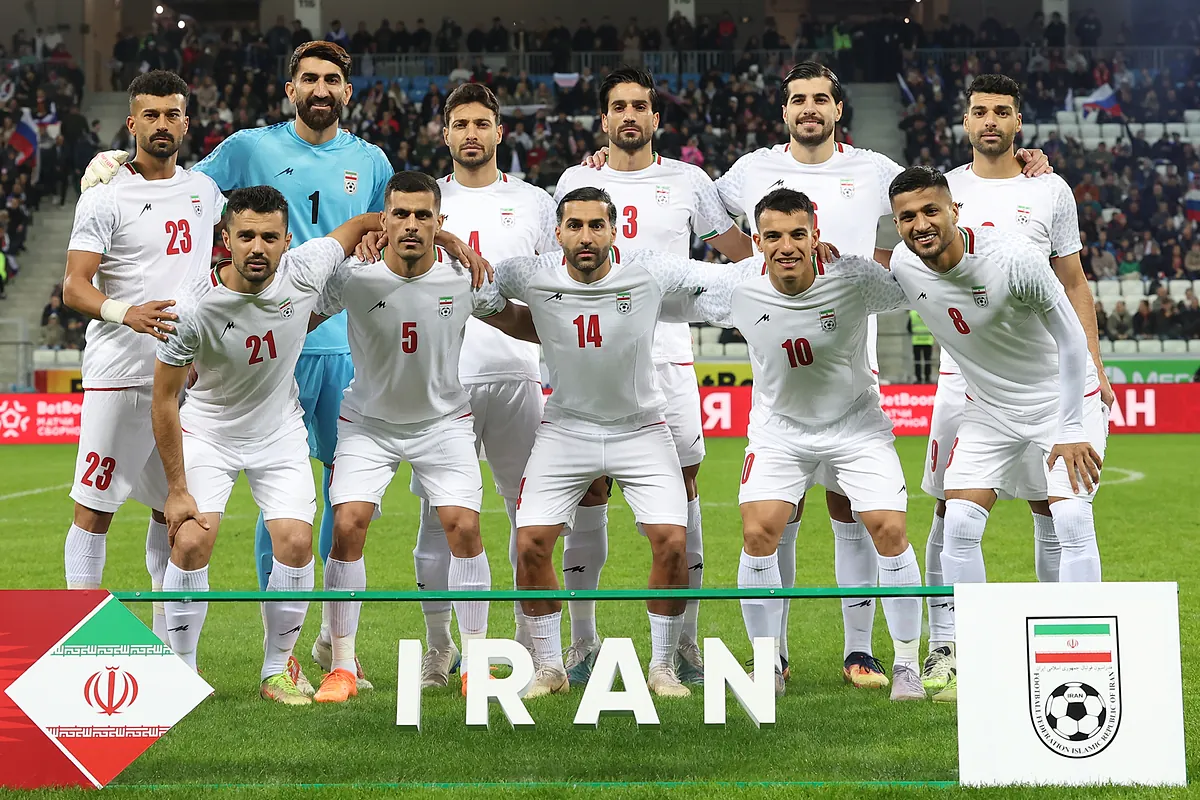
Iran’s participation in the 2026 World Cup is suddenly clouded by uncertainty after U.S. and Israeli airstrikes on Iranian targets escalated tensions across the region.
Mehdi Taj, president of the Football Federation Islamic Republic of Iran, admitted he does not know whether the national team will ultimately be able to compete in the United States as scheduled.
“What is certain is that after this attack, we cannot be expected to look forward to the World Cup with hope,” Taj told the Iranian sports outlet Varzesh3, as Iran and Israel exchanged strikes in what has become a rapidly widening conflict.
The military escalation followed the killing of Ali Khamenei, a development that has thrown Iran’s political future into uncertainty and heightened fears of prolonged regional instability. The volatile situation is now spilling into the sports world, placing one of the globe’s biggest tournaments in an unexpected geopolitical spotlight.
Iran has been drawn into Group G for the upcoming 2026 FIFA World Cup and is scheduled to play all three of its group-stage matches on American soil.
The team is set to face New Zealand national football team and Belgium national football team in Los Angeles on June 15 and June 21, respectively, before meeting Egypt national football team in Seattle on June 26.
Complications for fans and FIFA monitoring
The tournament, which runs from June 11 through July 19, will be co-hosted by the United States, Canada, and Mexico. While the matches remain on the official schedule, Taj’s remarks underscore how quickly circumstances could change if diplomatic or security conditions deteriorate further.
Even prior to the current conflict, complications existed for Iranian supporters hoping to attend matches in the U.S. Iranian nationals were previously included in travel restrictions announced during the Trump administration, limiting their ability to enter the country.
The renewed hostilities could further complicate visa approvals, security clearances, and logistical planning for players, staff, and fans alike.
FIFA has not publicly clarified whether contingency plans are being discussed. The governing body said it is monitoring developments in the region but has not responded to questions about Iran’s status or whether alternative venues would be considered if tensions escalate.
The uncertainty adds emotional strain to what should be a period of preparation and anticipation for Iran’s players and coaching staff. The World Cup represents not only a sporting milestone but also a rare opportunity for national unity and international engagement. Taj’s comments suggest that, at least for now, optimism has been replaced by apprehension.
As diplomatic tensions continue and military exchanges unfold, the fate of Iran’s World Cup campaign remains unclear. Whether Group G proceeds as planned in the United States may ultimately depend less on soccer and more on how the geopolitical crisis develops in the weeks ahead.
Read the full article here