





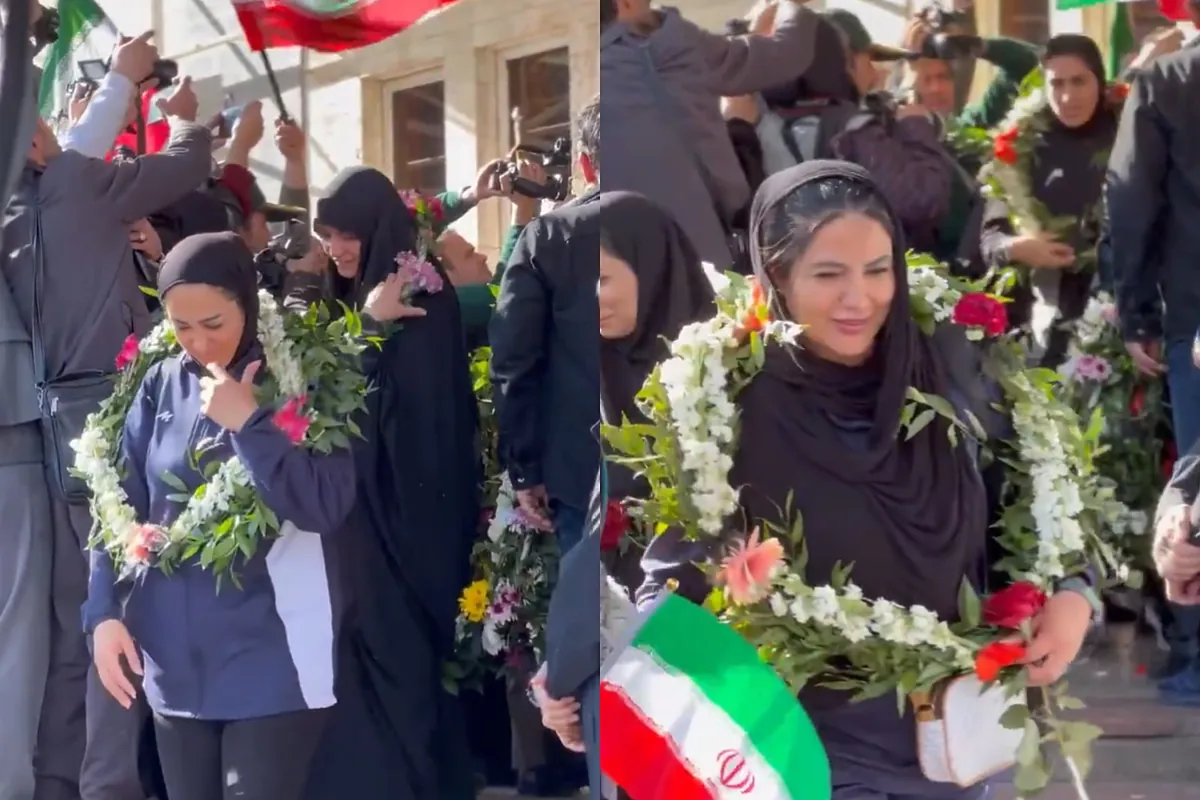
They arrived to applause, cameras, and a carefully choreographed reception. Iran’s women’s national team stepped back onto home soil this week, greeted as heroes after several players abandoned asylum requests in Australia.
State footage shows the squad being welcomed with flowers and cheers, surrounded by officials and members of the Islamic Revolutionary Guard Corps. In one moment that quickly drew attention, players walked across American and Israeli flags placed on the ground.
The symbolism was hard to miss, and it appeared intentional.
Shortly after, Mohammad Bagher Ghalibaf, speaker of the Iranian parliament, praised the team publicly, describing them as loyal daughters of the country. His message reinforced the official line that these players had resisted outside influence and returned by choice.
The tone of the reception stood in stark contrast to what had unfolded just days earlier.
From controversy to celebration
During the Women’s Asia Cup, the team became a talking point after reportedly refusing to sing the national anthem before a match. The reaction inside Iran was swift, with state media branding them as disloyal.
Soon after the tournament ended, at least seven members of the delegation sought asylum in Australia. That number shifted quickly. Within days, several reversed their decision and rejoined the squad for the return to Iran.
Midfielder Mohaddeseh Zolfi, speaking to Tasnim News, pushed back on claims of pressure. She said the players felt safe and supported, adding that returning home was the right decision. In her words, “We feel a sense of security and happiness.”
Still, the story does not end there.
Pressure claims and a split reality
Outside Iran, a different version has emerged. Former futsal player Shiva Amini, now living in exile, has suggested that families of players may have been placed under pressure. Legal voices in Australia have raised similar concerns, pointing to patterns seen in past cases.
Organizations like Amnesty International and Human Rights Watch have previously documented how athletes in Iran can face consequences tied to political expression.
This context makes the players’ sudden reversal harder to view in isolation.
At the same time, not everyone returned. Fatemeh Pasandideh and Atefeh Ramezanisadeh remain in Australia, where they have been training with Brisbane Roar. Photos shared online show them practicing freely, without the dress restrictions required in Iran.
A story bigger than football
The contrast between both groups is striking. Some players are now celebrated at home, while others are navigating uncertain paths abroad.
What began as a football story has grown into something much larger.
Compared to previous tournaments, this situation has drawn more global attention. Coverage from international media, combined with statements from advocacy groups, has amplified the conversation around athletes, identity, and control.
There is also a noticeable shift in presentation. The public welcome, the messaging, and the timing suggest a deliberate effort to shape how this story is seen, both inside Iran and beyond.
What comes next
For the players who returned, a return to domestic football is expected, though likely under close observation. For those still in Australia, decisions about asylum and their professional future remain open.
Every step from here will be watched closely, not just for sporting reasons, but for what it represents.
This article is based on verified reporting from international media outlets, official Iranian statements, and commentary from recognized human rights organizations. Information has been carefully reviewed to ensure accuracy and context.
Read the full article here