





The widening financial gap in Major League Baseball has become impossible to ignore, and the Los Angeles Dodgers sit firmly at the center of the debate.
While big-market teams have always spent more than their smaller-market counterparts, recent payroll figures illustrate a disparity so large that it is beginning to raise serious concerns about the league’s long-term competitive balance and labor stability.
The Dodgers’ player payroll exceeded $417 million this season, a staggering figure that dwarfs the rest of the league. As a result, they were assessed more than $169 million in luxury tax penalties alone.
That number is nearly double the luxury tax bill paid by the New York Mets, who ranked second in spending at $346.6 million and owed $91.6 million in tax penalties. These numbers reflect a structural reality in MLB where financial muscle often translates directly into sustained on-field success.
Much of the Dodgers’ spending surge can be attributed to blockbuster contracts. Shohei Ohtani’s 10-year, $700 million deal, signed ahead of the 2024 season, reset expectations for superstar compensation.
Shortly after, Juan Soto’s 15-year, $765 million contract, signed before the 2025 season, further cemented a new era of megadeals that only a handful of franchises can realistically afford.
The New York Yankees and Philadelphia Phillies round out the top four in payroll, paying roughly $316 million and $314 million respectively. Even among these traditional big spenders, the Dodgers remain in a tier of their own.
Luxury tax teams and the growing middle class
Beyond the top four, several teams exceeded the luxury tax threshold without approaching the Dodgers’ financial territory. The Toronto Blue Jays, San Diego Padres, Boston Red Sox, Houston Astros, and Texas Rangers all crossed the tax line, reflecting a growing middle class of contenders willing to spend aggressively to remain competitive.
Toronto led this group with more than $286 million in payroll and paid $13.6 million in luxury tax penalties. San Diego followed with just over $270 million and a tax bill just under $7 million.
The Red Sox and Astros barely exceeded the threshold, each paying less than $1.5 million in tax, while the Rangers faced a minimal assessment of $190,000. These figures show a clear drop-off after the top tier, both in payroll size and financial consequences.
At the opposite end of the spectrum sit the Miami Marlins and Chicago White Sox. Miami spent just under $87 million on player salaries, while Chicago barely crossed $91 million.
The difference between the Dodgers and the Marlins exceeds $330 million, a gap that is unprecedented in most major professional sports leagues.
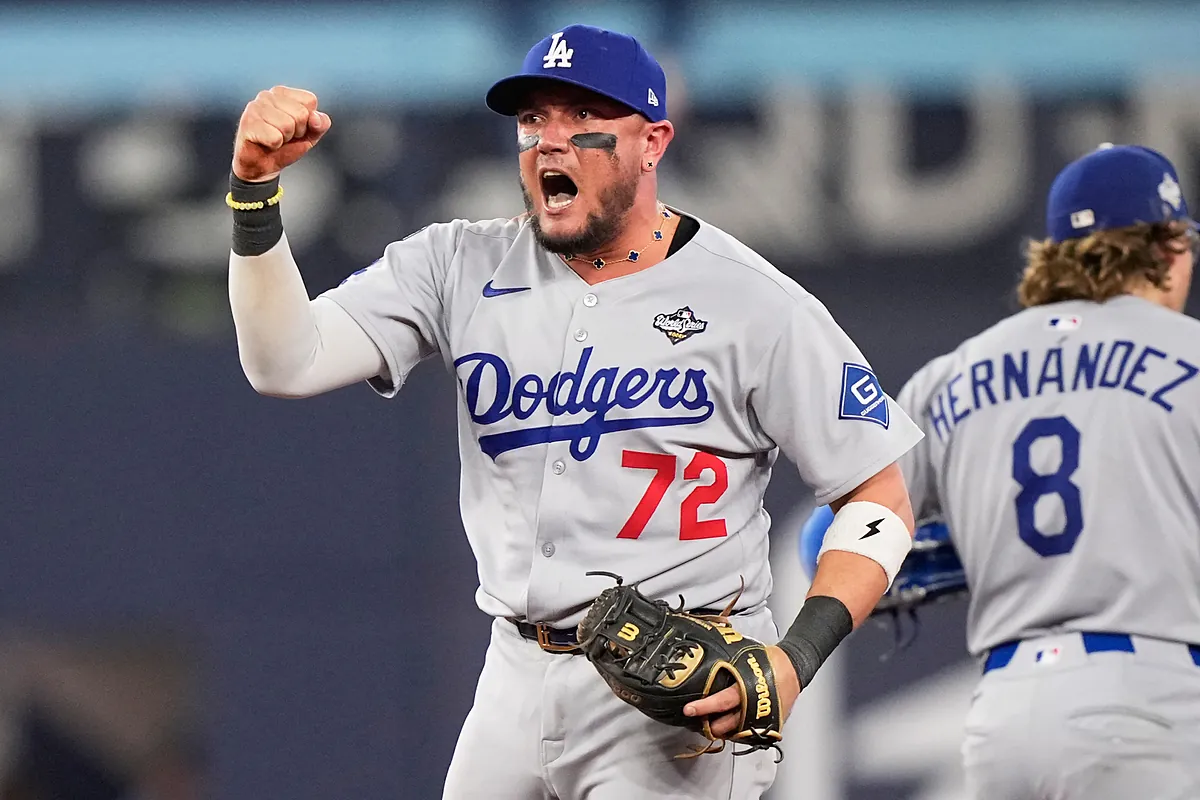
This imbalance has broader implications. The Dodgers’ back-to-back World Series titles underscore how financial advantages can reinforce competitive dominance.
Meanwhile, teams operating at the bottom face limited paths to sustained success, often relying on player development cycles rather than retention of elite talent.
As the current collective bargaining agreement approaches its 2026 expiration, payroll inequality is expected to become a central issue.
Read the full article here