





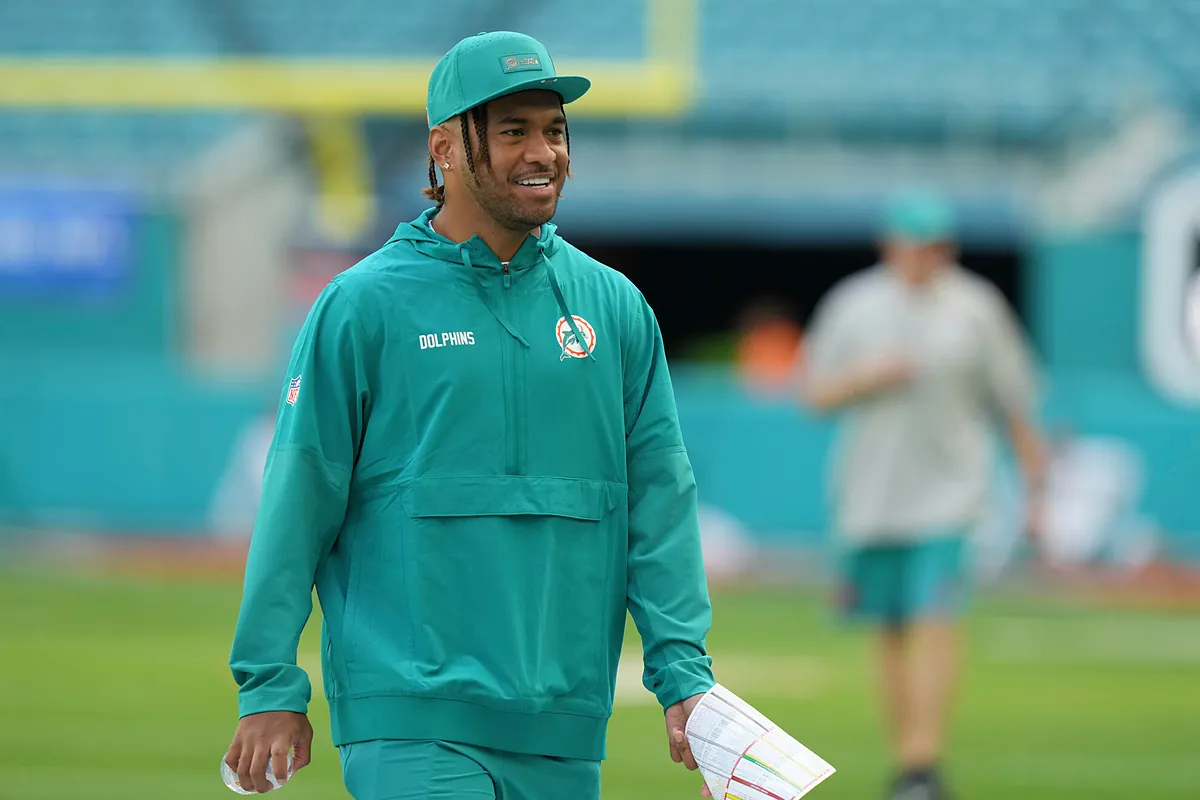
The Miami Dolphins’ quarterback situation remains one of the most closely watched storylines in the NFL as the 2026 offseason approaches.
After five seasons as the franchise’s starter, Tua Tagovailoa was benched late in the 2025 season following a disappointing 28-15 loss to the Pittsburgh Steelers on Monday Night Football, which officially eliminated Miami from playoff contention.
The move was particularly striking given that the Dolphins had rewarded Tua with a substantial contract extension prior to the 2024 season, signaling their long-term commitment to him.
Related:
- Super Bowl 2026: Date, time, location, and everything to know
- Where to watch the Super Bowl 2026? TV channel and streaming
- Super Bowl Halftime Show 2026: Everything about Bad Bunny’s performance
- How much do tickets for the Super Bowl cost in 2026?
- Super Bowl Winners List: All teams that have won the Vince Lombardi
Tagovailoa‘s decline has been swift and surprising. Once considered one of the league’s most promising young quarterbacks, his 2025 performance was marred by turnovers and inconsistent play, ultimately prompting rookie Quinn Ewers to step in.
While the on-field struggles have fueled debate among fans and analysts, the bigger challenge for Miami is financial. Tagovailoa‘s 2026 cap hit is projected to be around $56 million, and releasing him before June 1 would create a staggering $99 million in dead money against the salary cap.
The Dolphins face a narrow set of choices. They could attempt a trade, but moving a quarterback with a massive cap charge would likely require giving up draft compensation or retaining part of his salary.
Alternatively, they could release him, accepting the crippling dead money and significantly limiting roster flexibility. Or, the most pragmatic option may be to simply keep him on the roster and let him compete for the starting role.
Financial realities shaping Tagovailoa’s 2026 prospects
According to Brian Miller of FanSided’s PhinPhanatic site, keeping Tagovailoa may be the most realistic option for Miami. Miller notes that releasing him would result in an almost unmanageable financial hit, and trading him might not be feasible without costly concessions.
Instead, allowing Tua to remain on the roster could provide flexibility, whether as a starter or a backup, while keeping the team financially stable. He also points out that a post-June 1 release would reduce the 2027 cap impact, though the team would still face significant charges.
From a football perspective, retaining Tagovailoa gives Miami a veteran presence under center while also encouraging competition for the starting job. If another team loses its quarterback before the season, the Dolphins could explore trade opportunities, potentially mitigating some of the financial burden.
Additionally, the Dolphins’ coaching staff has expressed confidence in Tua’s ability to rebound, emphasizing development and competition rather than an immediate departure.
While Tagovailoa‘s benching marked a low point in his tenure with Miami, the financial and strategic realities suggest that the Dolphins may find keeping him on the roster the most logical path forward.
With limited alternatives and a complicated cap situation, it appears increasingly likely that the former starter will remain in South Florida at least through the 2026 season, offering one more opportunity to prove he can lead the franchise back to contention.
Read the full article here