




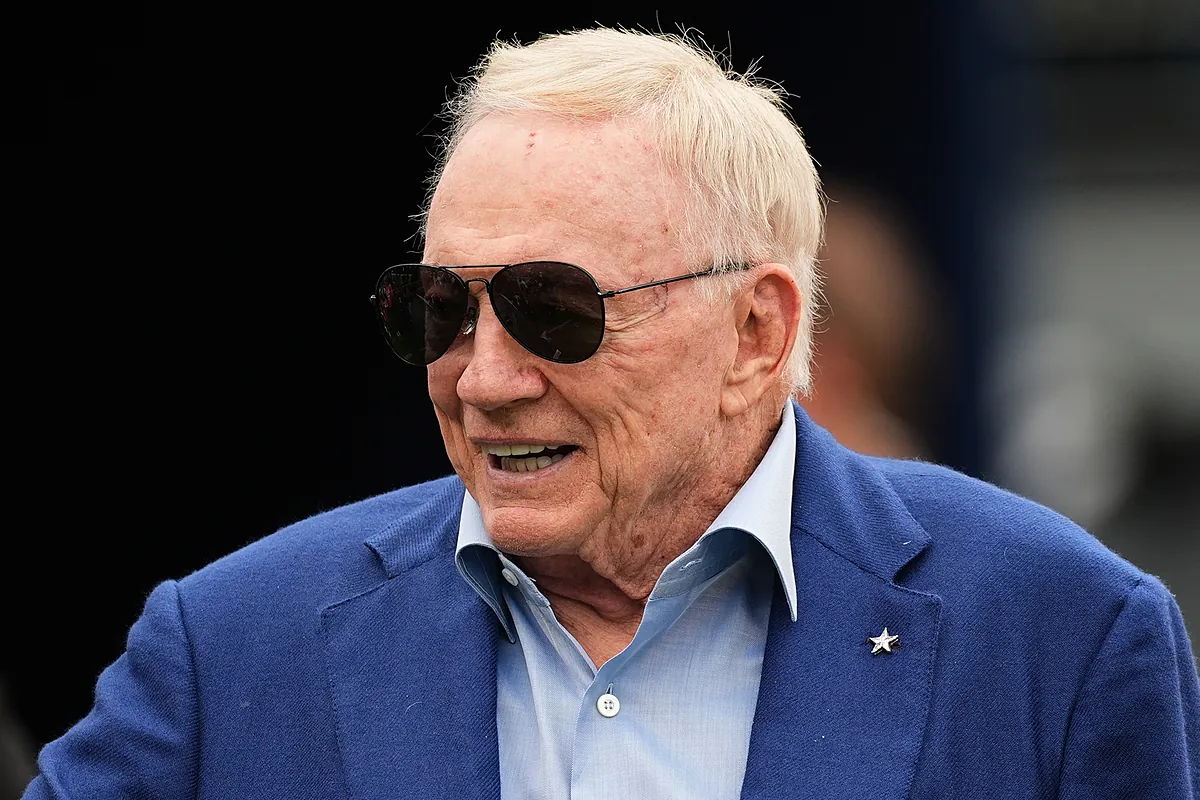
A new wave of draft controversy has surrounded the Dallas Cowboys, with media personality Skip Bayless igniting debate over whether team owner Jerry Jones influenced events behind the scenes to secure defensive prospect Rueben Bain Jr. with the 12th overall pick.
The speculation stems from Bayless’ comments suggesting that information about Bain’s reported car accident may have surfaced strategically during the pre-draft process.
According to Sportskeeda, Bayless floated the idea that the Cowboys could have benefited from, or even indirectly contributed to, the timing of the news becoming public, ultimately allowing them to land the former Miami Hurricanes defensive end at a more favorable draft position.
It’s important to note that no official evidence has been presented to support the claim, and NFL teams are strictly prohibited from interfering in medical or personal matters to manipulate draft stock.
Still, the theory has gained traction online due to the Cowboys’ long-standing reputation for aggressive draft strategy and high-profile decision-making under Jones’ leadership.
Bayless, known for his provocative sports commentary, framed the situation as more than coincidence, questioning whether Dallas positioned itself advantageously as Bain’s draft stock fluctuated in the lead-up to selection night.
His remarks immediately sparked backlash and discussion across sports media platforms, with analysts divided between dismissing the idea outright and acknowledging how quickly narratives can shift during the draft cycle.
Draft speculation fuels debate around NFL transparency and prospect evaluations
The NFL Draft has long been a stage where perception and timing can dramatically influence player valuation.
Teams routinely adjust their draft boards based on medical reports, interviews, and background information that becomes available in the weeks leading up to selection day.
However, the suggestion that any organization might influence the flow of information crosses into far more controversial territory.
For the Cowboys, this is not the first time draft strategy discussions have followed the franchise.
Under Jones, Dallas has often been linked to bold moves, surprise picks, and calculated risks designed to maximize both talent and value within the first round.
Yet even for a franchise accustomed to scrutiny, Bayless’ claim introduces a far more serious level of speculation.
From a league perspective, NFL teams operate under strict compliance rules intended to prevent tampering or manipulation of sensitive player information.
Any proven violation would carry significant consequences, making the allegations largely speculative without substantiated evidence.
Still, the discussion highlights how quickly narratives form around high-profile franchises.
Once draft boards begin to shift and unexpected selections occur, fans and analysts often search for explanations that go beyond performance metrics alone.
In Bain’s case, the defensive prospect remained a highly regarded talent entering the draft process, with evaluations across scouting outlets consistently projecting him as a first-round selection.
That consensus makes the idea of stock fluctuation more complex, as teams often weigh multiple factors beyond isolated incidents.
For now, the claims remain firmly in the realm of speculation, driven by media commentary rather than verified reporting.
But in the modern NFL media landscape, where draft rumors spread rapidly and narratives evolve in real time, even unproven theories can dominate the conversation.
What remains clear is that the Cowboys continue to attract attention whenever they are involved in first-round decisions, and this latest episode is no exception.
Read the full article here