




NFL offenses were literally too busy scoring in Week 1 for coaches to have much time for scoreboard watching, but the final numbers were unexpectedly high. A whopping 791 points, or a combined 49.4 per game, were scored in Week 1, matching the most for any Week 1 in the Super Bowl era.
“I was definitely surprised to look up at the scoreboard on Sunday and see some of the scores at halftime,” Tampa Bay Buccaneers offensive coordinator Zac Robinson said. “The Carolina-Bears game, it was crazy. I typically don’t see that in Week 1.”
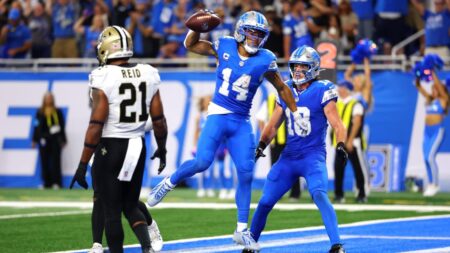
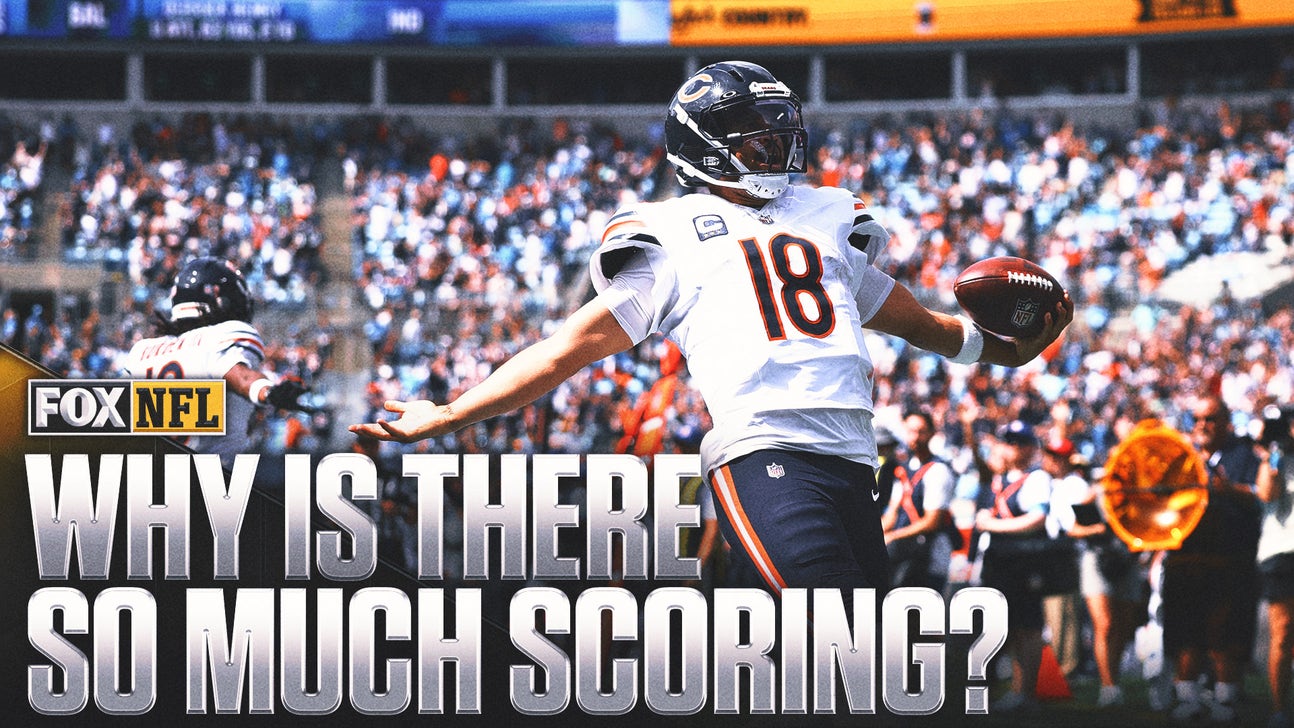
The Chicago Bears had a 31-24 lead on the Carolina Panthers at halftime and ended up winning 59-37. That was one of six games that had 60-plus total points scored, two more than any other opening weekend in NFL history. Week 2 opened with the Buffalo Bills beating the Detroit Lions 41-31, suggesting the Week 1 scoring explosion might not be an outlier.
The Jacksonville Jaguars had a 31-0 lead on the Cleveland Browns three minutes into the second half on Sunday, but Jaguars offensive coordinator Grant Udinski was busy enough in postgame that he didn’t fully appreciate just how many points were scored until he caught up by watching the NFL RedZone’s wrap-up, which shows every single touchdown scored during Sunday’s slate in one glorious clip.
“RedZone does the touchdown montage at the end of the day, and I took a quick break from looking at Denver and getting stuff ready for this week, and you notice: ‘Man, this montage is going on forever,'” Udinski told me. “Then you start looking at scores, and you say, ‘Oh, OK, this makes more sense.’ It wasn’t until you got tape in from around the league that you realized all the stuff that some of those offenses, like Chicago did, and really lit it up.”
Three teams — the Panthers, Houston Texans and New Orleans Saints — scored 30 or more points and lost, something that’s happened just once ever in Week 1 (2002). So why such a spike in scoring? Is it a trend likely to continue deep into the 2026 season, or a symptom of ever-changing approaches to preseason games — where fewer starters play to avoid the risk of injury — and even training camp practices, which don’t have nearly as much contact and actual tackling as they used to have?
“I watched some around-the-league stuff, and it felt like guys just were making plays,” Robinson said. “There [were] a ton of plays being made after the catch … defenses are so limited with what they can do based on the rules [before] you get to live tackling, and it’s a different ballgame.”
The lack of physicality in preparing for an NFL season can make even the best defenses look rusty in their first games. The Denver Broncos, who had a top-three defense last year in points and total yards allowed, recorded 28 missed tackles in their humbling 31-10 loss to the Kansas City Chiefs on Monday night.
Kenneth Walker rushed for 179 yards after contact (per Pro Football Focus) in the Chiefs’ Week 1 win over the Broncos. (Photo by David Eulitt/Getty Images)
High-leverage situations favored offenses in Week 1. Not a single NFL team converted half their third-down opportunities last year. Yet, in Week 1, nine teams were better than 50%, and three were above 70% on conversions. Red zone? The most efficient offense in the NFL got touchdowns on 70% of their trips inside the opponents’ 20-yard line, but in Week 1, there were nine teams that got touchdowns on every red-zone opportunity they had.
“The lack of opportunities to go live and tackle, whether it’s preseason or training camp, I think less and less teams have live periods where you’re actually tackling ball carriers to the ground,” Udinski told me. “It’s hard to account for those yards when you’re practicing some of the things that show up with different angles of tackles.
“Even sacks on quarterbacks, where a guy might be blown down before a defensive end gets a hand on a quarterback, and now, they’re in a game and the quarterback can escape and extend plays. A play might have gotten blown dead, but next thing you know, you’re in a scramble and you’ve had limited reps in scramble drills.”
Jaxson Dart wasn’t sacked in the Giants’ season-opening win as the Cowboys had a four-man pressure rate of just 10.0%, their lowest in a game in five years, according to Next Gen Stats. (Photo by Rich Graessle/Icon Sportswire via Getty Images)
One more factor to consider in the high scoring: NFL games are rarely hotter than in Week 1 with mid-September highs, and six openers had temperatures at kickoff recorded at 89 degrees or hotter. You combine that conditioning concern with players testing their stamina by playing a full game in most cases for the first time in eight months.
“There are no two-a-days. They’re never on the field for three and a half hours on a given day,” Udinski said.
If the record scoring was a surprise to some, it wasn’t to Las Vegas oddsmakers, as the 16 Week 1 scoring totals had eight games go over their over/under point totals and eight games fall short. Thursday’s Bills-Lions game had an over/under of 54.5 points — four points higher than any Week 1 game — and the two teams still cleared the over by 16.5 points in the end.
The scoring explosion was led by the Bears, and their head coach, Ben Johnson, has expressed a team goal of becoming the highest-scoring team in NFL history. Scoring 59 in an opener is a great start toward that, as the record for an entire season is 37.9 points per game, which was scored by the 2013 Broncos.
So, Chicago can be three touchdowns a game worse than they were Sunday and still fulfill their goal of becoming the highest-scoring team ever. That’s how high the bar was set by Week 1 this season.
Read the full article here