





The Indiana Fever expected attention heading into the 2026 WNBA season. What they may not have anticipated was that it would begin with questions about contracts rather than championships.
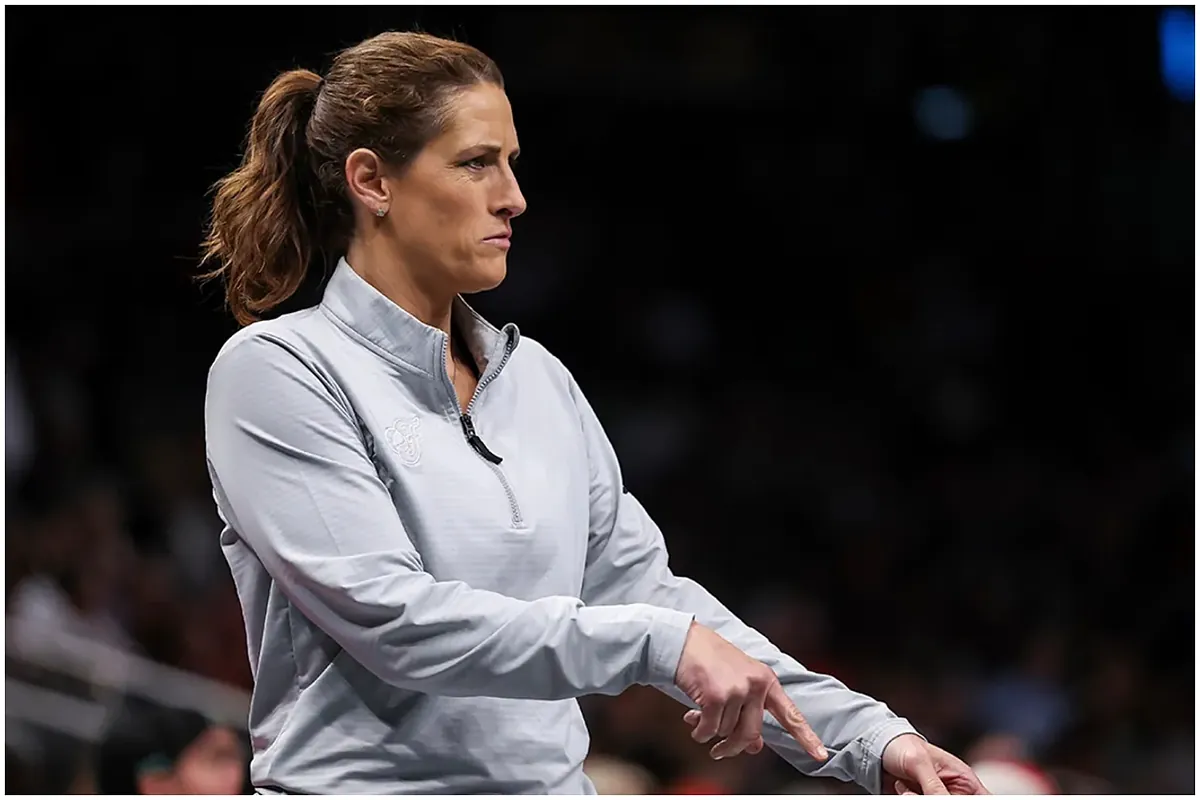
Veteran guard Sophie Cunningham sparked that conversation this week, openly discussing her dissatisfaction with the structure of her new deal and prompting head coach Stephanie White to weigh in.
White‘s reaction, delivered at training camp, was calm and pragmatic. “Look, it’s part of the business,” she said, via ESPN‘s Kareem Copeland, addressing the situation for the first time.
“Players, they want to know where they’re going to be… and organizations want to make sure that they’re making the right decisions for now and for the long term.”
Cunningham‘s comments, made on her “Show Me Something” podcast, were not centered on salary but on security. The 29-year-old expressed a desire for a longer-term commitment, emphasizing that her connection to the team goes beyond basketball.
For Cunningham, the issue reflects stability as much as structure. She spoke about wanting to “get established in a place like Indiana,” pointing to the relationships she has built within the Fever locker room as a driving force behind her comments.
“When you find a group of girls who really make you fall in love with basketball again… you want to hold on to that,” she said.
White, a former WNBA player herself, acknowledged that perspective. Her response leaned on experience, recognizing that contract negotiations often carry an emotional dimension.
“They’re human beings,” she said. “They feel things and they want things just like all of us. All of us want job security, right?”
The coach also admitted she was initially unaware of Cunningham‘s remarks, suggesting the situation has not disrupted the team internally as preparations for the new season ramp up.
Big-money offseason sets the stage for huge expectations
Cunningham‘s comments arrive against the backdrop of a transformative offseason for the Fever. The franchise has invested heavily in its core, reflecting both its ambition and the broader financial growth of the WNBA.
Aliyah Boston agreed to a four-year, $6.3 million extension, setting a new benchmark for the league, while Kelsey Mitchell signed a one-year supermax deal worth $1.3 million. Cunningham and Lexie Hull also secured new contracts, though details have not been publicly disclosed.
White admitted the scale of those deals has been striking. “It’s just baffling hearing those numbers,” she said, via team reporter Scott Agness. “I’m so thankful that this league is where we are right now.”
At the same time, she framed the spending as long overdue recognition. “These players deserve it,” White added. “They have been a part of a tidal wave of changing the landscape of the game.”
Balancing business decisions with championship ambitions
The Fever enter 2026 with legitimate title aspirations after a resilient 2025 campaign that included a Commissioner’s Cup victory and a deep playoff run despite injuries to key players like Caitlin Clark.
With a healthier roster and increased continuity, expectations have risen sharply. That context makes Cunningham‘s comments more nuanced than controversial. Rather than signaling unrest, they underscore how invested players are in the team’s long-term direction.
For White, the challenge lies in navigating both sides of that equation: maintaining competitive focus while acknowledging the realities of a changing league.
As the season approaches, the headlines will inevitably return to performance on the court. But the conversation sparked this week offers a reminder of how much the WNBA has evolved, and how players are increasingly willing to voice their priorities along the way.
Read the full article here